





Multicoloured Woven Rug
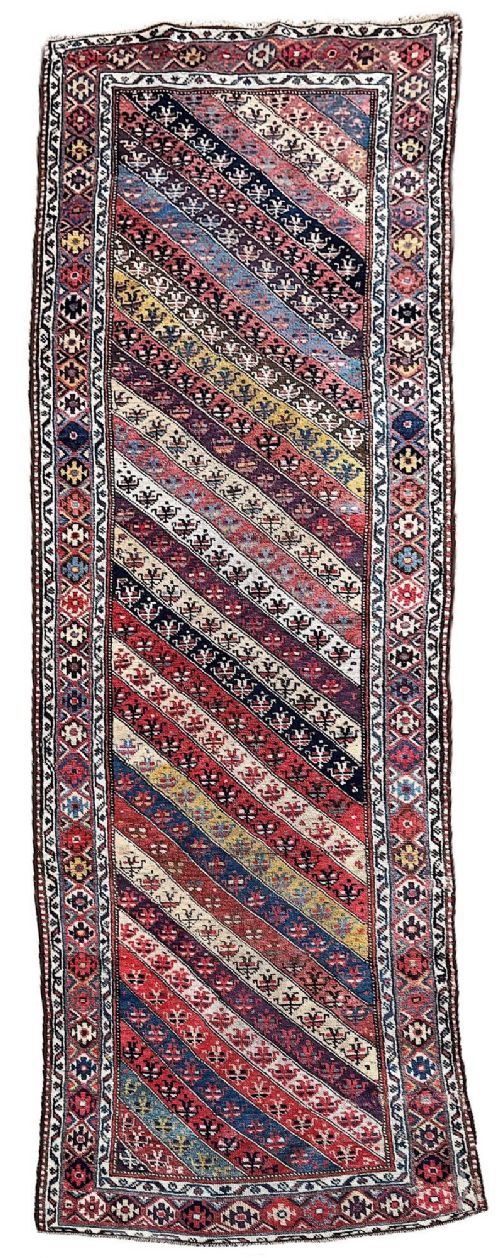
These pieces form a multicoloured woven rug selection, bringing together tribal textiles, village floor coverings and storage bags from the nineteenth and early twentieth centuries.
Multicoloured Woven Rug
A multicoloured woven rug search brings up a rich selection of tribal floor coverings, flatweave kilims and functional storage bags originating from Persian, Caucasian, Turkish and Central Asian regions. These textile items span various periods from the mid nineteenth century through to the early twentieth century, reflecting traditional nomadic and village craftsmanship.
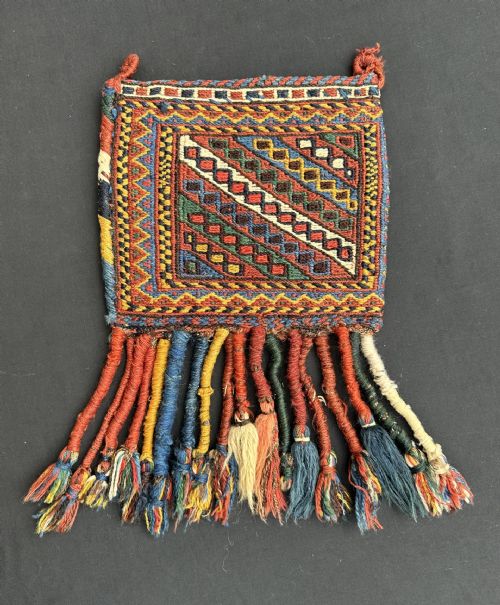
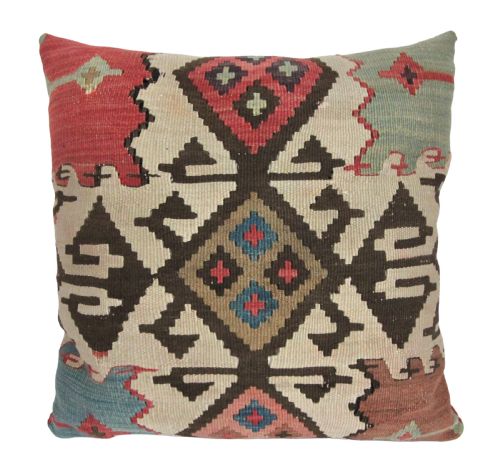
The objects themselves range from large carpets and long runner rugs down to smaller utility pieces such as saddle-bags, salt-bags, vanity bags and cushions. Many examples display bold geometric patterns, banded designs and striped motifs typical of specific tribal confederacies like the Qashqai or Shahsavan.
Buyers will encounter diverse formats including pile rugs, flatweave kelims, double-sided silk purses and complete mafrash storage pieces. Each textile records the distinct aesthetic and structural traditions of the specific region and weaving group that produced it.
What varies in quality
The visual strength of a piece rests upon the vibrancy and depth of its colour palette, where natural dyes yield harmonious variations across the surface. Items described as having bold or outstanding colour demonstrate superior visual impact compared to more faded examples.
Structural integrity and the fineness of the weave distinguish everyday utility bags from important rugs and carpets. The complexity of tribal motifs, such as scarce striped designs or carefully balanced banded patterns, also separates standard work from master village production.
Several storage pouches retain their plain weave backs, reminding us they once rested against the flank of a travelling pack animal.
The Multicoloured Woven Rug Glossary
- Kilim
- A flatwoven carpet or rug produced without a pile, common throughout Turkey, Persia and the Caucasus. These textiles often feature sharp geometric patterns created by slit-weave techniques.
- Gabbeh
- A traditional pile rug woven by nomadic tribes, characterised by a thicker, coarser pile and sparse, highly abstract geometric designs.
- Mafrash
- A large rectangular storage bag or chest panel used by nomadic groups for bedding and household goods, typically constructed from flatweave or piled faces with sturdy flatweave backs.
- Torba
- A small wall-hanging storage bag used in Central Asian households for domestic organisation and possessions.
- Runner
- A long, narrow carpet format designed specifically for hallways, corridors or bedside placement within traditional interiors.
Multicoloured Woven Rug: Frequently Asked Questions
How were these bags used originally?
Nomadic and village groups utilised these woven pouches to store salt, personal items, tea equipment or bedding while travelling or inside permanent dwellings.
Many functioned as saddle-bags or storage chests designed to endure daily transport across rugged terrain.
Where do most of these rugs originate?
The pieces hail predominantly from Persian tribal confederacies, Anatolian villages, Caucasian regions and Central Asian tribal groups.
Specific weaving traditions reflect the distinct geographic territories of makers such as the Qashqai, Shahsavan or Kurdish populations.
What materials make up these textiles?
Makers relied on sheep wool, hand-spun wool and cotton for the structural foundations and pile surfaces of these rugs and bags.
Certain delicate items incorporate silk elements or decorative additions like cowrie shells alongside natural dye colourants.
How should I care for an antique rug?
Protect these textiles from direct sunlight to preserve the natural dye colours over time. Gentle vacuuming without a rotating brush helps maintain the wool pile without damaging the antique foundation.
Professional textile conservation cleaning is recommended for heavier rugs and structural bags.