





Multicoloured Wool Wall Hanging
A multicoloured wool wall hanging brings rich nomadic texture and saturated natural dyes into a room, offering both warmth and graphic impact.
Multicoloured Wool Wall Hanging
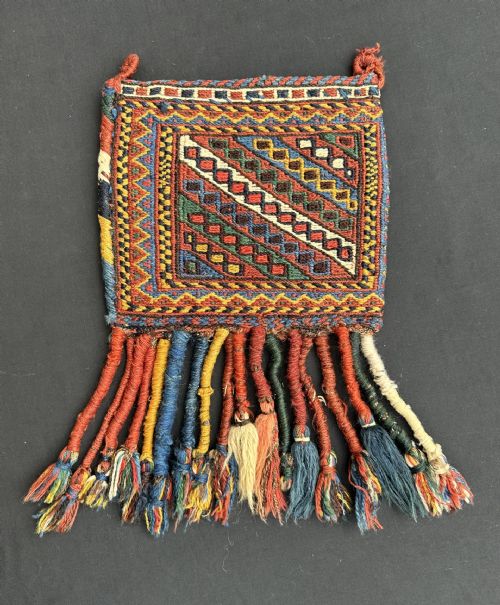
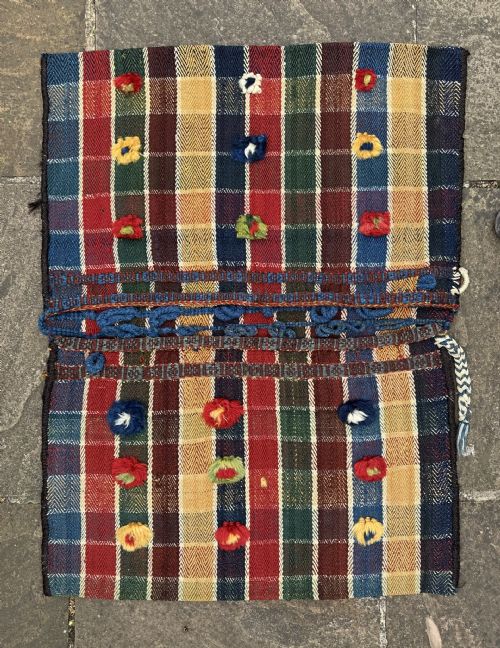
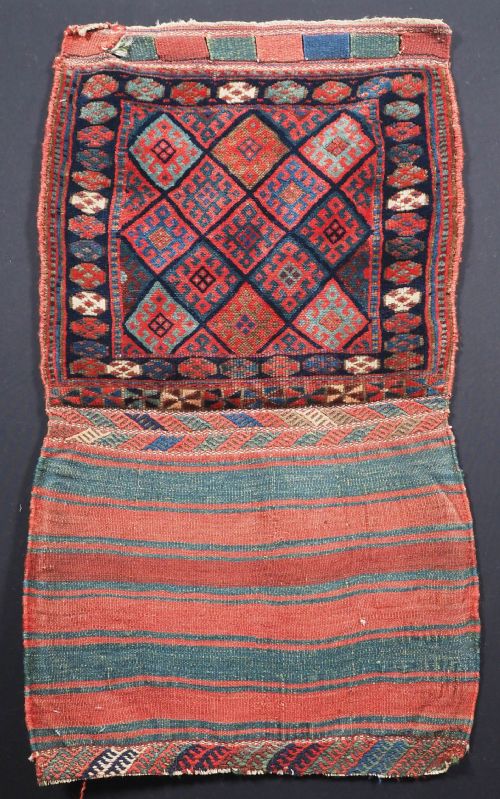
A multicoloured wool wall hanging encompasses a diverse group of tribal textiles, repurposed storage bags, and framed tapestries originating from Persia, Central Asia, and Europe. Buyers seeking this phrase typically encounter functional nomadic objects - such as salt-bags, torba ilgich, and vanity pouches - repurposed for display.
The selection ranges from late nineteenth-century Persian tribal weaves by the Afshar and Qashqa'i confederacies to Central Asian Uzbek embroideries and Scandinavian rya rugs. European examples appear through French signed tapestries and mid-nineteenth-century German Berlin wool work in gilt frames.
Items designated as wall hangings frequently began life as utilitarian tribal items like bread sofreh or saddle-bags, utilised for domestic storage before transitioning to decorative wall display. This functional heritage ensures that each piece carries authentic signs of nomadic or traditional craft.
Materials and Construction
These textiles rely predominantly on hand-spun wool, cotton, and occasionally silk, dyed with natural pigments that yield deep, variegated tones. Certain Central Asian and Persian pieces integrate supplementary materials such as cowrie shells and brass elements into their surfaces.
Construction techniques vary widely between regions, encompassing pile weaving, flat-weaving, and intricate embroidery. European examples utilise fine wool work stitches mounted within rigid wooden frames or gilt surrounds.
Listings feature items dated from the mid-nineteenth century through the early twentieth century, incorporating wool, cotton, silk, and cowrie shells.
Evaluating Quality and Execution
Quality rests upon the fineness of the weave, the complexity of the tribal iconography, and the vibrancy of the natural dyes used across the wool surface. Superior examples display tight, even knots or precise embroidery stitches that maintain structural integrity.
The integrity of the original wool and the preservation of secondary materials, such as cowrie shells or brass accents, distinguish finer specimens. Compositional balance and the distinct character of regional tribal motifs elevate an ordinary textile into a compelling visual statement.
The Multicoloured Wool Wall Hanging Glossary
- Torba
- A small Central Asian storage bag or tent hanging produced by tribal groups. These items were traditionally hung inside a yurt for household storage.
- Sofreh
- A flat-woven spread used for kneading dough, serving food, or processing bread. Their geometric designs make them striking when mounted on a wall.
- Rya
- A traditional Scandinavian piled rug or textile known for its deep, plush wool pile. They often feature abstract or folk art patterns suited to interior display.
- Suzani
- An embroidered tribal textile originating from Central Asia, typically worked in silk or wool on a cotton ground. They are celebrated for large-scale floral and sunburst motifs.
- Berlin wool work
- A form of nineteenth-century European canvas embroidery worked from printed point paper charts. These were frequently framed as domestic pictures.
Multicoloured Wool Wall Hanging: Frequently Asked Questions
How were these tribal bags originally used?
Nomadic groups utilised these bags for storing salt, spoons, water-pipes, or personal items within tents and temporary dwellings. They served practical domestic functions before being adapted for decorative wall display.
Over generations, many functional items lost their nomadic utility and entered the decorative market as textiles appreciated for their artistic patterns and construction.
What regions do these textiles come from?
The pieces originate primarily from Persia, Central Asia, and Europe, reflecting distinct regional weaving traditions. Persian examples often stem from confederacies such as the Qashqa'i and Afshar.
Central Asian pieces typically represent Uzbek and Lakai tribal traditions, while European items include German needlework and French tapestries.
How do I hang a textile securely?
Hanging methods depend on the weight and backing of the specific piece, with many owners utilising professional conservation mounting. Some flat-woven bags and textiles accept a discreet fabric sleeve stitched along the reverse to accommodate a rod.
Framed pieces, such as German wool work tapestries, rely on traditional picture wire and wall fixings suited to their gilt frames.
How can I tell the age of a wool wall hanging?
Dating relies on identifying regional weaving structures, the presence of specific natural dye palettes, and characteristic tribal motifs. Examining the hand-spun wool and signs of honest wear helps contextualize the period of production.
Reference to documented tribal patterns from the nineteenth and early twentieth centuries provides a reliable framework for establishing the era.