

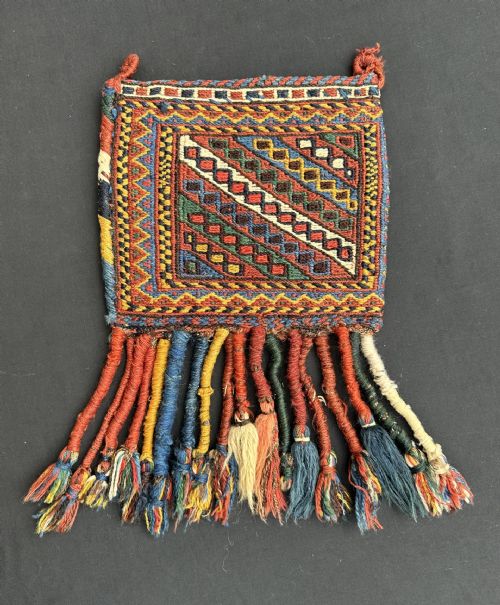

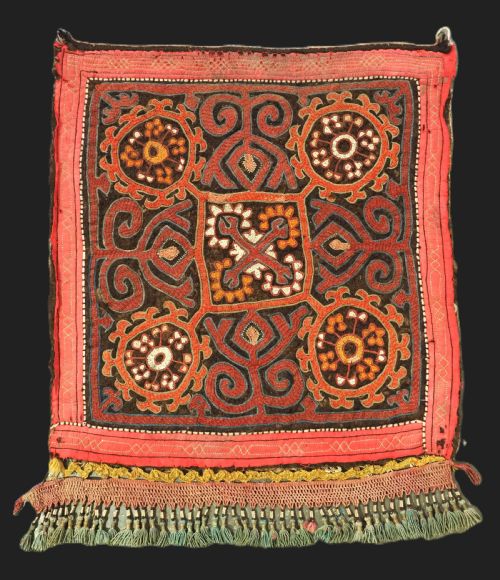


Tribal Tassels Textile
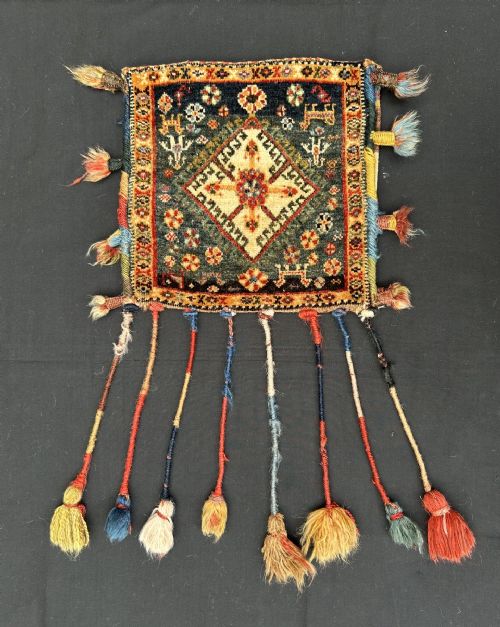
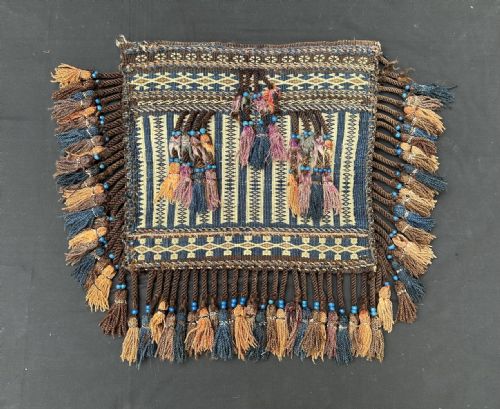
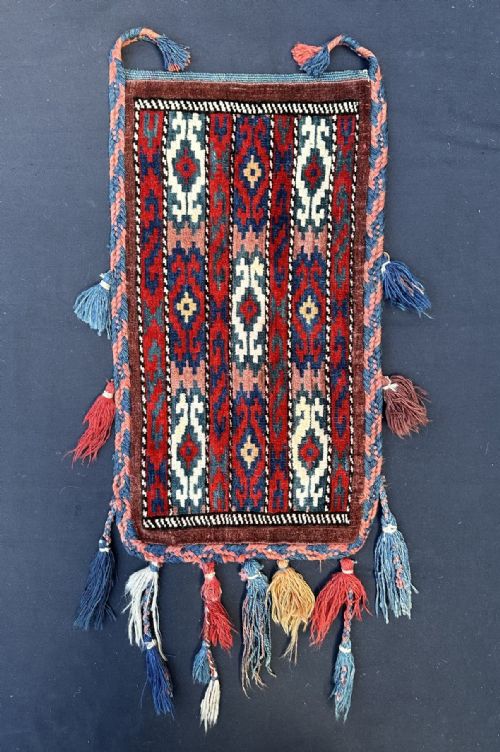
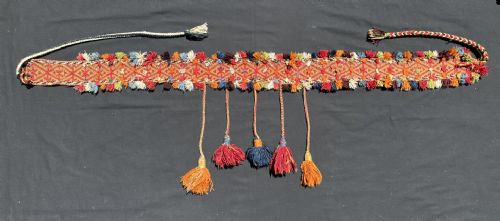
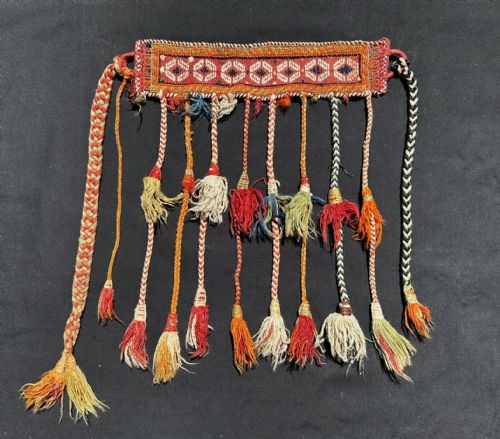
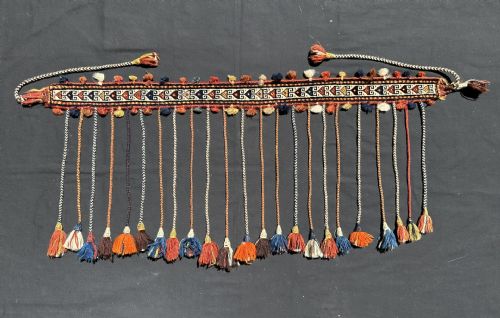
These tribal tassels textile pieces are nomadic wool and silk weavings adorned with fringes and pendants, offering buyers authentic handheld expressions of Central Asian and Persian heritage.
Tribal Tassels Textile
The objects served practical roles within nomadic daily life, functioning as containers for salt or vanity items, tent decorations, and horse or camel trappings. Each form carries distinct structural traditions tied to the specific region and tribe of its makers.
How they were made
Weavers utilised local wool, cotton, and silk foundations, often incorporating felt or leather for durability in nomadic environments. Natural dyes provided the deep red, brown, and ochre grounds seen across these regional textiles.
Makers embellished the surfaces with glass beads, embroidery, and applied fringes or horse hair tassels. These decorative elements were hand-stitched to structural bag faces and hanging panels using traditional regional techniques.
Several horse decorations and camel trappings carry their original swaying tassels, ready for another journey across the rug.
What varies in quality
Quality rests upon the integrity of the surviving materials, the density of the weave, and the complexity of the surface embroidery or pile work. Complete pieces retaining their original tassels, backings, and suspension loops command greater interest from collectors.
The precision of the natural dye palette and the fineness of the silk or wool spinning also distinguish superior examples. Pieces demonstrating skilled execution in both the structural textile and the applied fringe elements represent the higher tier of these tribal works.
The Tribal Tassels Textile Glossary
- Asmalyk
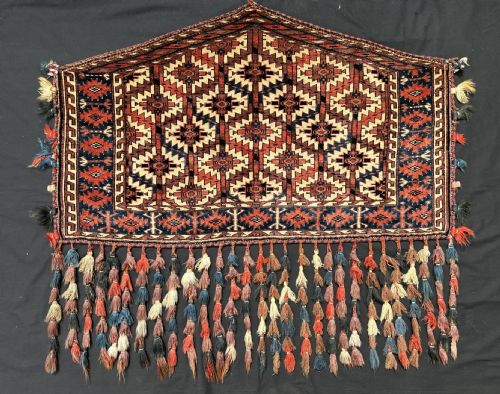
- A large pentagonal trapping produced by Turkmen groups, traditionally hung on the flanks of a bride's camel during wedding processions. These pieces often feature elaborate geometric guls and bottom fringes.
- Torba
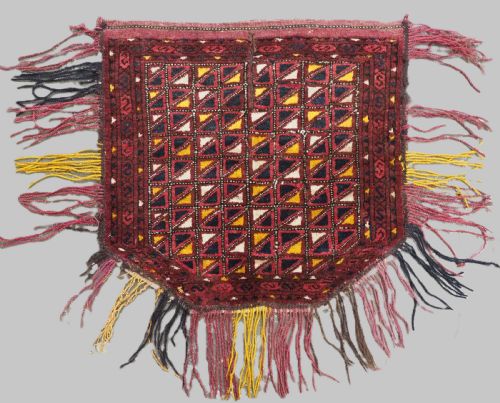
- A small rectangular wall-hanging bag used in nomadic tents for storage. They are frequently finished with bottom tassels and detailed border patterns.
- Namakdan
- A narrow-necked salt bag woven by nomadic groups such as the Baluch. Their asymmetric shapes and tactile pile surfaces accommodated utilitarian hanging inside the tent.
- Gul
- A medallion motif repeated across Turkmen and Central Asian textile grounds. These octagonal or cruciform emblems identified specific tribal lineages.
Tribal Tassels Textile: Frequently Asked Questions
What were tribal storage bags used for?
Nomadic families utilised these woven pouches inside tents to store household items, salt, spindles, and personal belongings. Their structured forms protected contents during seasonal migrations.
Many of these functional items doubled as decorative interior furnishings, displaying the weaver's technical skill and tribal affiliation through specific motifs.
How do I identify Turkmen trappings?
Turkmen pieces typically display deep madder red grounds, geometric gul medallions, and precise wool pile or flat weave structures. They frequently include original wool or silk tassels along the lower edges.
Originating from the Trans-Caspian steppes, these works encompass specific tribal attributions such as Yomut and Ersari through distinct border designs and knotting styles.
How should I care for antique felt panels?
Antique felt and embroidered panels require protection from direct sunlight to prevent natural dye fading. Gentle vacuuming through a mesh screen helps remove surface dust without disturbing fragile fibres and applied fringes.
Mounting textile wall hangings on padded supports distributes weight evenly across the wool or cotton ground, preserving the structural integrity of the piece over time.