





Multicoloured Leaded Glass
These multicoloured leaded glass panels bring rich colour and historic character to a room through traditional craftsmanship.
Multicoloured Leaded Glass
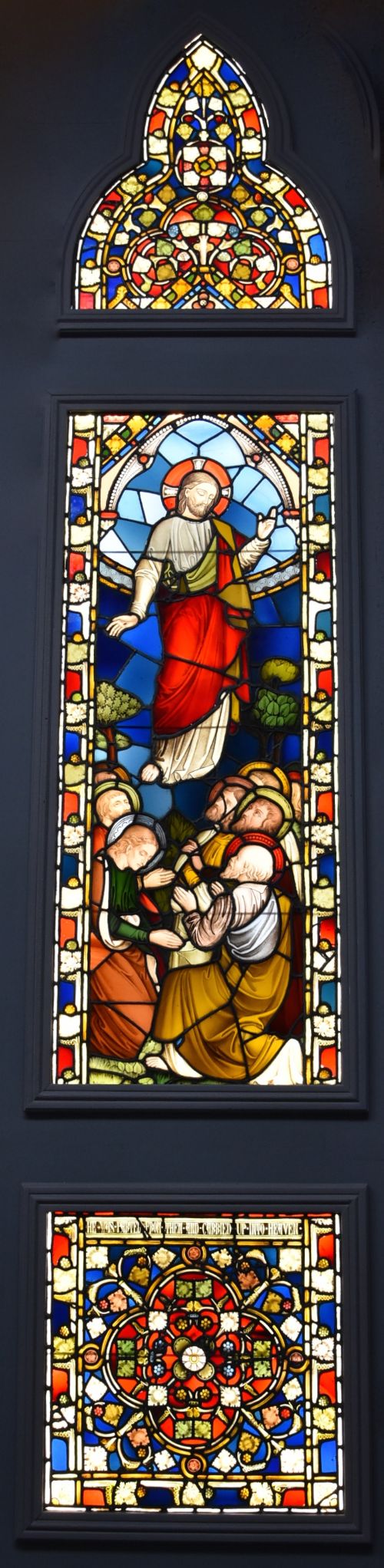
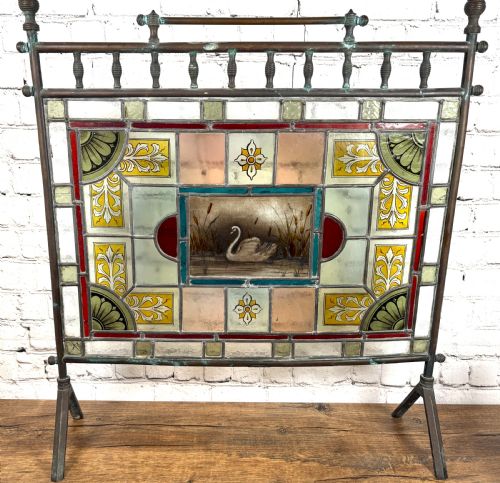
When you search for multicoloured leaded glass, you encounter architectural panels, windows, and fire screens originating from the nineteenth and early twentieth centuries. These pieces encompass various historic styles, notably Gothic Revival, Victorian, Edwardian, and Art Nouveau.
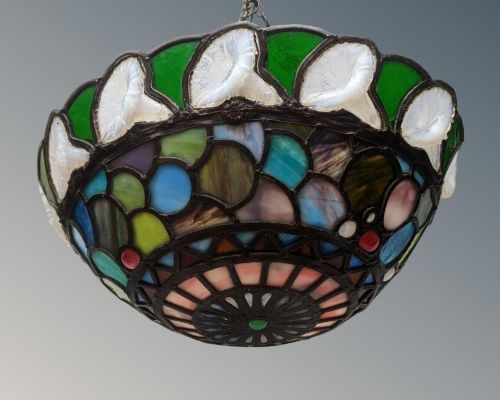
The objects listed here include large church windows, triptychs, and domestic windows featuring hand-painted scenes alongside geometric multicoloured borders. You are most likely to meet rectangular stained glass windows and ceiling lights utilising lead, glass, timber, and brass.
The forms range from large-scale multi-section windows down to smaller fire guards and ceiling lights. Makers from the Victorian period onward utilised these panels for both ecclesiastical settings and domestic decoration.
How they were made
The construction relies on coloured and stained glass held together by lead cames, soldered at the joints to form intricate pictorial or decorative designs. Wood and pine wood frames frequently support the heavier panels, while brass elements appear in specific light fittings.
Many of the glass sections incorporate hand-painted details depicting countryside scenes, figures, and birds, fired onto the surface before assembly. Larger architectural panels are constructed in distinct sections, such as triptychs or two-part windows, to provide structural integrity.
Multicoloured Leaded Glass Retail Price Guide 2026
Typical asking prices for multicoloured leaded glass among the pieces listed under this phrase on Sellingantiques today, from the lower quarter to the upper quarter. They describe what is for sale here now, not the wider market.
Current listings demonstrate a prevalence of 1900s craftsmanship, incorporating lead, glass, wood, brass, and pine wood across various architectural forms.
What varies in quality
Quality in these pieces is dictated by the artistry of the hand-painted elements and the complexity of the glass selection. Panels featuring detailed figural work, such as knights in armour or intricate pastoral scenes, require a higher level of artisan skill than standard geometric borders.
The structural robustness of the lead framework and the surrounding timber or pine wood frames also define the standard of the piece. Larger church windows and multi-section triptychs demonstrate greater scale and ambition than domestic fire screens or smaller ceiling lights.
The Multicoloured Leaded Glass Glossary
- Came
- A grooved strip of lead used to hold together pieces of stained glass in a window or panel. These strips form the linear grid of the design.
- Triptych
- A picture or relief carving on three panels, hinged together or side by side. In stained glass, this refers to large-scale windows divided into three distinct vertical sections.
- Stained glass
- Glass coloured by the addition of metallic salts during its manufacture, often further detailed with painted enamels. It forms the primary visual medium for these architectural pieces.
- Gothic Revival
- An architectural movement that began in the mid-eighteenth century and heavily influenced nineteenth-century design. Pieces from this style often draw inspiration from medieval church architecture.
- Fire guard
- A protective screen placed in front of an open fireplace, frequently repurposed from decorative stained glass panels during the Victorian era.
Multicoloured Leaded Glass: Frequently Asked Questions
How do I hang a stained glass window?
Heavy glass panels require secure fixing points attached directly to structural window frames or wall studs. Steel chain or wire rated for the weight of the lead and timber assembly is commonly utilised.
Ensure the weight is distributed evenly across the frame rather than hanging entirely from the top lead cames. Professional installation is recommended for large multi-section architectural pieces.
Are these windows suitable for exterior use?
Most antique panels were originally built for specific interior or protected architectural settings. Placing them directly into exterior walls often requires secondary glazing for weatherproofing and thermal insulation.
Consider mounting them internally against an existing glass window using brackets to let natural light through without exposing the historic lead to harsh weather.
How do I date a leaded glass panel?
Dating relies on stylistic markers such as the transition from Victorian Gothic Revival motifs to flowing Art Nouveau forms. Materials like pine wood frames and the specific technique of hand-painted scenes also provide chronological clues.
Comparing the complexity of the lead cames and the depth of the glass colour helps narrow down whether a piece originates from the nineteenth or early twentieth century.
Can I clean leaded glass safely?
Use a soft microfibre cloth and a mild, non-ammonia cleaning solution applied to the cloth rather than directly onto the glass. This prevents moisture from seeping under fragile lead cames or historic paint.
Avoid abrasive materials and harsh chemical cleaners that can degrade the solder joints, the painted enamel surfaces, and the surrounding timber frames.