
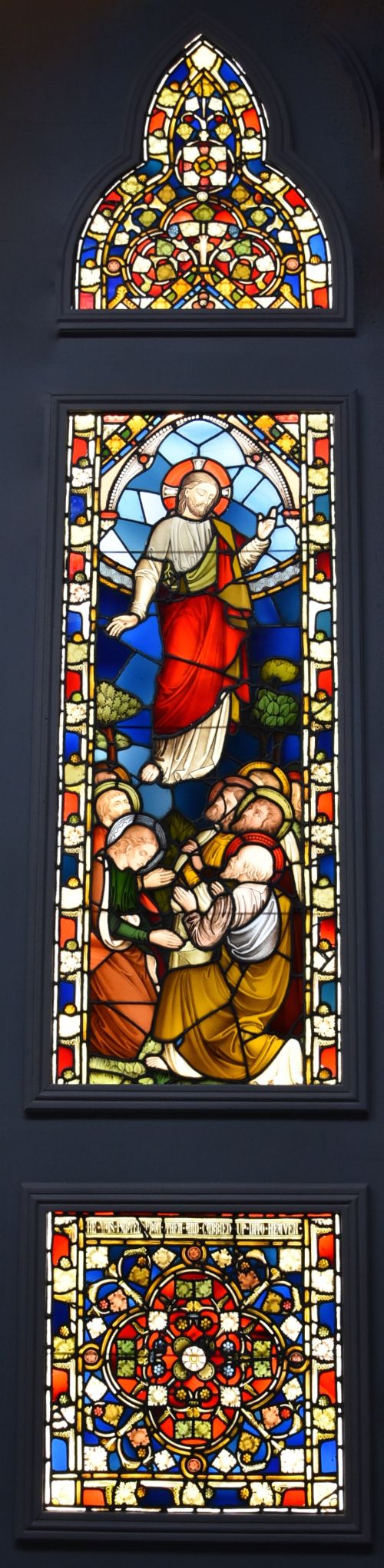


Multicoloured Glass Window
A multicoloured glass window brings brilliant hues and historic craftsmanship into a room, capturing daylight through leaded panels.
Multicoloured Glass Window
When you search for a multicoloured glass window, you encounter architectural pieces that transform interiors through coloured light and intricate designs. The selection spans periods from the nineteenth century into the twentieth, encompassing Victorian, Edwardian, Gothic Revival, Art Nouveau, and Arts and Crafts styles.
Most examples you meet on this page take the form of stained glass panels, architectural glass, and large windows set within timber or pine wood frames. These range from substantial triptychs and two-section panels to detailed windows featuring hand-painted countryside scenes and figural subjects.
Origins stretch from church settings to domestic residences, capturing decorative aesthetics from the eighteen-sixties through the nineteen-twenties. Buyers find both monumental church panels and domestic transoms, each offering a distinct window into past decorative tastes.
How they were made
The construction relies on assembling individual pieces of coloured and stained glass held firmly together within flexible lead cames. Artisans often applied hand-painted details directly onto the glass surface, depicting scenes of countryside landscapes, knights in armour, and birds in flight before firing the pigments.
Support structures typically involve robust timber, pine wood, or heavy wooden frames designed to bear the considerable weight of leaded glass panels. Large-scale works, including triptychs and multi-section formats, required sturdy framing to maintain structural integrity across architectural installations.
Listings feature pieces spanning from the mid nineteenth century through to nineteen-twenty, utilising lead, glass, timber, and pine wood.
What varies in quality
The sophistication of the painted details and the complexity of the glass composition distinguish finer examples from simpler domestic panes. Hand-painted figural work, such as detailed knights in armour or intricate countryside scenes, demands a higher level of artistic execution than purely geometric or border-led designs.
The scale and ambition of the glazing, from expansive multi-section church windows to compact domestic panels, dictate the visual impact within a space. Preservation of the original leadwork and timber framing also influences the overall character and integrity of the piece.
The Multicoloured Glass Window Glossary
- Stained glass
- Glass that has been coloured during its manufacture by the addition of metallic oxides. This material forms the vibrant translucent panels seen in historic windows.
- Leaded glass
- Individual panes of glass joined together by lead cames into decorative patterns. The network of lead lines provides both structural support and artistic definition.
- Came
- A slender channel of lead used to hold pieces of glass together in a window. These pliable strips are soldered at the joints to form a rigid matrix.
- Triptych
- A work divided into three sections or panels hinged or displayed together. Large architectural examples often utilise this format for balanced pictorial narration.
- Gothic Revival
- An architectural and decorative style drawing inspiration from medieval design. Pieces from this movement frequently incorporate pointed arches and ecclesiastical motifs.
Multicoloured Glass Window: Frequently Asked Questions
How do I hang a heavy glass window?
These architectural panels require secure load-bearing brackets and professional installation to support the combined weight of the glass, lead, and timber frame.
Fixing the wooden frame directly into structural wall studs ensures the glass remains stable and safe from accidental knocks.
Can these windows be fitted into modern walls?
Many buyers choose to mount panels as interior wall art or suspend them in front of existing windows using sturdy hanging chains.
This approach allows natural daylight to illuminate the colours without requiring structural alterations to exterior masonry.
What styles are available?
The selection includes Gothic Revival, Edwardian, Art Nouveau, and Arts and Crafts aesthetics, spanning the nineteenth and twentieth centuries.
Designs range from ecclesiastical triptychs to domestic panels featuring painted countryside scenes and birds.
How do I clean historic glass?
Gentle dusting with a soft, dry cloth is recommended to protect delicate painted surfaces and aged lead cames from unnecessary wear.
Avoid harsh chemical cleaners that might damage hand-painted pigments or weaken the historic materials.