



Moreau Bronze Statue
These moreau bronze statue pieces capture the elegance of nineteenth-century French sculpture through classical figures, maidens, and mythological subjects.
Moreau Bronze Statue
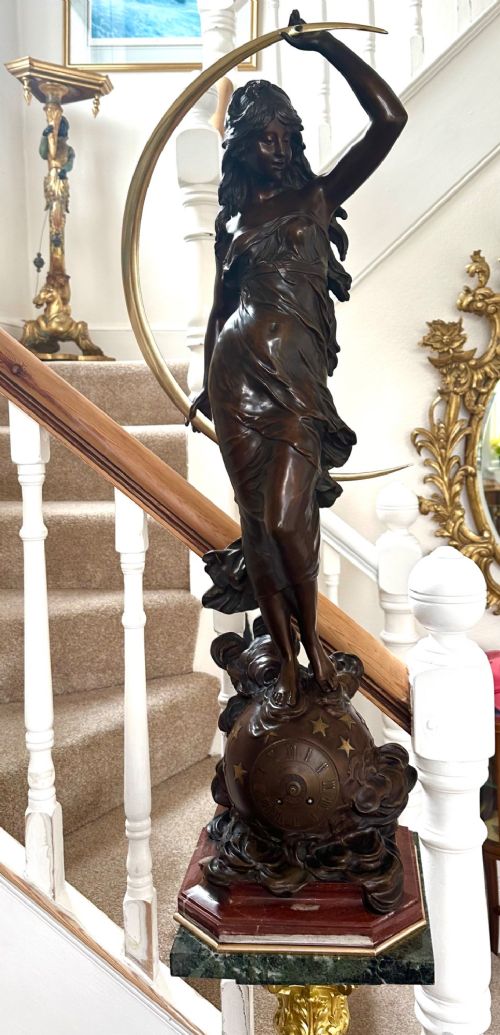
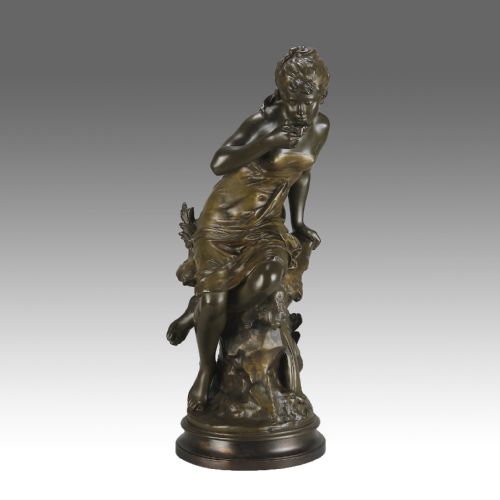
When you search for a moreau bronze statue, you encounter sculptural works originating from nineteenth-century France, often associated with the renowned Moreau family of artists. The pieces available here encompass figures of maidens, mythological characters such as Cupid and Selene, and figural table lamps.
The most common examples on this page date from the nineteenth century, spanning Victorian and Art Nouveau styles. These works frequently depict classical or romantic themes, including young maidens, flute players, and allegorical representations like Aurora or the spring.
Factors of quality
Quality in these sculptures rests upon the crispness of the casting and the sensitivity of the chasing work on the metal surface. Finer examples retain sharp details in facial expressions, drapery, and hair, whereas lesser pieces can exhibit softer contours.
The distinction also lies in the choice of base materials, such as solid marble versus simpler mounts, and the depth and richness of the patina applied to the bronze or metal.
Listings incorporate nineteenth-century French foundry works utilising bronze, patinated metal, spelter, and marble.
Auguste Moreau·Mathurin Moreau·Louis Auguste Moreau·H Moreau
The Moreau Bronze Statue Glossary
- Patinated bronze
- Bronze treated with chemical solutions to produce a specific surface colour and tone. This finish protects the metal and enhances the sculptural details.
- Spelter
- A zinc alloy frequently utilised in nineteenth-century French manufacturing as a substitute for bronze. It accepts finishes that mimic bronze closely.
- Art Nouveau
- An international style of art and architecture prevalent around the turn of the twentieth century. It is characterised by organic, flowing lines inspired by natural forms.
- Neoclassical
- A Western cultural movement drawing inspiration from the art and culture of classical antiquity. It appears in subjects depicting Roman and Greek figures and motifs.
- Gilt bronze
- Metal coated with a thin layer of gold using mercury amalgamation or electrochemical methods. This technique creates a bright, reflective surface.
Moreau Bronze Statue: Frequently Asked Questions
Who was Moreau?
The Moreau name refers to a prominent family of French sculptors active during the nineteenth and early twentieth centuries, including Auguste, Mathurin, and Louis Auguste Moreau. They produced numerous figural works exhibited at the Paris Salon.
Their subjects ranged from classical deities and allegorical figures to everyday pastoral scenes, executed in bronze and spelter.
How do I spot spelter?
Spelter is a zinc-based alloy that is lighter and softer than true bronze, often revealing a greyish metal beneath worn areas of patination. It was widely used for decorative figures during the nineteenth century.
Examining the underside or areas of friction can help distinguish the lighter alloy from heavier bronze castings.
Are these figures signed?
Many pieces bear the signature of a Moreau family member inscribed directly into the metal base during casting. Signatures typically appear as cast lettering rather than modern engravings.
Some works are marked as after a Moreau model, indicating reproduction or posthumous casting by foundries.
How should I clean bronze?
Maintenance requires only gentle dusting with a soft, dry cloth to prevent the accumulation of dirt on the patinated surface. Avoid chemical cleaners, polishes, or water, which can damage the original finish.
Preserving the stable patina protects the metal and maintains the historical integrity of the piece.