



Moorland Landscape Art
Moorland landscape art captures wild terrain through oils and watercolours, offering buyers evocative glimpses of British uplands.
Moorland Landscape Art
Moorland landscape art encompasses paintings depicting upland terrain, ranging from expansive Devon and Yorkshire expanses to Scottish highlands. These works capture atmospheric conditions through oil on canvas, oil on wood panel, and watercolour.
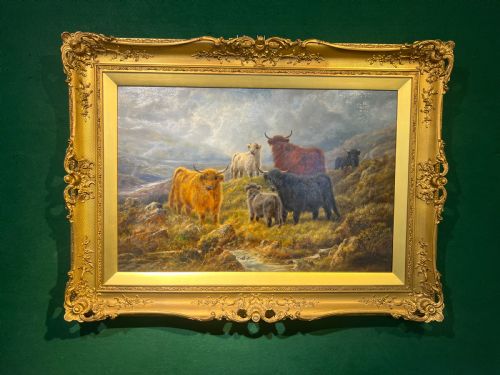
Victorian and Edwardian examples predominate this selection, often highlighting figures, sheep, deer, or sporting dogs within the scenery. Works span traditional oil paintings to delicate watercolours framed under glass.
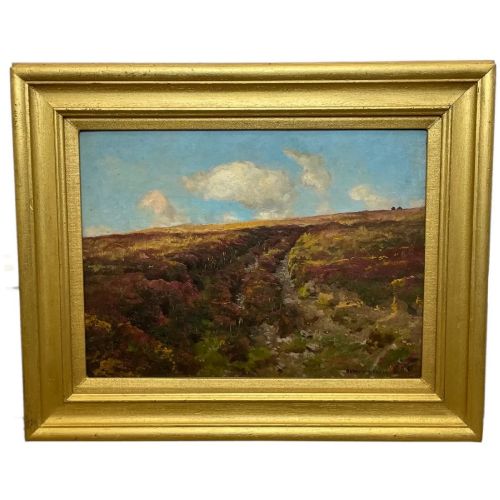
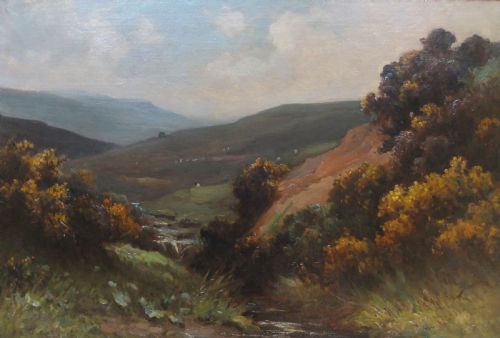
Regional scenes focus on specific British locales such as Exmoor, Dartmoor, and Danby Moor. Artists render these wild environments using palettes reflecting heather, peat, and open skies.
Materials and Techniques
Artists apply oil paint directly onto canvas, wood panels, or board to build rich textures across open terrain. Watercolours on paper utilise fluid washes to capture shifting light and weather over upland expanses.
Pastel and gouache occasionally supplement standard painting mediums, introducing opaque highlights and soft colour transitions. Gilt framing often encloses these works, protecting the paper or canvas surface behind glass where appropriate.
Several sheep and sporting dogs make persistent appearances, quietly supervising the entire expanse of British moorland.
Judging Quality
Handling of atmospheric light and weather distinguishes finer compositions from standard topographical records. Brushwork confidence in rendering open skies and rugged terrain separates superior paintings.
Provenance and artist reputation elevate specific pieces, particularly when signed by established British Impressionist or Scottish School painters. The preservation of the original paper, canvas, and panel integrity maintains the visual impact.
Tom Campbell·Arthur Wardle·Joseph Knight·Charles Walter Simpson·Owen Bowen·James Orrock·John A Houston·Florence Hess·Colin Graeme Roe·Joseph Farquharson·Edmund Morris Wimperis·Ernest Higgins Rigg·Arthur H Enock·Frederick Richard Lee·Charles James Adams·Rowland Henry Hill·Robert Cleminson·Alfred Graham·W H Dyer
The Moorland Landscape Art Glossary
- Oil on canvas
- Pigment suspended in drying oil applied to stretched fabric. This medium allows for deep layering and textured brushwork.
- Watercolour
- Pigment ground in a water-soluble binder applied to paper. It creates translucent washes suited to damp moorland skies.
- Wood panel
- A rigid wooden support used instead of canvas. Painters often applied oils directly to this firm base during the period.
- Gilt frame
- A wooden moulding covered with gold leaf or metallic paint. It provides a decorative border that isolates the painting from its surroundings.
- British Impressionism
- A painting style focusing on light and everyday subjects. Artists working in this manner recorded transient weather effects outdoors.
Moorland Landscape Art: Frequently Asked Questions
What periods do these paintings date from?
Pieces span from the Victorian era through the early twentieth century, with notable examples from the 1880s to the 1930s. Artists working during these decades recorded traditional British rural scenes.
Styles shift gradually from detailed Victorian fine art towards looser British Impressionist interpretations of upland weather.
Are these works painted outdoors?
Many artists sketched upland views on location before completing larger oils or watercolours in the studio. Pastels and watercolours captured rapid shifts in moorland light directly from nature.
Studio finishing ensured durable surfaces on canvas, board, or wood panels suitable for domestic display.
How should I frame a watercolour?
Watercolours require framing under glass with acid-free mounts to protect the paper from humidity and fading. Original gilt frames often complement these works if structural stability remains intact.
Keep watercolours away from direct sunlight to preserve the original pigment tones over time.
What subjects typically appear in these scenes?
Compositions frequently feature grazing sheep, red deer, sporting dogs, and figures traversing remote tracks. The landscape itself remains the primary focus, dominated by heather, streams, and wide skies.
Regional details identify specific locations across Dartmoor, Exmoor, and the Scottish Highlands.