



Gilt Slip Frame Painting
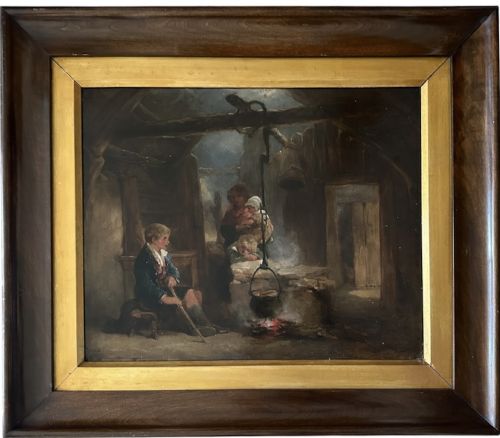
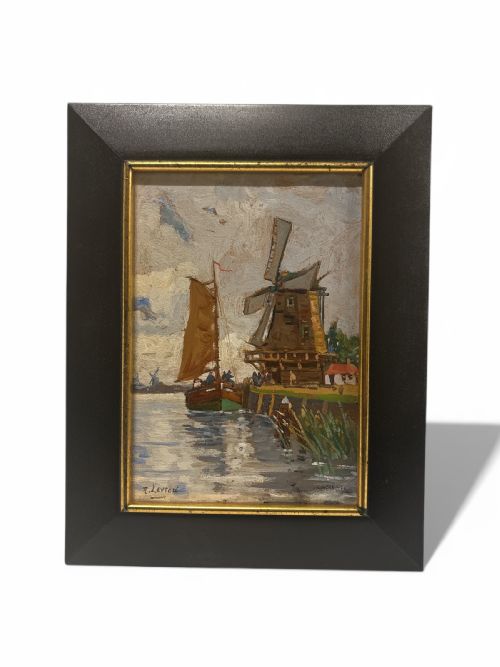
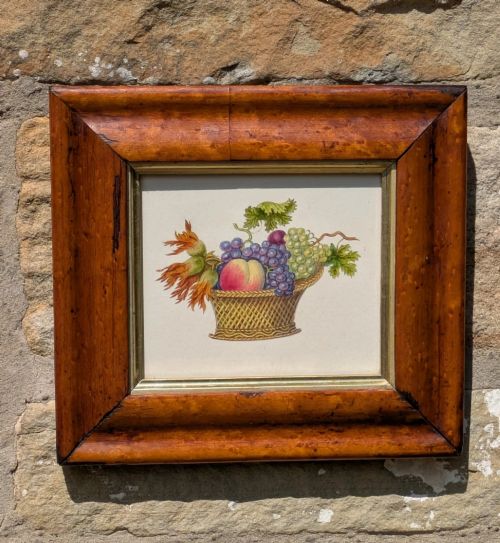
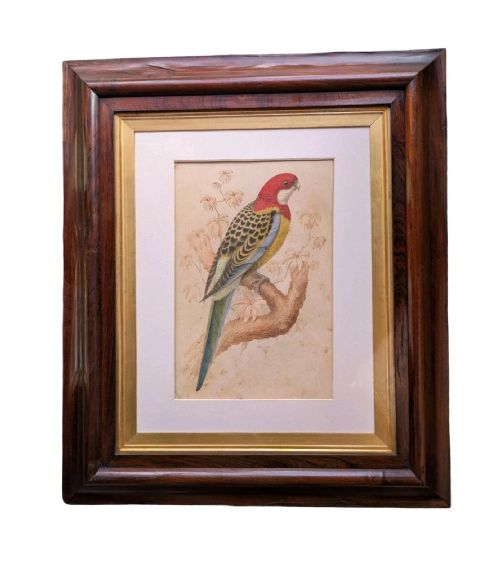
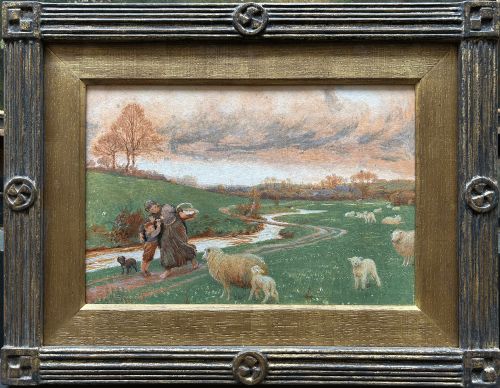
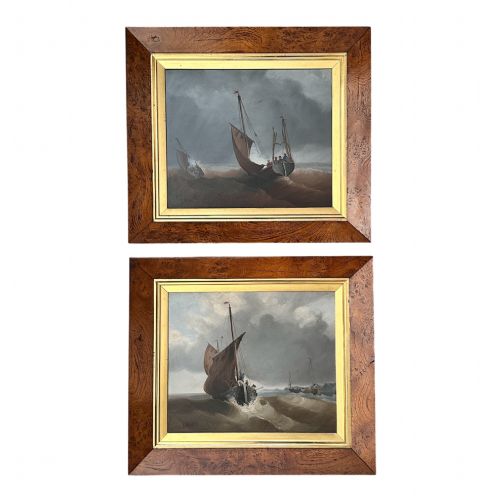
These gilt slip frame paintings bring together period oils, watercolours and silhouettes set within distinctive narrow internal mouldings.
Gilt Slip Frame Painting
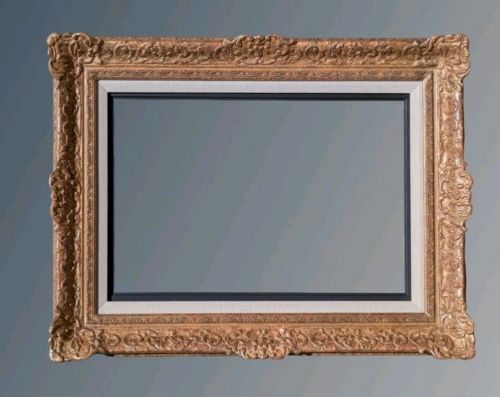
A gilt slip frame painting combines a traditional artwork with a narrow, often gold-leafed internal liner that sits between the canvas or paper and the main outer moulding. You encounter these works across the eighteenth, nineteenth, and early twentieth centuries, spanning oil on canvas, watercolour, and portrait miniatures.
The selections on this page showcase varied forms including portraits, maritime scenes, landscapes, and still life studies. They range from Regency watercolours and Georgian silhouettes to Edwardian canvases and Victorian genre pieces.
How they were made
Makers constructed these pieces using wood supports, canvas, and paper, applying oil and watercolour pigments to build up the imagery. Outer frames incorporate materials such as gilt wood and rosewood, while the internal slip is typically finished in gold leaf.
Artists painted directly onto panels, stretched canvas, and paper sheets, which were then housed beneath glass where watercolours or miniatures required protection.
Rosella parrots and Highland cattle gaze out from these walls alongside stern Georgian gentlemen and gentlefolk.
What varies in quality
Quality rests in the handling of the painted surface, from the precision in portrait miniatures and natural history studies to the confident brushwork found in maritime and landscape oils. Finer examples demonstrate deliberate control over pigment and composition.
The integrity of the framing materials also distinguishes the work. Superior pieces retain original gilding on the slip and matching primary mouldings that complement the scale of the artwork.
George Whitton Johnstone·John Moore of Ipswich·Gustave De Bréanski·Edwin Hughes·John Ferneley Jnr
The Gilt Slip Frame Painting Glossary
- Slip
- A narrow internal frame liner, frequently gilded, positioned between the artwork and the primary outer moulding. It provides a visual transition and depth to the framed presentation.
- Gilt Wood
- Wood that has been coated with a thin layer of gold leaf or metallic powder. This finish catches the light and frames the pictorial subject.
- Watercolour
- A painting method where fine pigments are suspended in a water-soluble binder and applied to paper. It yields translucent tones often seen in nineteenth-century landscapes and portraits.
- Silhouette
- A profile portrait cut from dark paper or painted directly onto a light background. These are typically mounted in contrasting frames such as rosewood or ebonised wood.
- Reverse Glass Engraving
- An image printed or engraved on the reverse side of a glass panel and subsequently hand-coloured. This technique was practiced during the Regency period.
Gilt Slip Frame Painting: Frequently Asked Questions
What is a gilt slip?
A gilt slip is the narrow inner border, usually covered in gold leaf, that sits directly against the edge of a painting or its mount.
It acts as a visual buffer between the artwork and the main outer frame moulding.
How do I date these paintings?
Dating relies on stylistic clues in the clothing, the painting technique, and the construction methods of the frame and stretcher.
Material choices like rosewood frames or ebonised surrounds also point to specific periods such as the Georgian or Regency eras.
Are watercolours framed differently from oils?
Watercolours and miniatures generally require glass protection to shield the paper and pigments from atmospheric moisture and dust.
Oils on canvas or board are typically left unglazed to allow the textured surface of the paint to remain visible.
Where should I hang these works?
These framed pieces suit traditional domestic settings, studies, and hallways where smaller paintings and portraits can be viewed closely.
Keep them away from direct sunlight and damp environments to protect the paper, canvas, and gilded surfaces.