
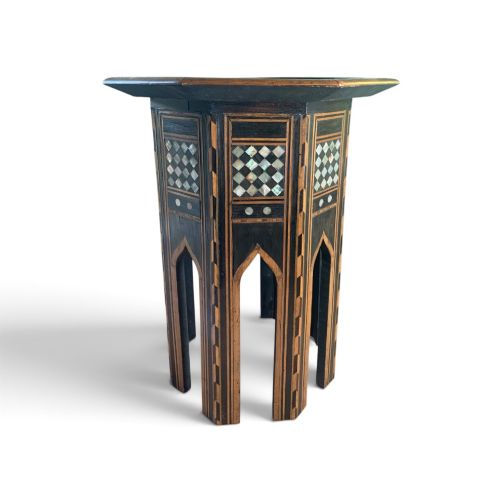
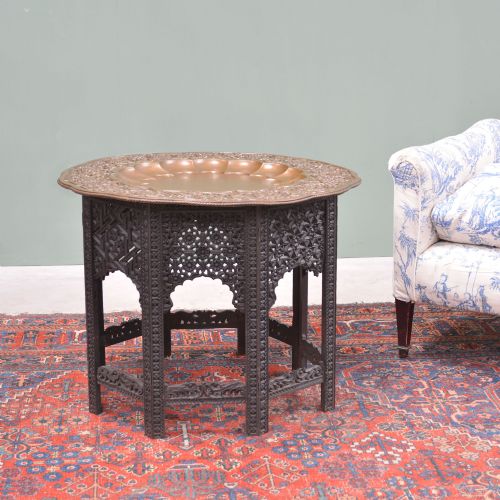
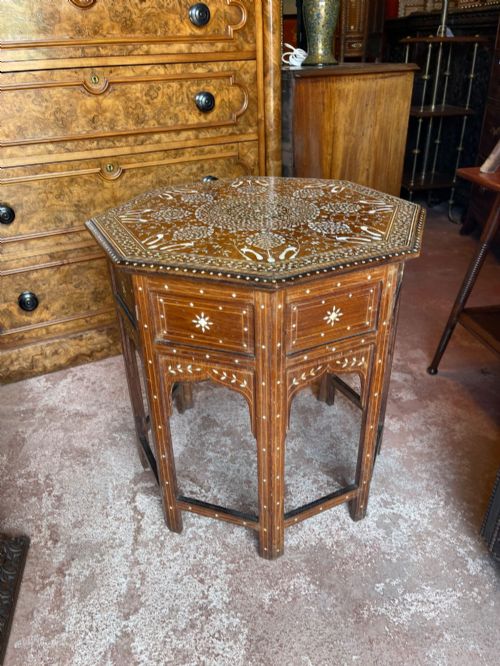
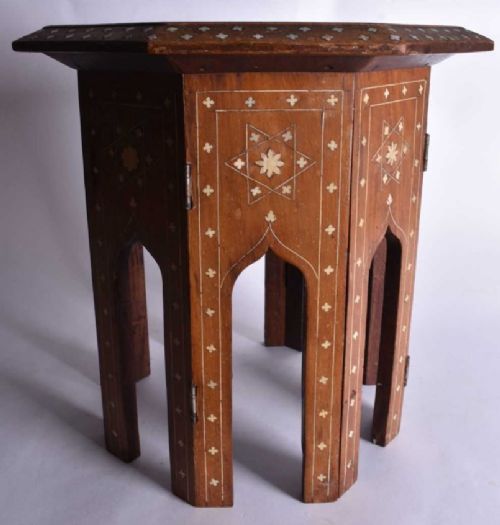



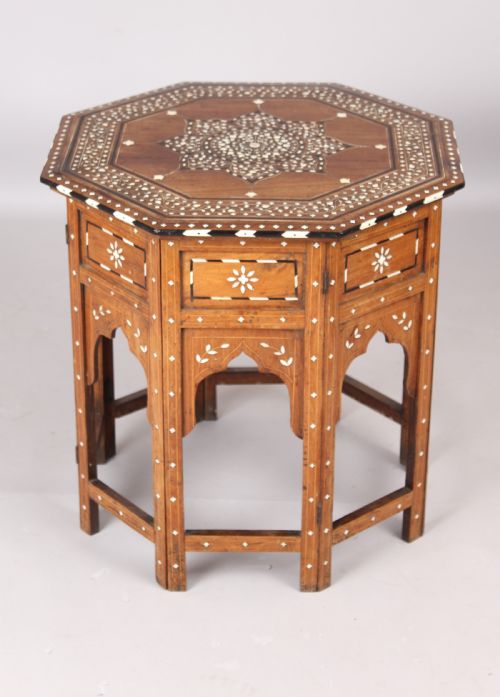

Moorish Style Side Table
These moorish style side table examples bring intricate geometric inlay and rich timbers into a room, offering both history and utility.
What they are
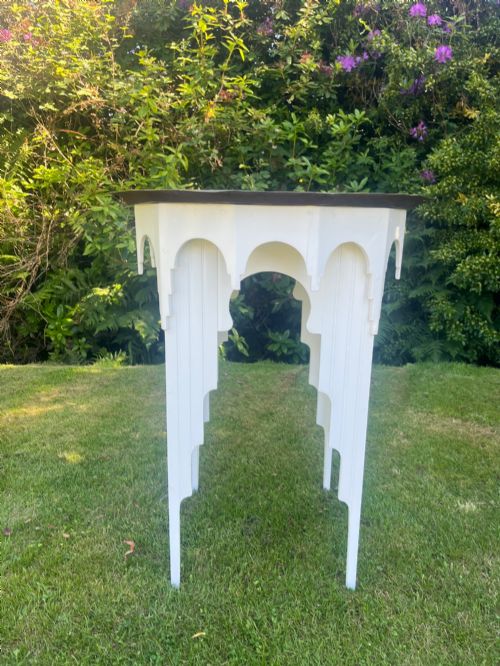
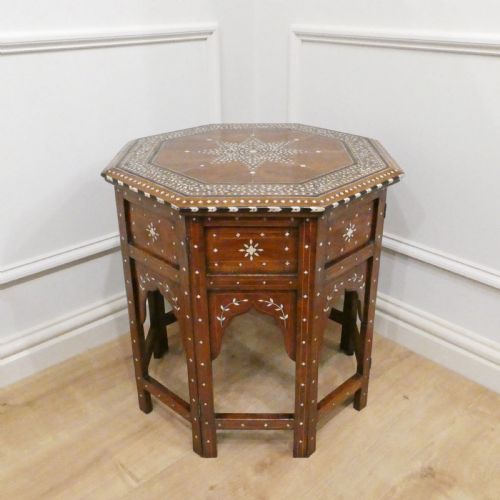
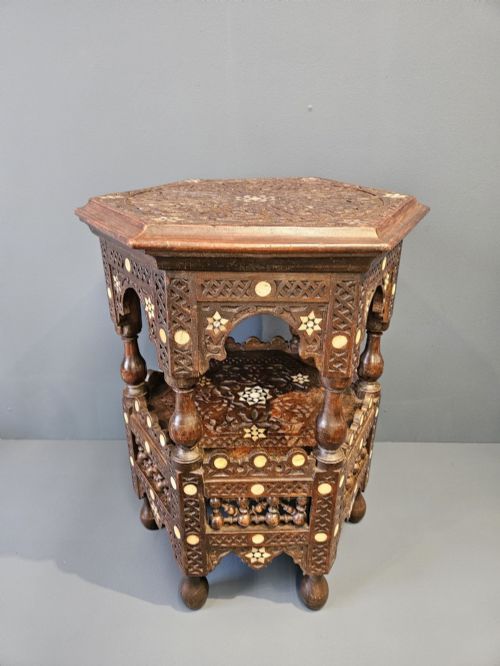
A moorish style side table draws on influences spanning Anglo-Indian Hoshiarpur traditions, Arts and Crafts experiments, and avant-garde continental design. These occasional tables and side tables appear across periods such as nineteen hundred and nineteen thirty.
The versions most commonly met here combine exotic hardwoods with intricate metalwork or contrasting inlay. They function as versatile surface pieces that reflect international design revivals at the turn of the twentieth century.
How they were made
Maker workshops utilised dense timbers including teak, rosewood, walnut, yew wood, and ebonised wood to build sturdy frames. These dark woods provided a stable canvas for complex surface decoration.
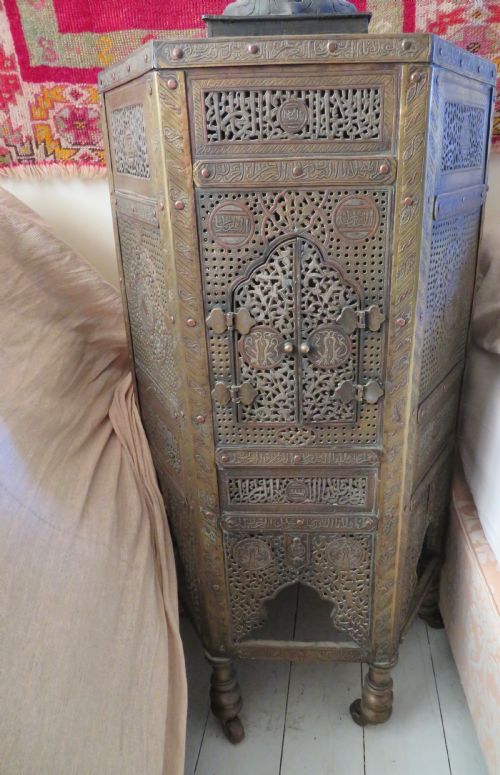
Artisans hammered brass, copper, and pewter into intricate patterns, or stretched vellum across panels. Metal wire and sheet were meticulously inlaid into carved recesses within the wood.
Listings feature woods including teak, rosewood, walnut, yew wood, and ebonised wood, alongside metal inlays of brass, copper, and pewter.
What varies in quality
The standard of a moorish style side table rests on the precision of its joinery and the complexity of its surface decoration. Finely executed brass wire inlay and deeply carved woodwork distinguish superior examples from simpler production pieces.
Attribution to notable makers or specific design movements elevates certain pieces above standard vernacular furniture. The integrity of the original materials, such as intact vellum or undamaged metal inlays, defines the upper tier.
Carlo Bugatti·Liberty and Co
The Moorish Style Side Table Glossary
- Ebonised wood
- Timber treated with a dark stain or finish to imitate ebony. This technique was popular in avant-garde furniture design.
- Hoshiarpur
- A town in northern India renowned for intricate woodwork and inlay traditions. Pieces from this region often feature dense floral and geometric carving.
- Vellum
- Prepared animal skin stretched over furniture panels. It provides a smooth, pale surface that contrasts with dark timber frames.
- Inlay
- A technique where pieces of contrasting material are embedded into recesses in a wooden base. Brass and copper are frequently used for this purpose.
Frequently Asked Questions
What is a moorish style side table?
These are small decorative tables inspired by Islamic and North African design traditions, reinterpreted by European and British makers around nineteen hundred.
They typically feature low profiles, geometric woodcarving, and metallic inlay intended for domestic display.
How were these tables used originally?
Homeowners placed them in reception rooms and parlours to hold lamps, small ornaments, or smoking accessories. Their portable nature allowed them to be moved easily around a room.
Today they serve similar functions as accent pieces beside seating.
What materials should I expect to find?
Construction relies heavily on hardwoods such as teak, rosewood, walnut, and ebonised wood. Surfaces are frequently embellished with brass, copper, pewter, or vellum.
These varied materials create strong contrasts of texture and colour.
How do I distinguish different periods?
Pieces from nineteen hundred often reflect Arts and Crafts or Anglo-Indian influences with hand-carved details and brass wire inlay. Examples from nineteen thirty show cleaner lines and alternative construction methods.
Examining the underside and joint construction helps determine the likely age.