



Moorish Revival Furniture
Moorish revival furniture brings intricate eastern geometry and rich inlay into western interiors, offering striking forms for those seeking decorative seating and tables.

Moorish Revival Furniture
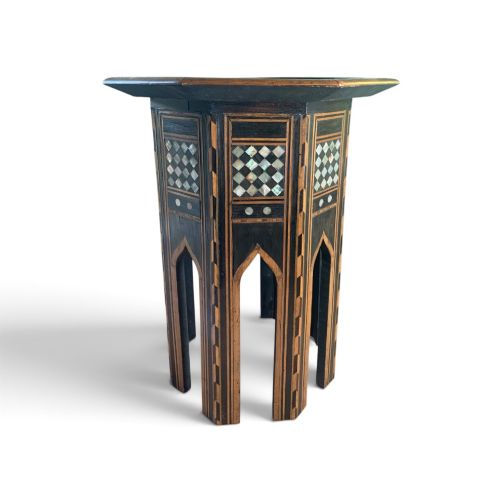
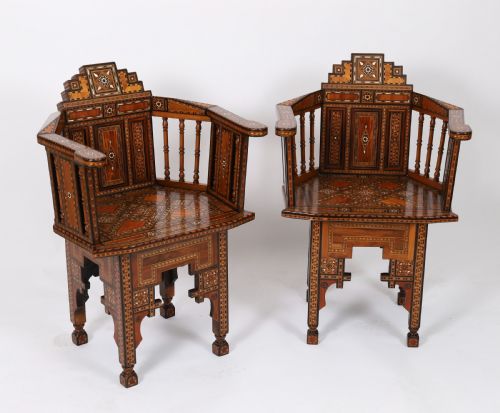
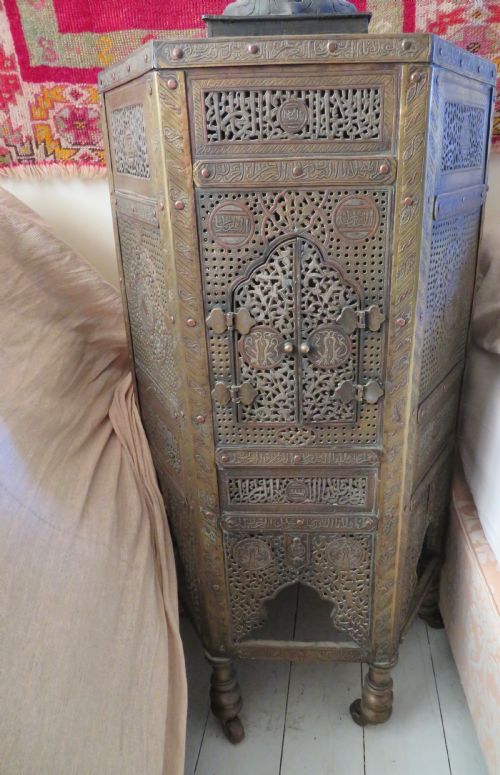
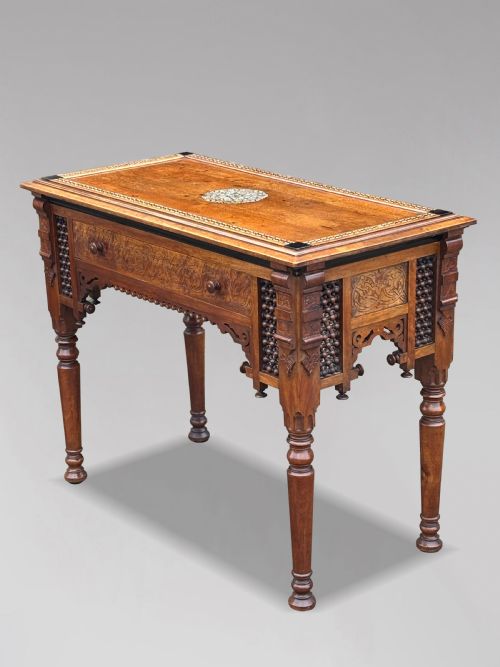
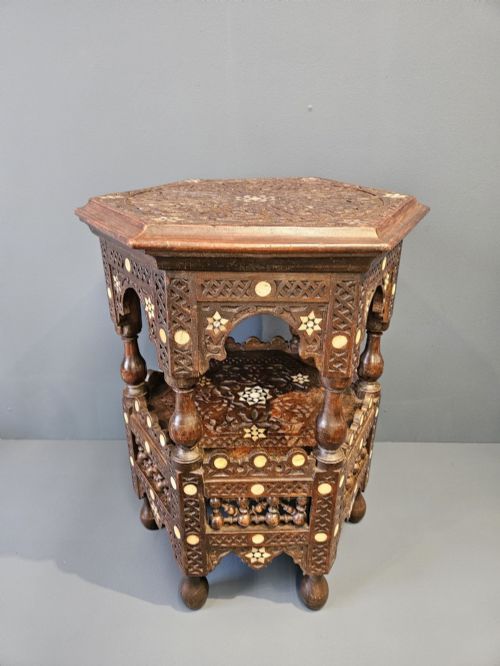
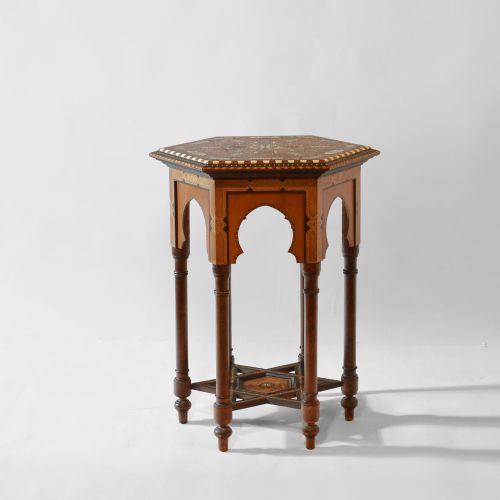
Moorish revival furniture encompasses heavily ornamented occasional pieces, seating and cabinets created during the nineteenth and early twentieth centuries under the influence of Islamic design. When exploring moorish revival furniture, buyers most frequently encounter hexagonal side tables, occasional tables and inlaid armchairs dating from the Victorian and Edwardian periods.
The selection ranges from Syrian and Levantine occasional tables to European interpretations by firms such as Liberty and Co. and makers like Adriano Brambilla. Forms span from folding chairs and window seats to cabinets and centre tables, reflecting diverse regional aesthetics including Mamluk and Aesthetic Movement influences.
Materials and construction
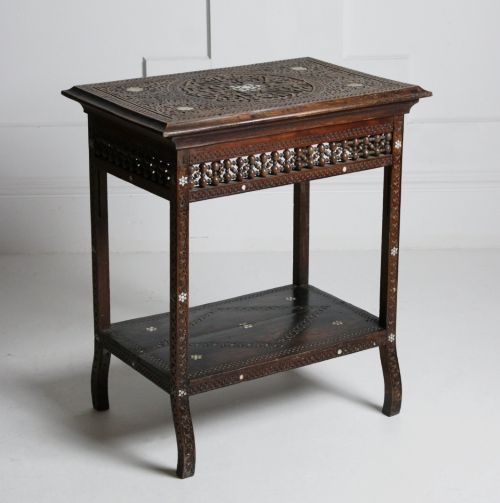
Construction relies upon dense hardwoods and ebonised wood often enriched with intricate parquetry and geometric marquetry. Artisans integrate delicate inlay elements including mother-of-pearl, bone, abalone and white metal to form complex star and polygon motifs.
Surface ornamentation extends to openwork carving, brass tray tops, and copper-inlaid brass details alongside painted finishes. Folding mechanisms and multi-tiered structures demonstrate advanced joinery tailored for portable or modular domestic use.
Secretaries and folding chairs prove that Victorian travellers loved exotic woodwork that could fold flat or hide a desk behind an eastern facade.
Assessing quality and execution
Quality rests upon the precision of the geometric inlay and the density of the decorative carving across wooden surfaces. Finer examples display tightly fitted bone, mother-of-pearl and metal tesserae with minimal filler and stable structural joinery.
The sophistication of the design execution separates standard production from exceptional studio or retailer output, particularly in pieces featuring complex pierced fretwork and multi-material combinations.
Liberty And Co·Adriano Brambilla
The Moorish Revival Furniture Glossary
- Parquetry
- Geometric mosaic woodwork formed by fitting small wooden veneers together to create repeating patterns. This technique defines the surface decoration of many tables and chairs.
- Kursi
- A traditional low hexagonal table or stool often utilised in Middle Eastern interiors. Examples frequently feature intricate metal inlay or openwork construction.
- Aesthetic Movement
- A late nineteenth-century design ethos prioritising visual beauty over narrative content. It heavily influenced British interpretations of eastern forms.
- Mamluk Revival
- A design style drawing directly upon the decorative arts of the Mamluk Sultanate. It manifests in elaborate geometric brass and inlaid woodwork.
Moorish Revival Furniture: Frequently Asked Questions
How do I identify genuine moorish revival furniture?
Authentic pieces rely upon period construction methods, traditional hardwood foundations, and authentic inlay materials such as bone and mother-of-pearl. Examine the structural joints and the regularity of the hand-cut geometric patterns.
European interpretations often combine eastern decorative motifs with western furniture forms like cabinets and armchairs. Comparison with documented pieces from makers and retailers helps confirm period provenance.
Where were these pieces used in the home?
These furnishings served as exotic accent pieces in Victorian and Edwardian drawing rooms, smoking rooms, and hallways. Occasional tables and tabourets held lamps or decorative objects.
Larger items like settees, window seats and cabinets created designated seating or display areas. Their portability allowed them to be repositioned easily within formal reception spaces.
How do I care for inlaid wood surfaces?
Maintain a stable indoor humidity to prevent the wood from shrinking and loosening the delicate bone or pearl inlay. Dust gently with a dry, soft cloth and avoid chemical polishes.
Protect the surfaces from direct sunlight and excessive heat sources that can dry out the adhesives used in complex parquetry. Professional conservation is recommended for loose tesserae.
What defines the Aesthetic Movement influence?
The Aesthetic Movement embraced exotic craftsmanship and integrated eastern design principles into British domestic interiors. It valued surface pattern and textural richness above strict historical revival.
Furniture from this crossover period frequently pairs traditional Moorish geometric inlay with contemporary European cabinet forms. This fusion created distinctive hybrid pieces for fashionable homes.