





Moorish Carved Coffee Table
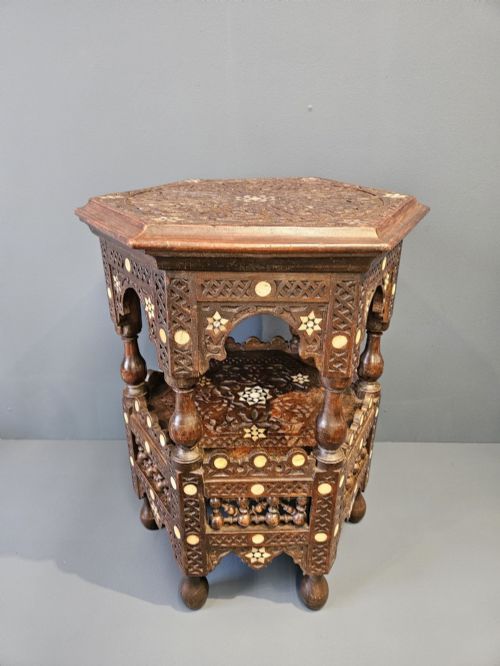
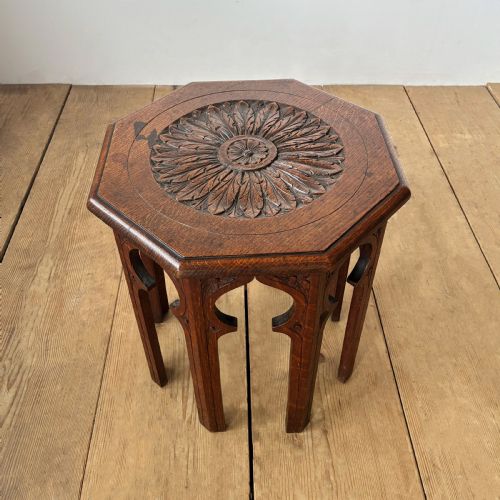
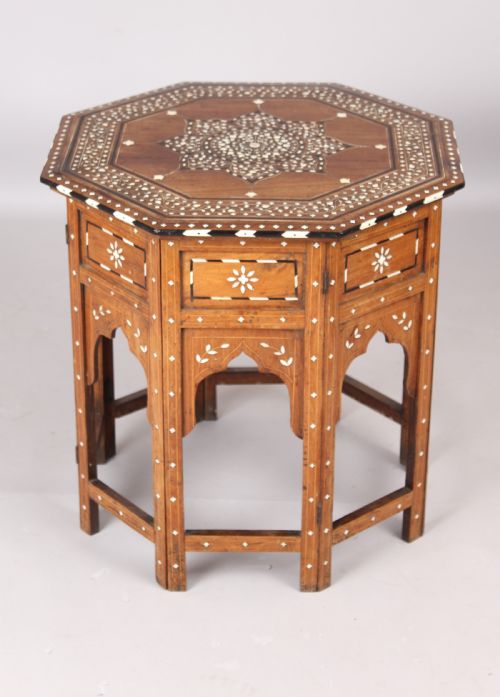
These moorish carved coffee table pieces bring intricate geometric design and rich inlay work directly into modern rooms.
Moorish Carved Coffee Table
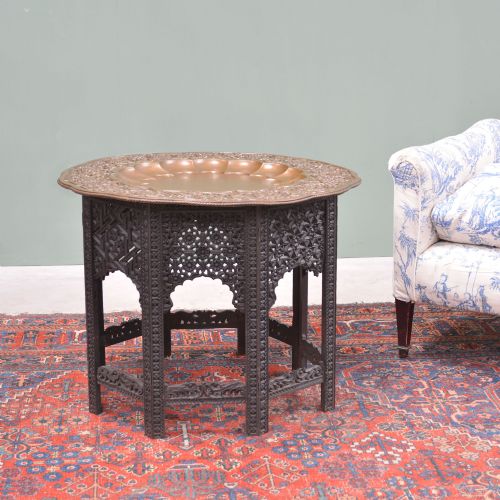
When you search for a moorish carved coffee table, you enter a diverse field of low occasional tables spanning the late nineteenth century and the early twentieth century. The examples on this page encompass side tables, lamp tables, tray tables, and folding tables drawing on Moorish Revival, Anglo-Indian, Ottoman, and Persian design traditions.
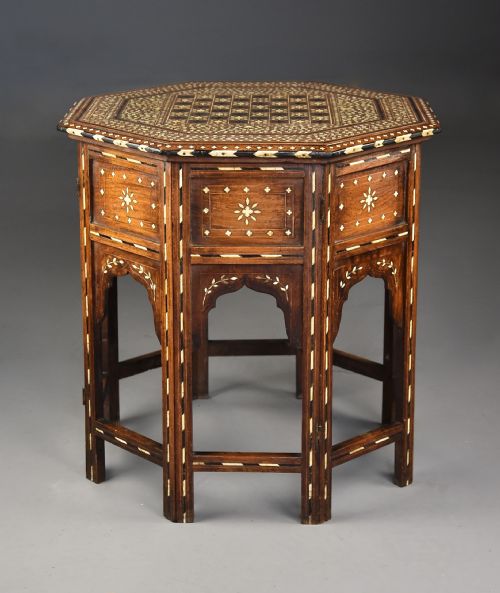
You are most likely to meet octagonal forms constructed for domestic use during the Victorian era and the decades immediately following. These pieces frequently display regional stylistic overlaps, including Syrian, Moroccan, North African, and Hoshiarpur influences.
The practical function of these tables remains as relevant today as it was in the past, serving well beside low seating or as centre pieces. Their varied origins mean that forms range from solid carved hardwoods to folding frame structures designed for portability.
How they were made
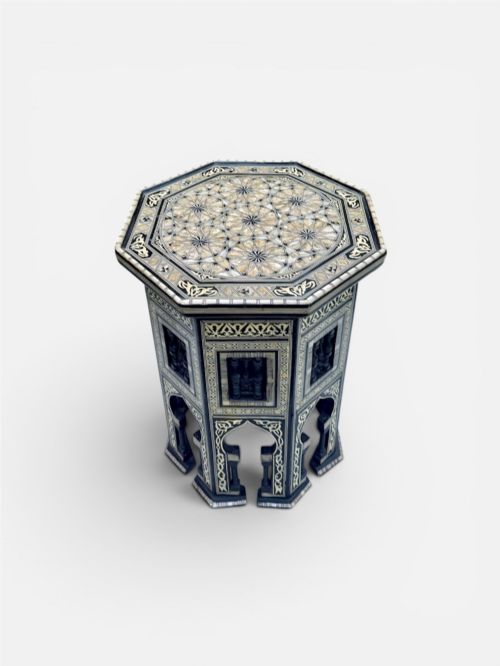
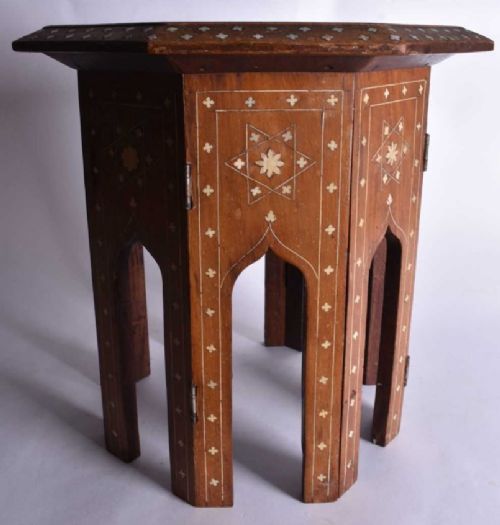
Makers constructed these tables using dense hardwoods such as teak and rosewood, carved entirely by hand with deep geometric and floral relief. Artisans then detailed these wooden surfaces with intricate inlays of bone, copper, brass, and mother-of-pearl.
Metal components also serve as primary surfaces, seen in heavy brass and copper trays mounted onto folding or static wooden bases. The precision of the joinery allows many of these tables to fold flat without the use of modern metal hinges.
Some tables arrive with their original brass tea service still intact, ready for a very historically grounded afternoon brew.
What varies in quality
The distinction between ordinary and exceptional work lies in the density and precision of the hand carving and inlay. Superior examples retain every tiny sliver of mother-of-pearl and bone without shrinkage gaps, showing crisp edges on every carved polygon.
Construction integrity separates casual production from master craftsmanship. Tables that remain rigid and balanced on their original frames without modern stabilization represent the higher tier of surviving examples.
Liberty & Co.
The Moorish Carved Coffee Table Glossary
- Moorish Revival
- An architectural and decorative style popular in the nineteenth century that reinterpreted traditional Islamic design elements. It draws heavily on North African, Spanish, and Middle Eastern motifs.
- Hoshiarpur
- A North Indian city renowned for intricate woodwork and inlay techniques. Artisans there specialised in densely patterned bone and brass inlay on teak and shesham wood.
- Octagonal
- Having eight sides. This geometry dominates the surfaces and footprints of many tables in this category, creating dynamic angles for light and shadow.
- Tray table
- A table featuring a removable upper tray resting on a collapsible or fixed base. This form descends from portable serving traditions in the Middle East.
- Inlay
- A technique where contrasting materials are set into recesses flush with the surrounding surface. Common inserts include mother-of-pearl, brass wire, and bone.
Moorish Carved Coffee Table: Frequently Asked Questions
How do I clean a carved wooden table?
Dust gently with a soft, dry brush to reach deep into the carved recesses without disturbing any delicate inlay.
Avoid liquid cleaners and excessive moisture, which can loosen aged bone or mother-of-pearl elements from the hardwood base.
Are these folding tables sturdy enough for daily use?
Many historical folding tables use interlocking wooden frames designed for traditional portability rather than heavy daily weight loads.
Treat them with care when moving them around a room, and check that the hinges or folding joints align properly before placing items on top.
How do I date a nineteenth century table?
Examine the materials used for the construction and inlay, noting the presence of hand-cut brass, bone, or natural mother-of-pearl. Tool marks left by hand chisels and the natural patina of the wood offer reliable clues to the manufacturing period.
What is the difference between Anglo-Indian and Moorish styles?
Anglo-Indian pieces typically reflect British colonial commissioning of traditional Indian Hoshiarpur woodworking techniques and dense overall carving. Moorish Revival focuses more specifically on North African and Middle Eastern geometric arches, strapwork, and metal tray tops.