
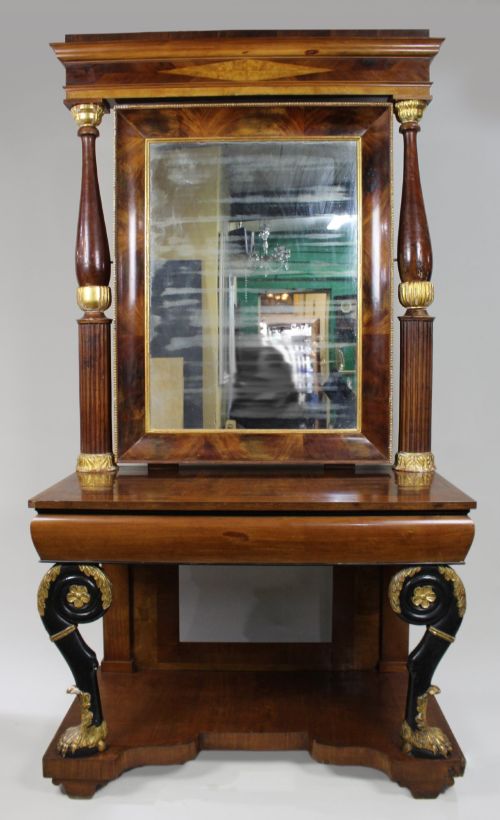
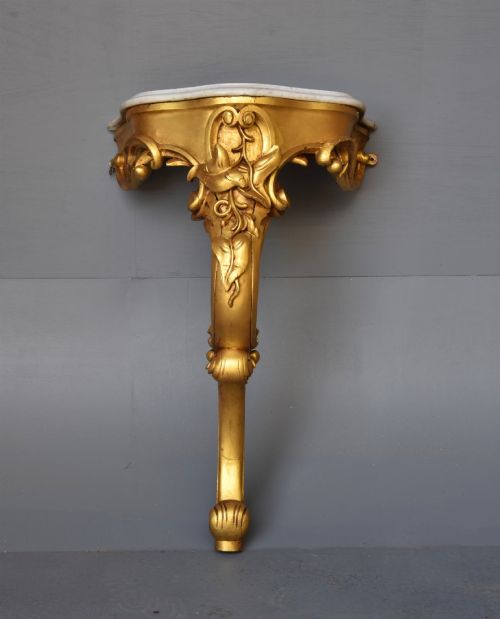
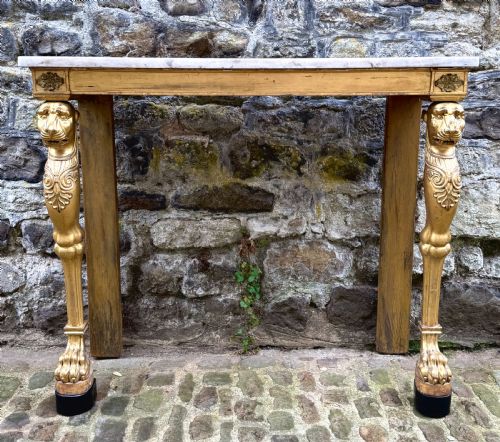
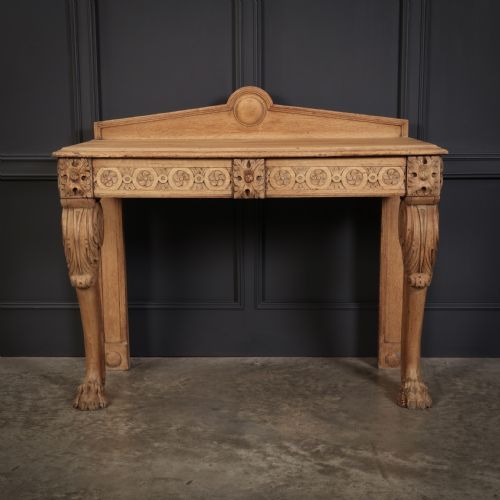


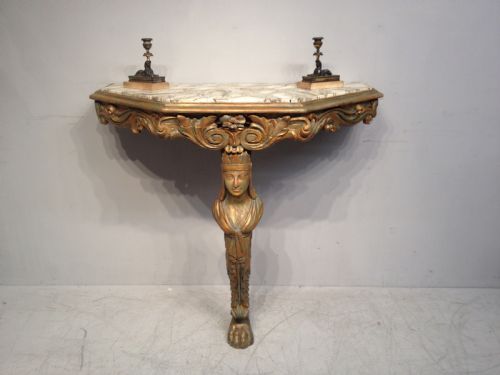
Monopodia Console Table
These monopodia console table pieces bring sculptural animal-leg supports and marble or timber tops into your hall or drawing room.
Monopodia Console Table
A monopodia console table brings classical animal-leg supports, such as lion or sphinx motifs, directly beneath a pier or wall-mounted marble or timber top. You will most frequently meet pieces from the nineteenth century, including Regency, Irish Regency, and William IV periods, alongside later revivals from eighteen ninety.
The form spans serving tables and console tables, with occasional related chiffonier forms appearing in the record. These heavy architectural pieces were traditionally designed to anchor the wall of a formal reception room or dining space.
Makers and workshops of the nineteenth century utilised carved mahogany, giltwood, painted wood, and gesso to execute these sculptural designs. Surviving examples demonstrate how classical revival aesthetics dominated this furniture type across both English and Irish workshops.
Materials and construction methods
Makers constructed the primary frames of these tables using dense timbers such as mahogany and oak, often finished with carved details or gesso and giltwood layers. Giltwood surfaces required skilled application of gold leaf over prepared grounds on carved wood bases.
Heavy marble tops rest upon the wooden friezes and console structures, providing a cool, durable surface that balances the substantial carved supports below. Brass fittings and mounts occasionally accent the timber framework on Regency and William IV pieces.
Several tables rely on fierce carved animal paws to hold up their heavy marble tops, ensuring your tea service rests on literal beasts.
Judging quality in monopodia console tables
The crispness and depth of the carved animal monopodia supports dictate the aesthetic success of the piece, separating fluid hand-carved work from softer execution. Timber selection matters immensely, with figured mahogany and finely preserved giltwood or original painted surfaces commanding greater visual presence.
Integration between the heavy top, whether marble or timber, and the structural base reveals the original maker's joinery skill and structural ambition. Surfaces retaining their original gilding or authentic painted finish hold superior character compared to later overpainting.
The Monopodia Console Table Glossary
- Monopodia
- A single support or leg terminating in an animal paw, head, or wing, derived from classical antiquity. These sculptural elements form the primary structural and decorative focal point of the table base.
- Console table
- A table designed to be fixed against a wall, typically supported by ornamental brackets or front legs rather than four independent legs. They often feature flat backs to sit flush against interior plasterwork.
- Giltwood
- Wood that has been coated with gold leaf or gold dust. This decorative surface treatment requires careful conservation to preserve the delicate metallic layer over centuries.
- Gesso
- A plaster mixture used as a smooth base for painting or gilding on wood. It provides the crisp ground necessary for intricate low-relief ornamentation before applying gold leaf.
- Breakfronted
- A piece of furniture whose front projects forward in sections, creating architectural rhythm. This treatment is often seen on larger serving tables and chiffoniers.
Monopodia Console Table: Frequently Asked Questions
Where should I place a monopodia console table?
These tables suit hallways, drawing rooms, or dining spaces where they sit flat against a wall as a focal point. Their architectural character demands a prominent wall space without crowding.
Because many feature marble tops and heavy timber frames, ensure the floor is level and the wall allows secure placement if stabilization brackets are needed.
What defines the Regency style in these tables?
Regency pieces draw heavily on Neoclassical and Greco-Roman antiquity, featuring bold animal monopodia, carved giltwood, and rich mahogany timbers. The aesthetic emphasises symmetry, architectural gravity, and classical motifs.
Proportions during this period are typically robust, designed to anchor large formal rooms with substantial marble or timber serving surfaces.
Are Irish Regency tables different from English examples?
Irish Regency pieces often display particularly bold carving and distinct regional timber handling, reflecting the output of prominent Dublin workshops like Mack Williams and Gibton. They share the classical vocabulary of their English counterparts but frequently possess a heavier, more sculptural presence.
Connoisseurs look for specific cabinetmaking traits and documented workshop signatures to distinguish Irish provincial and Dublin-made furniture.