
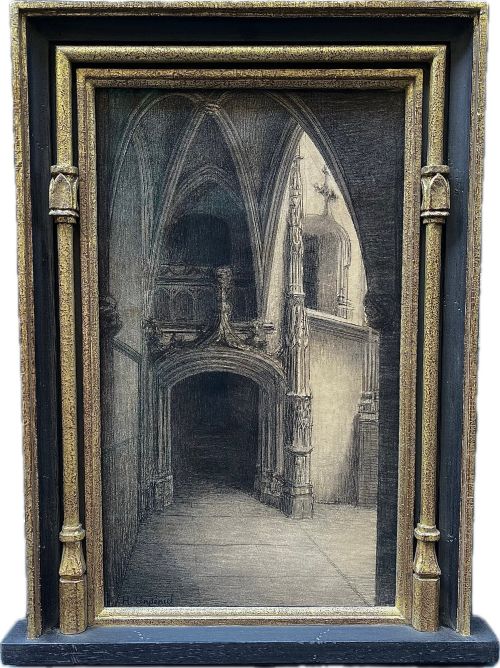
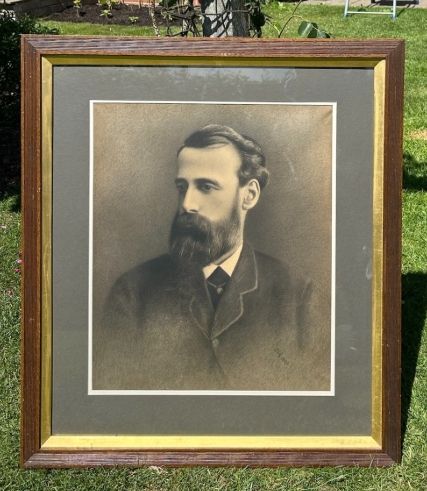
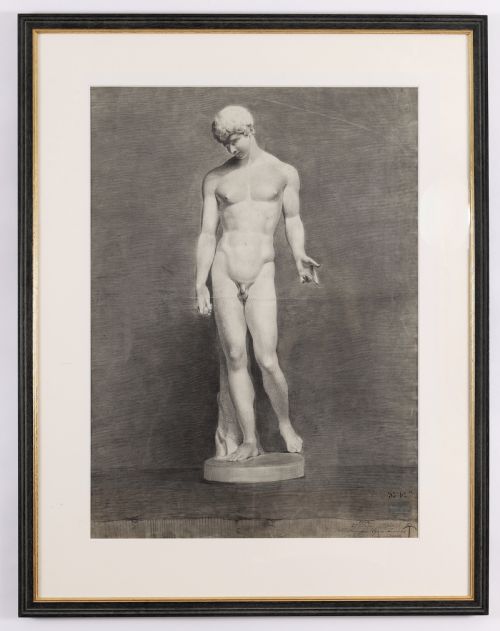


Monochrome Charcoal Sketch
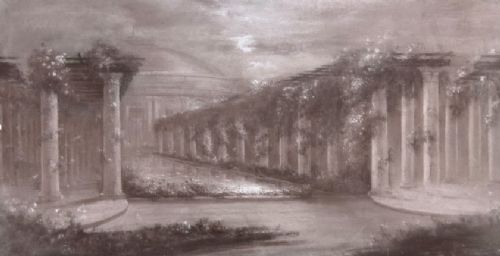
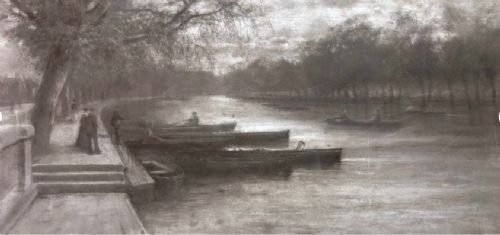
When you search for a monochrome charcoal sketch, you encounter original works spanning the eighteenth to the twentieth centuries, prized for their tonal depth and direct draftsmanship.
Monochrome Charcoal Sketch
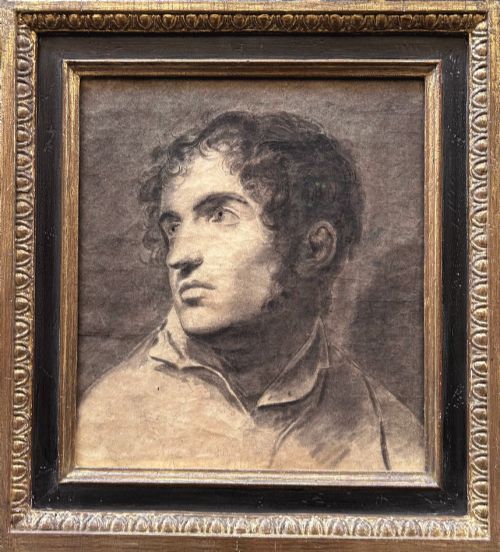
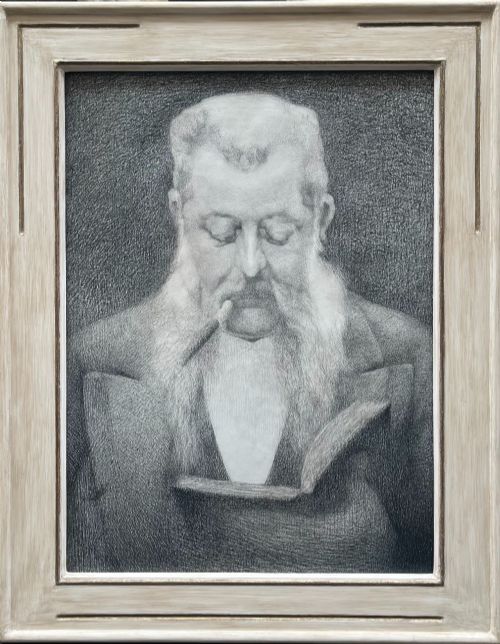
A monochrome charcoal sketch captures subjects ranging from academic life studies and French landscapes to intimate portraiture across various historical periods. The selections available here frequently include nineteenth-century portraits and early twentieth-century views rendered entirely in shades of black, grey, and white.
Buyers encounter framing formats that preserve fragile surfaces behind glass within wooden or giltwood surrounds. These works operate as direct records of an artist's hand, utilising paper supports that often display the age and texture characteristic of historic studio pieces.
Materials and Working Methods
Artists executed these works primarily on paper supports, sometimes utilising canvas stretchers, employing compressed or vine charcoal alongside graphite, chalk, and pencil to build rich tonal gradations. These drawing implements allowed creators to achieve deep shadows and sharp linear contrasts without the addition of colour.
Surfaces were frequently mounted beneath protective glass and housed within timber frames, occasionally incorporating giltwood mouldings. The combination of charcoal dust and pencil marks demanded careful handling to prevent smudging over successive decades.
Several life studies preserve the exact hesitant pencil lines underneath the charcoal where the artist changed their mind about a shoulder.
Distinguishing Quality and Execution
Execution and draftsmanship separate standard academic exercises from masterworks, with superior examples demonstrating precise control of light, shadow, and human anatomy. The confidence of the initial stroke and the subtlety of tonal blending determine the artistic merit of each sheet.
Condition and provenance further distinguish the range, as well-preserved paper without excessive foxing or tears commands greater attention from collectors. The historical significance of the sitter, the landscape, or the attributing school adds another layer of distinction.
Henri Charles Angéniol·Leopold Halvoet·Henry Arthur Roberts·Sir Edwin Landseer·Pierre-Paul Prud'hon·J D Fergusson·Winifred Eugene Ballard·John Hoppner·LS Lowry·Ted Halliday·Ernest Borough Johnson·Francis O A Haviland·Francis Dodd·Henri Joseph Harpignies·Cecil CP Lawson·Dr Thomas Monro·Juliet Pannett
The Monochrome Charcoal Sketch Glossary
- Charcoal
- A dry drawing medium made from charred organic material that produces deep blacks and easily blended grey tones. It permits rapid sketching and dramatic contrasts of light.
- Academic Realism
- A style of painting and drawing produced under the influence of European academies of art, prioritising accurate anatomy and meticulous finish. It forms the basis of many nineteenth-century life studies.
- Giltwood
- Wood carved and coated with gold leaf or a gold-coloured finish, frequently utilised for nineteenth-century framing. This material adds warmth and formal weight to works on paper.
- Life Study
- A drawing executed directly from a live model, usually an unclothed or draped human figure. These studies served as foundational exercises for larger composition paintings.
- Graphite
- A form of crystalline carbon used alongside charcoal in pencil drawings to achieve fine lines and metallic grey highlights. It provides finer detail than the broader strokes of compressed charcoal.
Monochrome Charcoal Sketch: Frequently Asked Questions
Are these sketches original works?
The inventory consists of unique, hand-drawn works on paper rather than mass-produced prints or mechanical reproductions.
Artists drew each line and tone by hand, meaning no two sheets share identical marks.
How can I tell the period of a drawing?
Examine the paper quality, framing style, and handwriting on any inscriptions or labels attached to the reverse of the frame.
Stylistic markers such as academic proportions or specific portrait clothing also help narrow down the decade of creation.
What subjects are most common?
Portraits of gentlemen, female nudes, and landscape studies form the majority of the available compositions.
Artists frequently produced these works as studio practice pieces or preparatory sketches for larger paintings.