
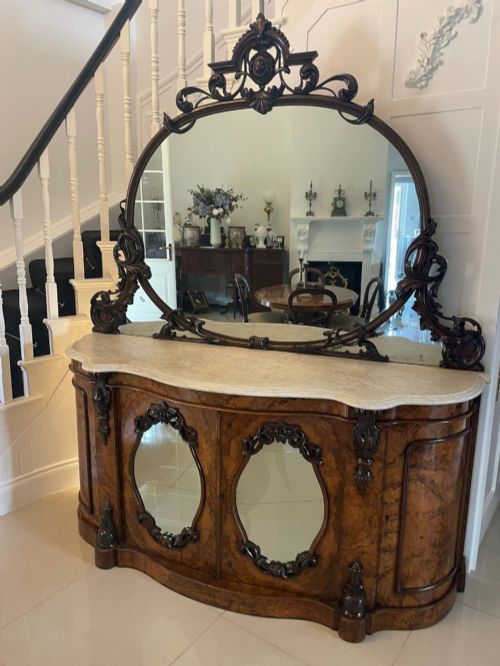
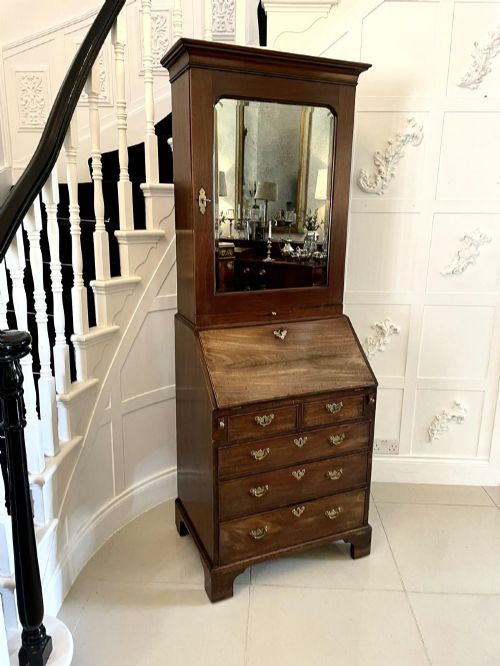
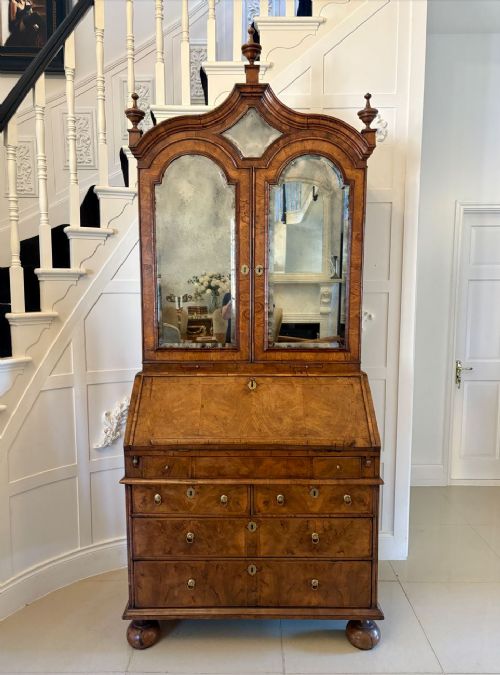
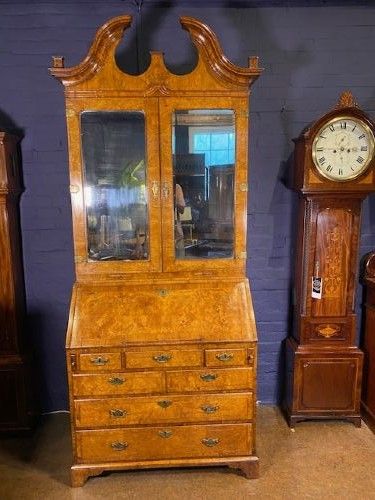
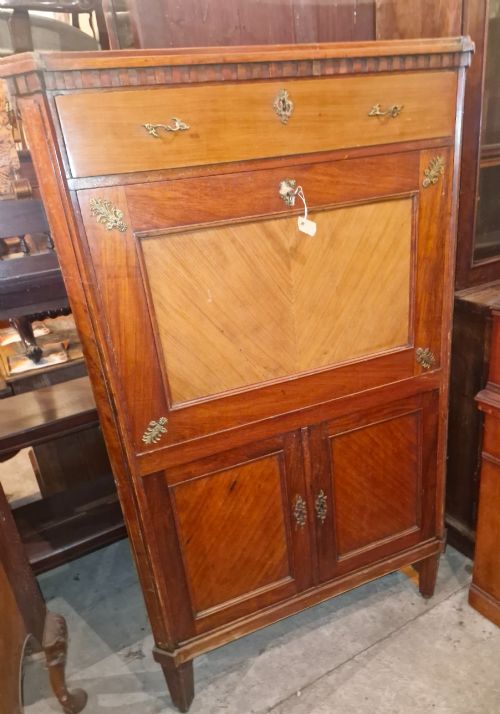
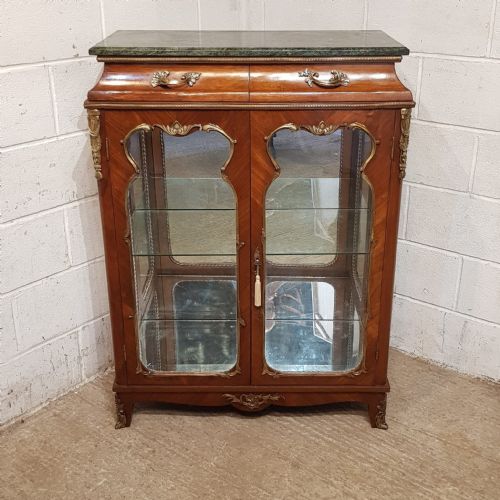
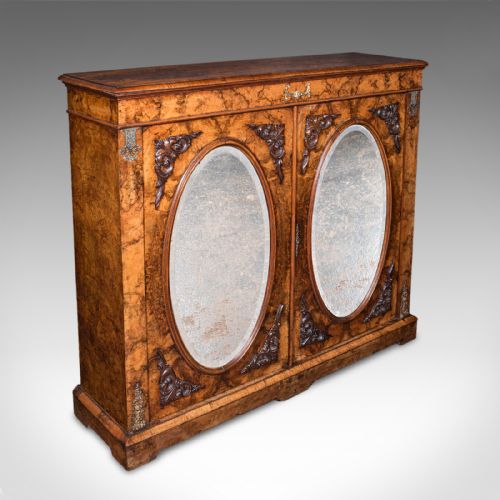
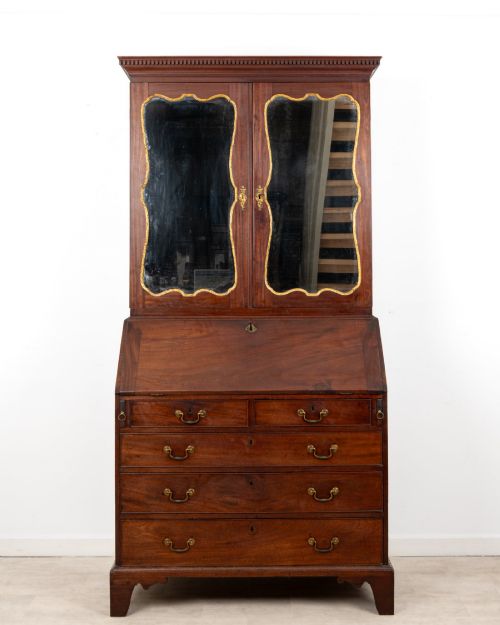
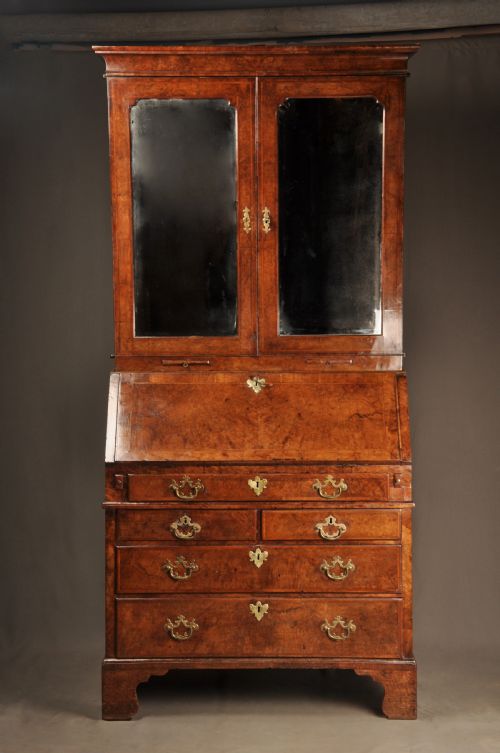
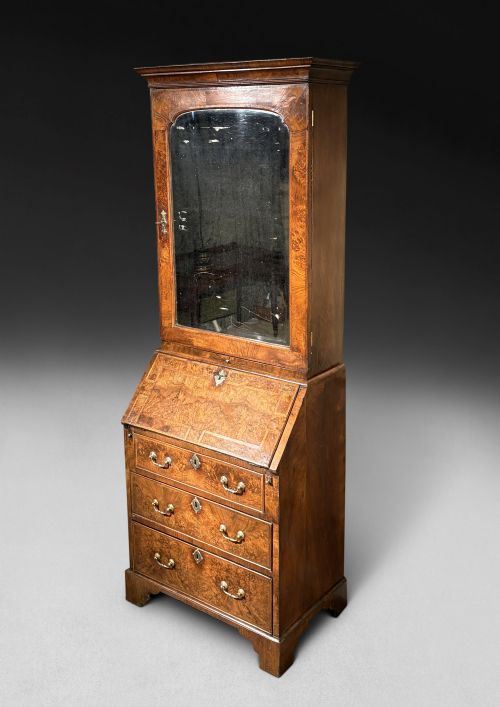
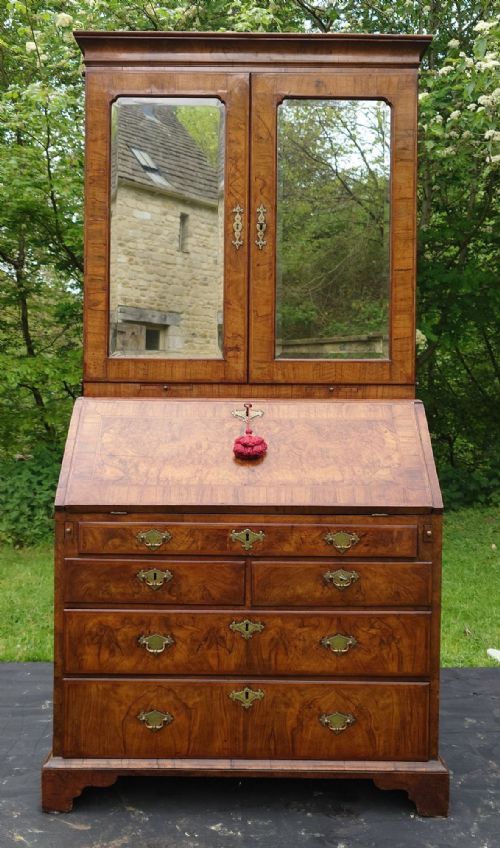


Mirrored Front Cabinet
These mirrored front cabinet pieces bring depth and reflective light to a room, offering functional storage alongside polished glass.
Mirrored Front Cabinet
A mirrored front cabinet combines functional storage with reflective glass panels, drawing the eye across rooms of various periods. When you search for a mirrored front cabinet, you encounter forms ranging from early bureau bookcases to Victorian credenzas and Edwardian display cabinets.
The pieces on this page span several centuries, featuring early examples in burr walnut and mahogany from the seventeenth and eighteenth centuries alongside later Victorian and Edwardian variations. Bureau bookcases and credenzas dominate the selection, bringing substantial presence and specialised compartments to domestic interiors.
How they were made
Cabinet makers utilised dense hardwoods such as walnut, burr walnut, and mahogany, often applying decorative veneers or featherbanding to the primary surfaces. These timbers provided a stable structural carcass capable of supporting heavy glass panels and fitted interior drawers.
Glass mirrors and panels were integrated directly into doors or backboards, secured with wooden moulding or brass mounts. Joinery techniques included dovetailing for drawers and mortise and tenon joints for the main housing, ensuring longevity.
Listings include pieces from the seventeenth, eighteenth, nineteenth, and twentieth centuries, using walnut, mahogany, oak, and marble.
What varies in quality
The selection of timber veneer determines much of the visual appeal, with tightly figured burr walnut or rich mahogany distinguishing finer examples from plain alternatives. The depth of grain and the precision of book-matching across double doors demonstrate the skill of the original workshop.
Hardware and internal fittings also dictate standard, where original brass handles, escutcheons, and meticulously organised pigeonholes elevate a piece. The clarity and preservation of the glass panels or mirrored backs further separate ordinary utility items from superior cabinet work.
The Mirrored Front Cabinet Glossary
- Bureau bookcase
- A combination of a sloping writing desk and a shelved upper cabinet enclosed by doors. This form provides both a working surface and substantial display space.
- Credenza
- A low-standing cabinet designed for storage and display, often featuring mirrored backing or glass doors. These pieces frequently anchor dining rooms or principal reception areas.
- Burr walnut
- A prized timber cut from the excrescences of walnut trees, yielding complex swirling patterns. Cabinet makers prized this wood for high-status eighteenth-century furniture facades.
- Featherbanding
- A decorative banding technique using small pieces of veneer arranged in a herringbone pattern. Craftsmen used this detail to frame drawer fronts and cabinet doors.
Mirrored Front Cabinet: Frequently Asked Questions
What is a mirrored front cabinet?
A mirrored front cabinet is a piece of furniture featuring glass mirror panels integrated into the doors or internal backing. These designs serve to reflect light and create a sense of space while concealing or displaying interior contents.
Such furniture spans various forms, including bureau bookcases, credenzas, and cocktail cabinets from different historical periods.
How do I date a walnut cabinet?
Dating a walnut cabinet involves examining the secondary timbers, construction methods, and hardware styles. Early eighteenth-century pieces often display distinct drawer linings and hand-cut dovetails characteristic of that era.
Stylistic shifts, such as the transition from Queen Anne curves to Georgian straight lines, also provide reliable chronological indicators.
Where were these cabinets used?
These cabinets traditionally occupied principal rooms such as drawing rooms, libraries, and morning rooms. They functioned as multi-purpose furniture for writing, storing books, and displaying valued objects.
In later periods, specialised variations like cocktail cabinets and credenzas found placement in dining spaces and entertaining rooms.
How do I care for antique wood?
Preserving antique wood requires maintaining stable room humidity and avoiding direct sunlight to prevent veneer cracking and fading. Regular dusting with a soft, dry cloth keeps the surface clean without damaging the polished finish.
Applying appropriate wax occasionally helps nourish the timber and maintain its natural lustre over time.