
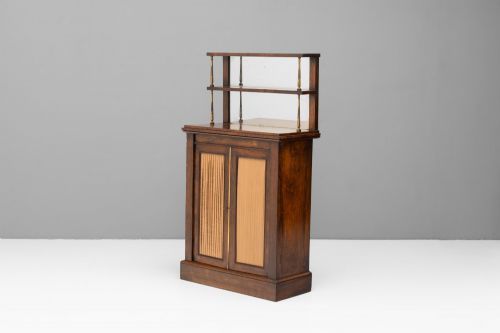

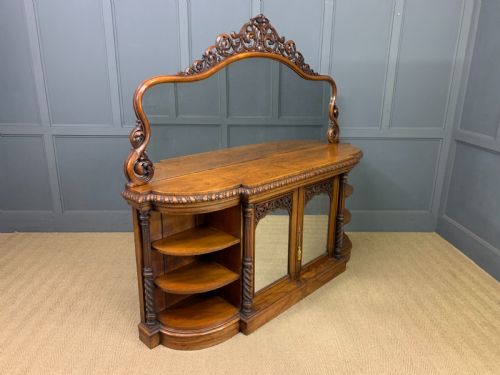


Mirrored Door Sideboard
A mirrored door sideboard brings depth and light to a room through polished glass panels set into timber cabinetry.
Mirrored Door Sideboard
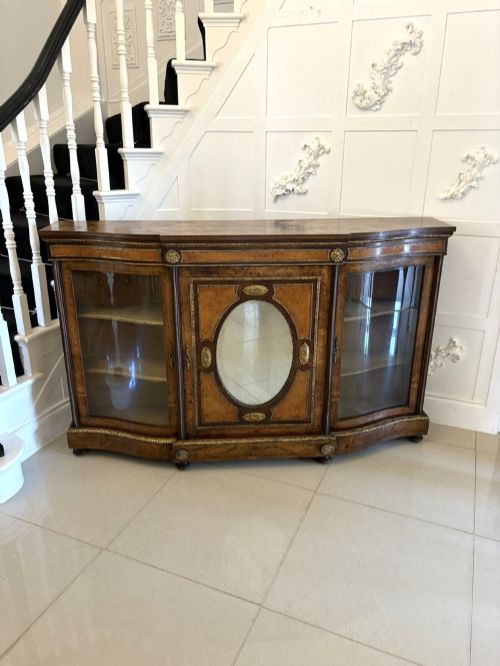
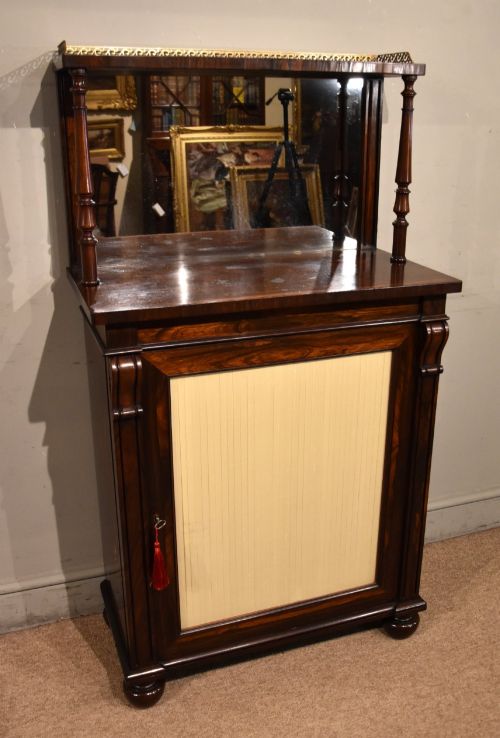
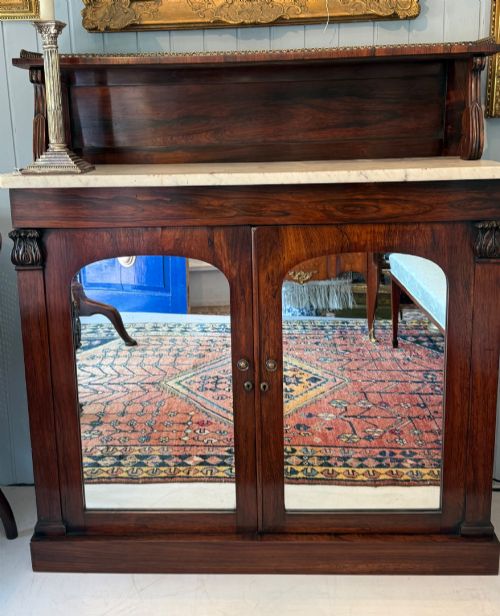
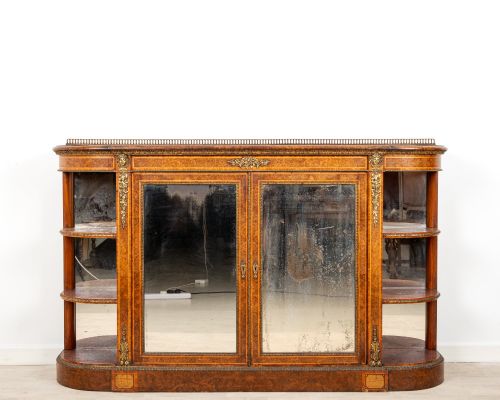
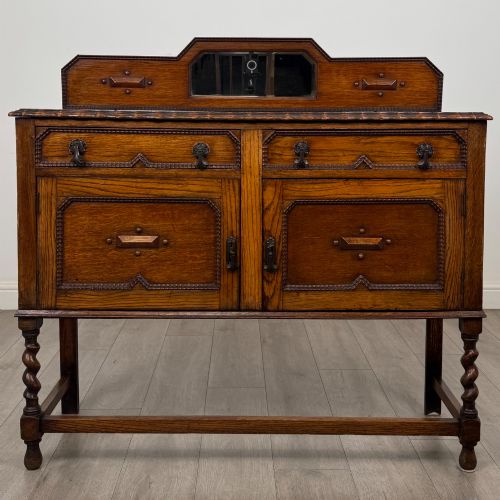
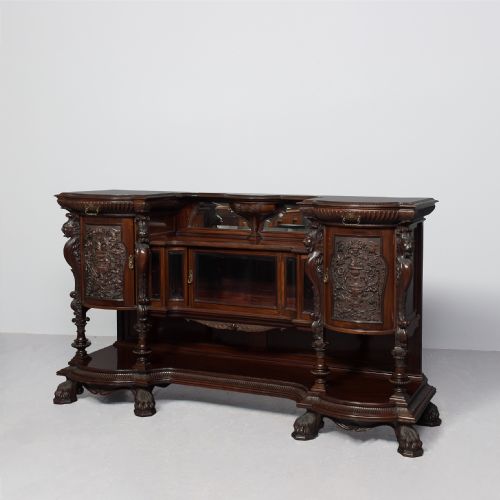
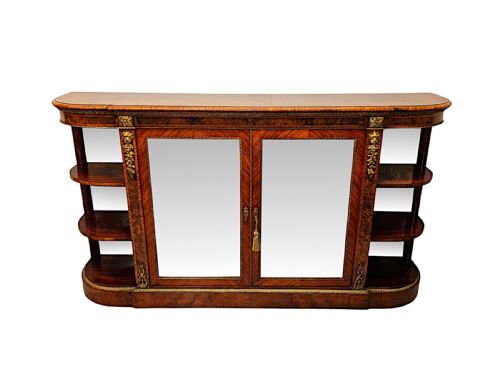
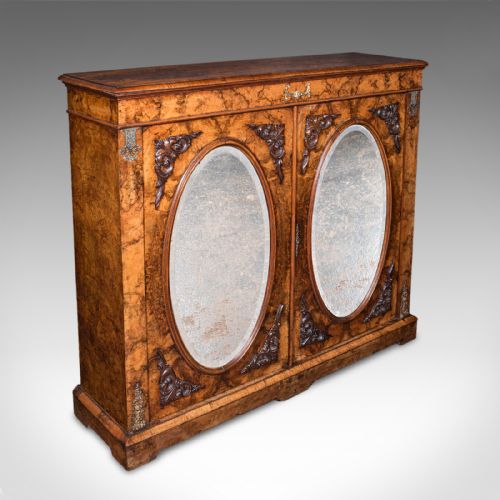
A mirrored door sideboard combines storage with reflective glass panels, appearing across various nineteenth-century and early twentieth-century forms. Buyers seeking a mirrored door sideboard frequently encounter credenzas, chiffoniers, and mirror-backed cabinets from the Victorian and Edwardian eras. These furnishings served primary functions in dining rooms, morning rooms, and parlours for storing tableware or displaying decorative objects.
The selections span distinct historical revivals, including Regency, Aesthetic Movement, and Victorian Rococo styles. Woods such as burr walnut, rosewood, and mahogany dominate the offerings, often complemented by intricate marquetry or brass details. Credenzas and side cabinets feature prominently, bringing reflective glass elements into domestic interiors.
How they were made
Cabinet makers utilised dense hardwoods such as mahogany, rosewood, and walnut as structural carcases, frequently applying highly figured burr veneers to external surfaces. These timbers underwent careful seasoning to prevent warping before being shaped into serpentine or straight-fronted configurations.
Reflective glass panels were hand-silvered and fitted securely into timber frame doors, sometimes accompanied by cast brass mounts or ormolu details. Joinery relied on traditional techniques, including dovetailing for drawer construction and mortise and tenon joints for the main framework.
Object forms span credenzas, chiffoniers, side cabinets, and buffets equipped with glass or mirrored doors.
What varies in quality
The choice of timber veneer dictates much of the visual appeal, with richly figured burr walnut and matched rosewood sitting at the upper end of craftsmanship. Grain continuity across multiple doors and panels demonstrates the maker's precision during assembly.
Hardware integrity and decorative application further distinguish examples. Cast ormolu mounts, inlaid brass lines, and substantial marble tops indicate a higher grade of production compared to simpler veneered alternatives.
Gillows
The Mirrored Door Sideboard Glossary
- Credenza
- A low cabinet or sideboard, frequently featuring mirrored doors and ormolu mounts. These pieces gained popularity during the Victorian period for displaying porcelain and silver.
- Chiffonier
- A compact sideboard or cabinet equipped with a raised shelf or mirrored back. This form developed during the Regency and Victorian eras for smaller reception rooms.
- Ormolu
- Gilded bronze mounts applied to furniture for decorative effect. Makers used these cast metal elements to accent the corners and doors of high-status cabinets.
- Marquetry
- Decorative woodwork where pieces of veneer are fitted together to form pictorial patterns. Artisans utilised contrasting timber shades to create geometric or floral designs on cabinet doors.
- Burr Walnut
- Wood taken from a growth on a walnut tree, yielding complex, swirling grain patterns. Cabinet makers prized this veneer for its highly decorative appearance on principal surfaces.
Mirrored Door Sideboard: Frequently Asked Questions
Where were mirrored door sideboards placed?
These cabinets stood principally in dining rooms, drawing rooms, and morning rooms as storage and display units.
Their reflective glass panels helped amplify natural light in nineteenth-century domestic interiors while concealing tableware.
How do I identify a Victorian piece?
Victorian examples typically feature dense timbers like burr walnut or mahogany, often paired with elaborate carving or serpentine fronts.
Look for characteristics such as mirror backs, brass inlays, and heavier proportions compared to earlier Regency designs.
What is the difference between a credenza and a chiffonier?
A credenza usually refers to a low, long cabinet with multiple doors, frequently featuring glass or mirrored panels.
A chiffonier is generally smaller and often incorporates a raised superstructure or mirrored back above the primary surface.
How do I care for antique walnut?
Maintain walnut furniture by keeping it away from direct sunlight and sudden temperature changes to prevent veneer splitting.
Apply a traditional wax polish sparingly and buff with a soft cloth to preserve the timber's natural lustre.