
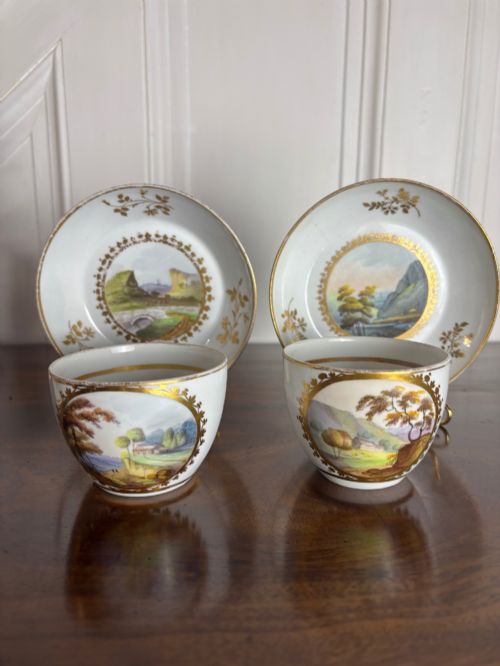


Minton Porcelain Pair
These minton porcelain pair selections bring nineteenth-century British craftsmanship into your home through figures, vases, and candlesticks.
Minton Porcelain Pair
When you search for a minton porcelain pair, you encounter matched sets created by the Staffordshire pottery across the nineteenth century, including the Victorian era, the Georgian period, and the Regency years. The selection on this page frequently includes figural candlesticks, decorative plates, and sculptural figures.
The forms range from functional teacups and saucers to elaborate compotes, scent bottles, and table garnitures. Pairs take the form of parian biscuit figures, basketweave plates, and pate-sur-pate vases.
Makers produced these dual items for symmetrical display on mantelpieces and dining tables. The items span various stylistic influences, incorporating rococo revival motifs, gothic elements, and landscape paintings.
What Varies In Quality
Superior examples display crisp modelling in figural groups and sharp definition in basketweave or floral mouldings. Inferior pieces lose fine detail in the casting or firing process.
The precision of hand-painted landscapes and the completeness of gold leaf gilding distinguish finer studio work. Well-preserved enamel colours without rubbing separate standard production items from masterworks.
Go-to-bed candlesticks were tiny chambersticks designed for a hasty midnight journey up the stairs.
The Minton Porcelain Pair Glossary
- Parian Porcelain
- A fine-grained, unglazed porcelain developed to imitate marble. It allowed nineteenth-century potteries to produce affordable neoclassical and Victorian statuary.
- Pate-Sur-Pate
- A ceramic decorating technique where liquid white porcelain slip is painted in layers onto a dark coloured body. This builds up a translucent low relief cameo effect.
- Biscuit Porcelain
- Unglazed ceramic fired once before decoration. It possesses a matte, porous finish that resembles white marble.
- Compote
- A raised bowl used for serving fruit or sweets on a dining table. They appear in porcelain pairs with decorative stands or figural supports.
Minton Porcelain Pair: Frequently Asked Questions
What is a minton porcelain pair?
A minton porcelain pair consists of two matched decorative or functional ceramic items produced by the Minton pottery. These items were designed to match each other for symmetrical placement in nineteenth-century interiors.
Collectors find them in forms such as candlesticks, vases, figurines, and comports. Each set reflects the aesthetic preferences of periods ranging from the Regency era to late Victorian times.
How were these porcelain pairs used?
Nineteenth-century households utilised these matched objects for both decoration and formal dining. Figural candlesticks illuminated mantelpieces, while scent bottles and sweetmeat figures adorned dressing tables and parlours.
Larger items like table garnitures and comports served food during formal meals or added symmetry to sideboard displays. Their dual nature ensured a balanced arrangement in domestic rooms.
How do I care for antique porcelain?
Antique porcelain requires gentle handling and placement away from direct sunlight and rapid temperature changes. Dusting with a soft, dry brush prevents the accumulation of dirt in intricate mouldings and flower encrustations.
Avoid washing pieces that feature delicate gold leaf gilding or enamel decoration in water. Professional display cabinets protect fragile parian figures and biscuit porcelain from accidental knocks.
How can I tell the period of these pieces?
Dating relies upon stylistic clues, material types, and potting techniques characteristic of specific decades. Early nineteenth-century items often show Georgian or Regency influences, while mid-century pieces frequently display rococo revival or gothic details.
Records of specific pattern numbers and modelling styles help narrow down the decade of production. Parian porcelain figures and pate-sur-pate vases point towards the Victorian era.