

Miniature Wooden Chest Drawers
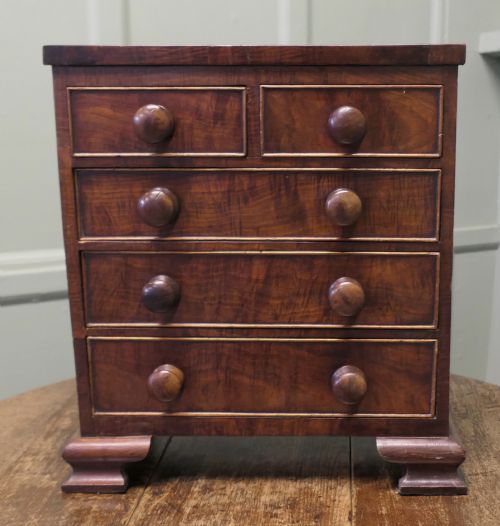
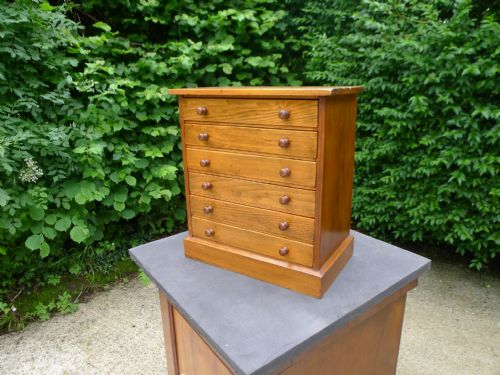
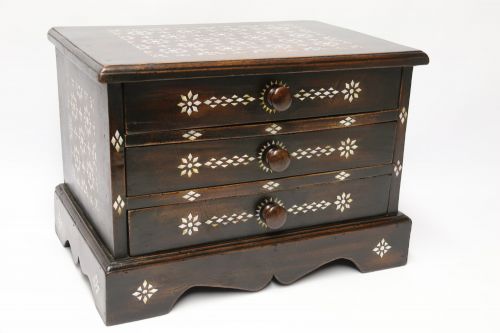
These miniature wooden chest drawers pack the joinery of full-scale furniture into tabletop proportions, offering compact storage for small valuables and specimens.
Miniature Wooden Chest Drawers
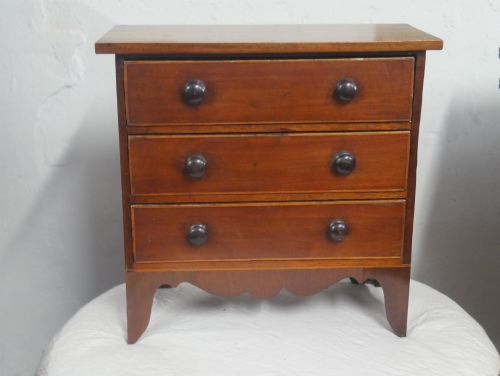
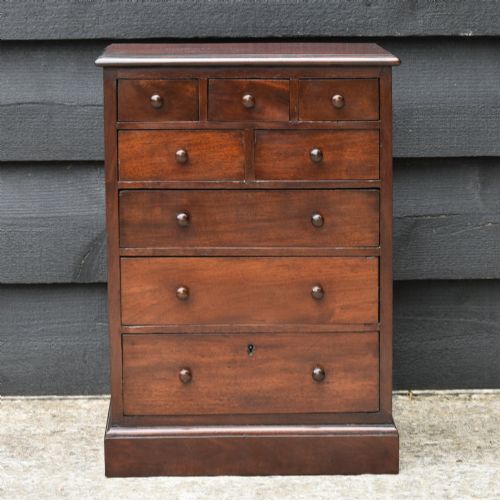
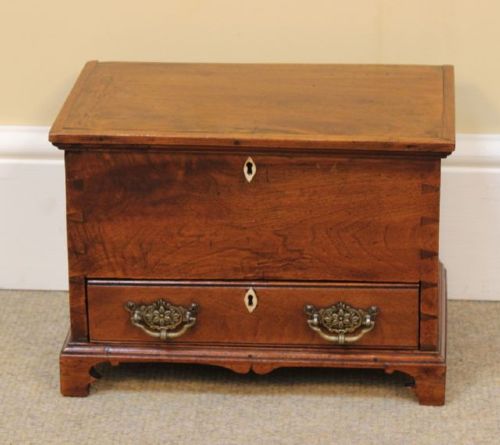
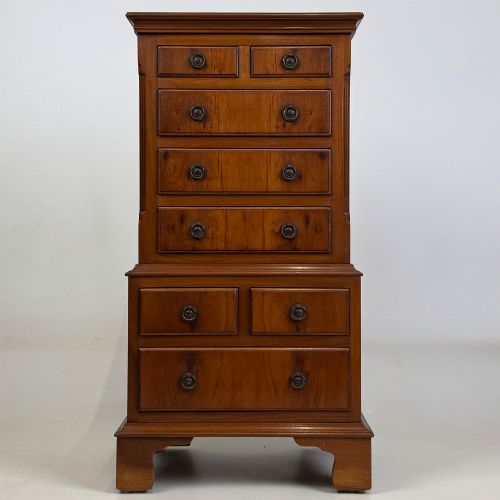
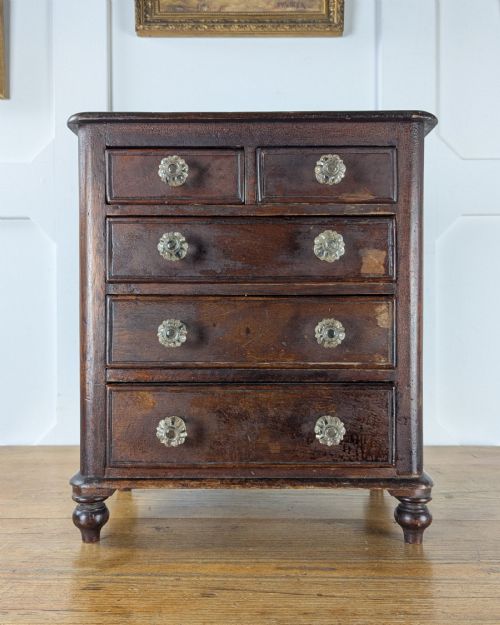
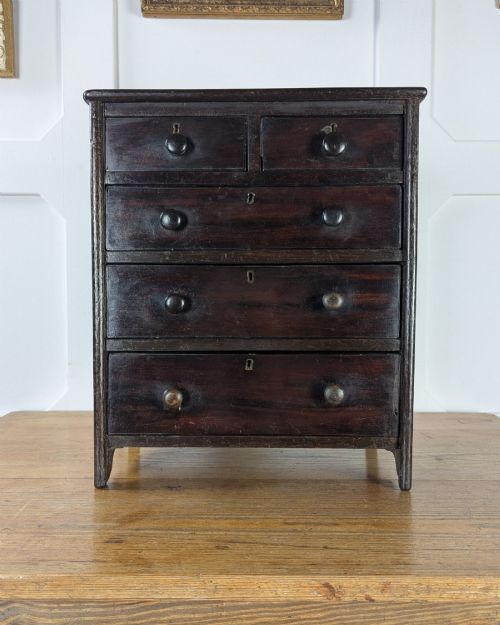
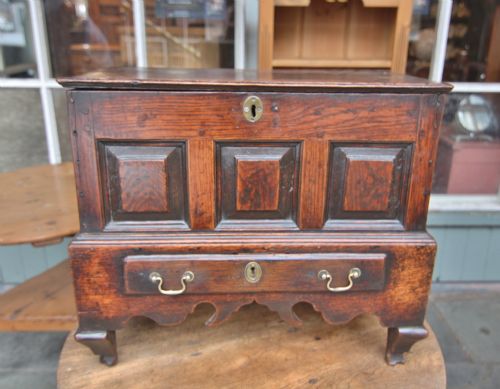
Miniature wooden chest drawers appear primarily as Victorian apprentice pieces and Georgian or Edwardian collectors' cabinets designed for domestic tabletops. Makers also produced coffer bach forms in Welsh oak, alongside spice drawers and apothecary units in fruitwood or pine.
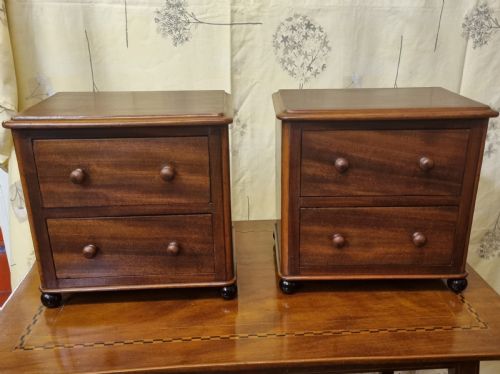
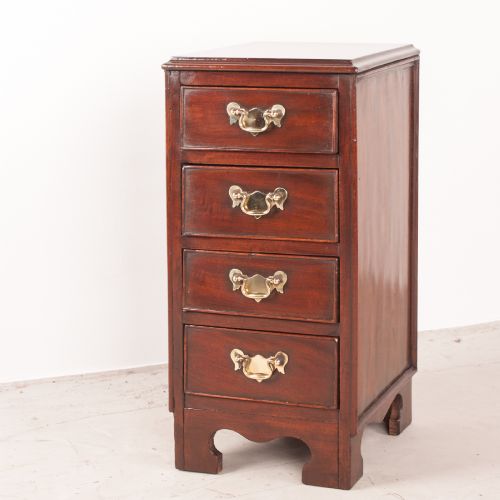
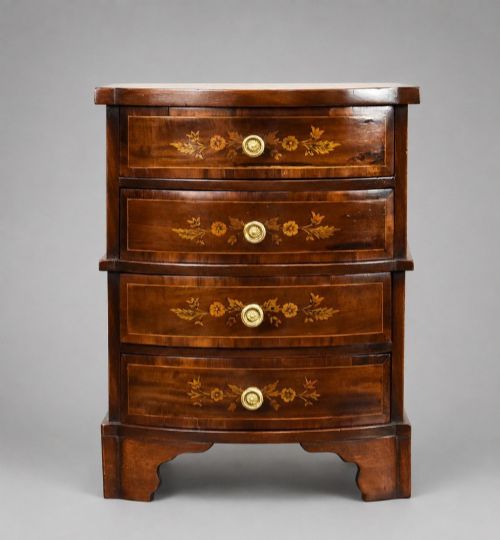
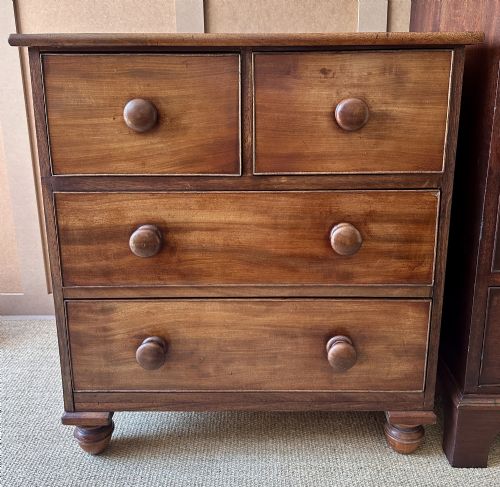
The pieces on this page span the eighteenth, nineteenth and twentieth centuries, taking the shape of miniature Scotch chests, Wellington chests and bow front chests. Small proportions served practical functions for jewellers, apothecaries and collectors organising specimens or trinkets.
Regional variations emerge clearly across the periods, from Scottish apprentice pieces to Welsh oak coffer bach designs. Scale remains the unifying trait, keeping full-sized architectural details within a fraction of the usual dimensions.
Materials and construction
Cabinetmakers utilised hardwoods such as mahogany, walnut, oak and yew wood, often pairing them with secondary pine or fruitwood carcases. Surface enrichment relied on mahogany veneers, marquetry inlays and burr walnut figuring.
Joinery techniques mirror domestic furniture of the period, incorporating dovetailed drawer construction and turned wooden feet. Brass handles, escutcheons and working locks add functional hardware detail to miniature proportions.
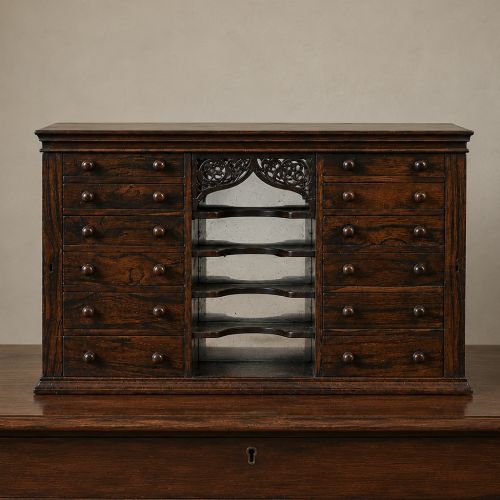
Object forms range from Welsh coffer bach and spice drawers to Wellington chests and collector cabinets.
Assessing quality
Quality rests on the fidelity of the miniature scale to full-sized cabinetmaking standards, visible in tight dovetail joints and proportioned mouldings. Grain selection in burr walnut, mahogany or oak distinguishes standard utility pieces from finer cabinet work.
The Miniature Wooden Chest Drawers Glossary
- Apprentice piece
- A small item of furniture made by a trainee craftsman to demonstrate mastery of joinery before entering a guild. These demonstrate full-scale techniques scaled down to tabletop dimensions.
- Coffer bach
- A small Welsh oak chest featuring a drawer or drawers beneath the main lifting lid. These domestic pieces served for linen or valuables storage in eighteenth-century households.
- Wellington chest
- A tall, narrow chest of drawers secured by a hinged locking side flap that fastens over the drawer edges. This form appears in miniature proportions during the nineteenth century.
- Specimen cabinet
- A small cabinet fitted with multiple shallow drawers designed to house natural history collections such as insects, shells or minerals. They frequently employ softwoods or figured hardwoods.
- Marquetry
- The art of applying decorative veneer pieces to a structure to form geometric or floral patterns. Miniature chests use contrasting timbers to create detailed surface decoration.
Miniature Wooden Chest Drawers: Frequently Asked Questions
What were miniature wooden chests used for?
Cabinetmakers built these small chests as apprentice demonstration pieces, salesman samples or domestic storage for jewellery, trinkets and sewing accessories. Collectors also used them to organise small natural history specimens and coins.
Their compact scale allowed them to sit on tables, desks or chests of drawers in period homes. They provided secure, lockable storage for items that required gentle handling away from main household traffic.
How do you date an antique miniature chest?
Dating relies on identifying the timber species, secondary woods, construction methods and prevailing furniture styles of the era. Georgian, Victorian and Edwardian examples each display distinct moulding profiles and hardware choices.
Secondary woods visible inside the drawers or on the backboards offer reliable clues to the period. Hand-cut dovetails and timber shrinkage patterns help separate eighteenth-century work from later Victorian production.
What is an apprentice piece?
An apprentice piece is a miniature item created by a young craftsman to prove skill to guild masters before qualifying as a full freeman. These objects condensed standard construction challenges into a portable format.
They display the exact dovetailing, framing and polishing techniques used on full-sized wardrobes and chests. Miniature proportions required immense precision from the maker.
How should I clean miniature wooden drawers?
Dust the exterior gently with a dry, soft bristle brush or lint-free cloth to protect fragile mouldings and delicate veneers. Avoid harsh chemical polishes that can degrade nineteenth-century French polish surfaces.
Feed dry timbers occasionally with a suitable microcrystalline wax to preserve the patina without building up heavy residue. Keep the pieces away from direct sunlight and heat sources to prevent timber splitting.