
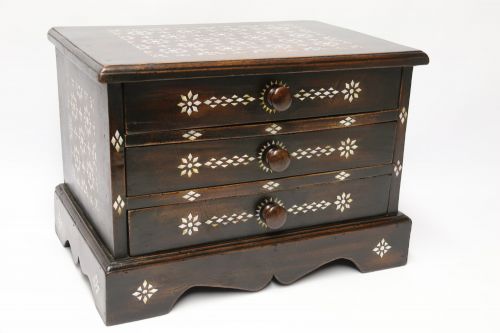
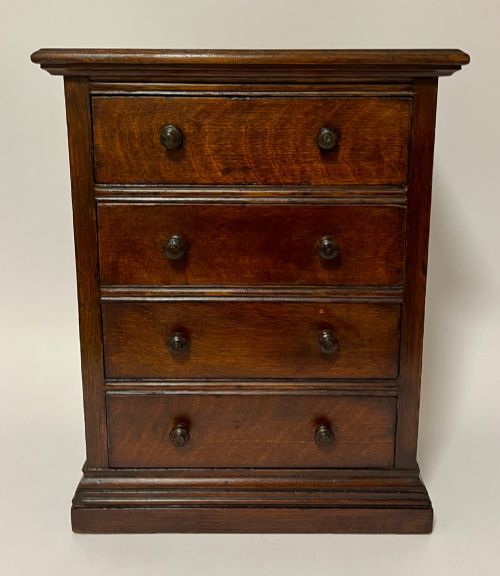
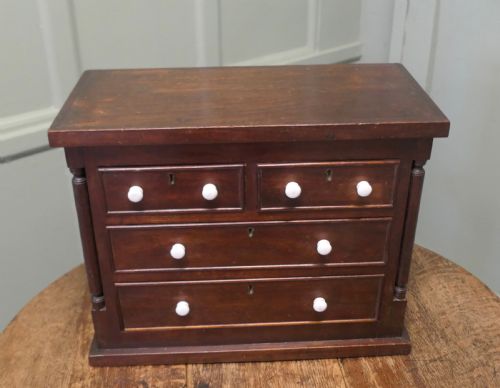
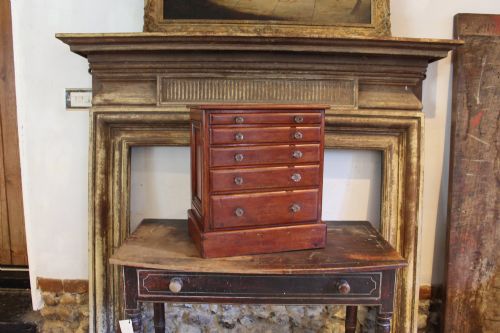
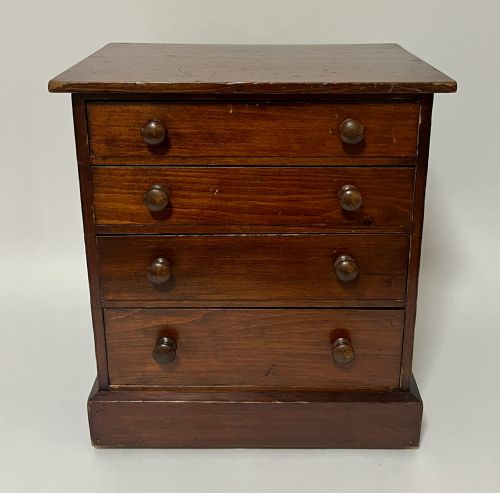
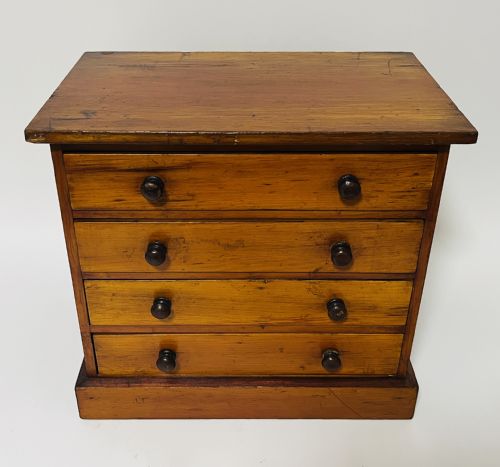
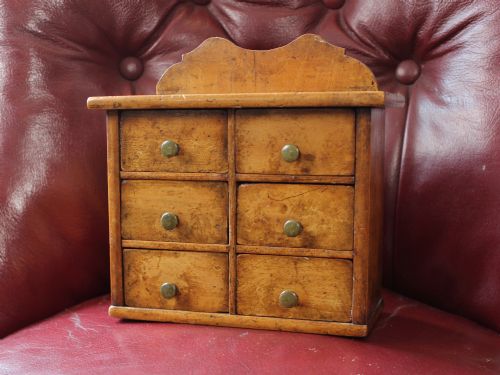

Miniature Wooden Cabinet
A miniature wooden cabinet offers small-scale storage crafted in mahogany, walnut, and oak across Georgian, Victorian, and later periods.

Miniature Wooden Cabinet
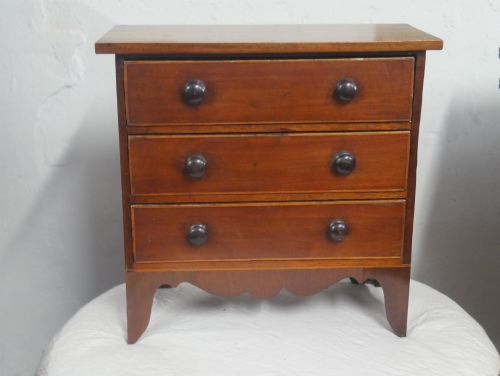
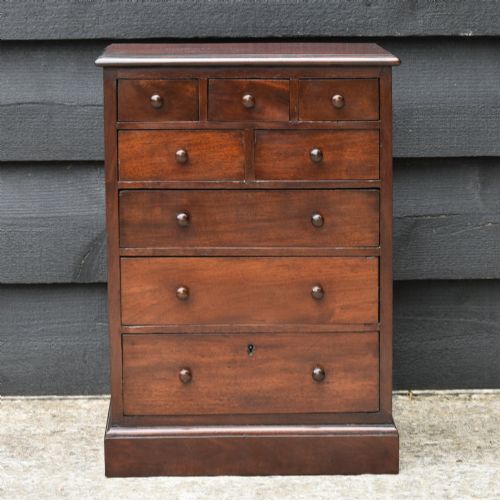
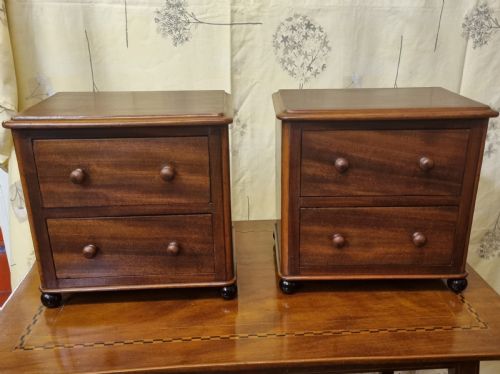
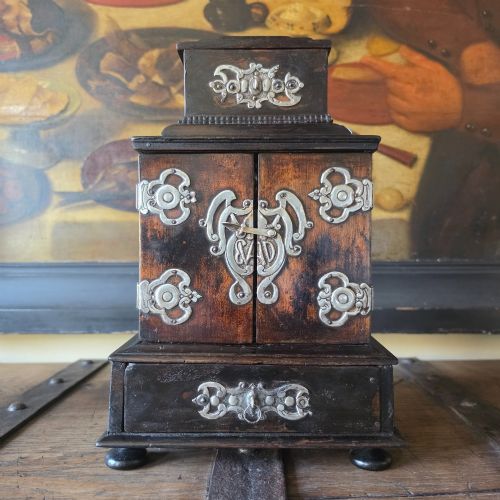
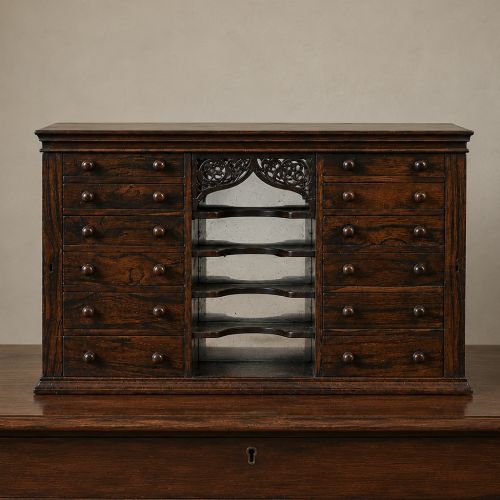
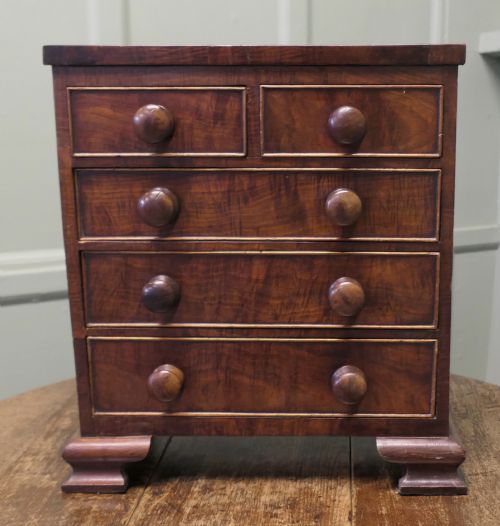
A miniature wooden cabinet serves various small storage purposes, ranging from jewellery and specimens to spices and dental equipment. These compact pieces mirror full-sized furniture forms, including chests of drawers, Wellington chests, armoires, and table cabinets.
The pieces appearing most frequently on this page belong to the Victorian period, often designated as apprentice pieces or miniature chests of drawers. Alongside these, buyers find Georgian, Regency, and Edwardian specimens constructed in diverse regional styles such as Anglo-Indian and Scottish.
Makers produced these smaller items for travellers, apprentices demonstrating skill, or domestic table use where space required reduced dimensions. Their survival across centuries demonstrates the enduring appeal of scale-model cabinetry.
Materials and construction methods
Cabinetmakers utilised hardwoods such as mahogany, walnut, burr walnut, and oak, alongside softer woods like pine and fruitwood. Selected timbers often featured decorative grains, inlay work, or dark finishes.
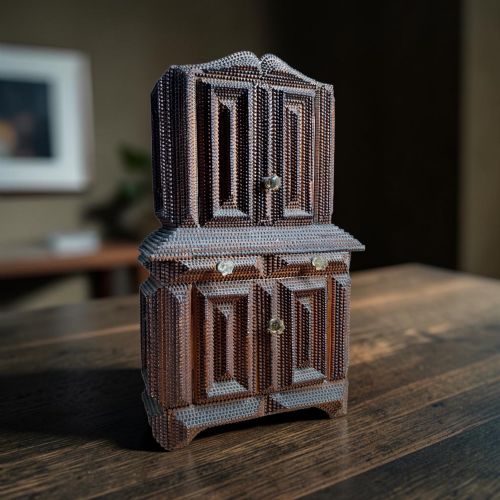
Construction mirrored standard furniture making, employing dovetail joints for drawers, brass handles, locks with keys, and occasionally secret compartments. Some examples incorporated specialist techniques including French tramp art, marquetry, and black lacquering.
The selection includes specialised storage forms such as apothecary chests, spice drawers, and memento mori skeleton displays alongside standard chests.
Distinguishing quality across pieces
Quality rests in the precision of the joinery and the selection of timber veneers, such as figured walnut or matched mahogany. Superior examples maintain proportion and structural integrity while housing working locks and well-fitted drawers.
Decorative detailing differentiates standard utility pieces from exceptional items. Carved elements, fine inlay, original brass hardware, and unusual internal configurations like revolving tabernacles elevate certain cabinets above basic workshop output.
The Miniature Wooden Cabinet Glossary
- Apprentice piece
- An item created by a trainee craftsman to demonstrate mastery of joinery and woodworking techniques before gaining professional admission to a guild.
- Wellington chest
- A tall, narrow chest of drawers secured by a locking hinged side pilaster that fastens over the drawer edges.
- Tramp art
- Folk sculpture carved using simple tools, typically pocket knives, from salvaged wood packaging and cigar boxes in geometric layered chip-carved patterns.
- Specimen cabinet
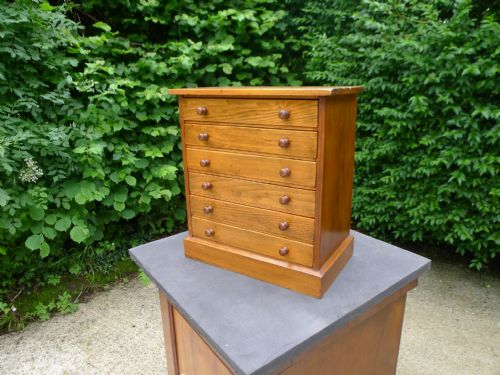
- A small piece containing multiple shallow drawers designed for organising natural history collections, such as insects, minerals, or botanical samples.
- Escritoire
- A small writing cabinet featuring a fall-front or sloping lid that conceals interior pigeonholes and small compartments.
Miniature Wooden Cabinet: Frequently Asked Questions
What is an apprentice piece?
An apprentice piece is a small-scale item built by a trainee craftsman to prove their woodworking skill to a guild. These miniature chests and cabinets allowed makers to demonstrate mastery over joints, drawers, and finishing.
While traditional lore often links them strictly to the training system, many served simply as high-quality miniature furniture for domestic table display.
How were table cabinets used?
Table cabinets served domestic purposes for storing precious items out of sight. Owners kept jewellery, documents, spices, and small curiosities inside these secure wooden boxes.
Many featured locks and keys, reflecting the need to safeguard valuables in busy households before the widespread use of built-in bedroom storage.
What woods are most common?
Mahogany and walnut appear frequently across 18th and 19th-century examples, often chosen for their rich grain and durability. Oak, pine, and fruitwood also form the primary structure of many regional and folk art pieces.
Cabinetmakers frequently applied decorative veneers like burr walnut or incorporated satinwood and brass details to enhance the visual appeal.
How do I date a miniature cabinet?
Dating relies on identifying the prevailing style, construction timber, and drawer joint techniques used in the piece. Georgian and Regency examples show distinct moulding and hardware profiles compared to later Victorian or Edwardian items.
Secondary woods inside drawers and the presence of original locks or hand-cut dovetails provide further clues to the manufacturing decade.