



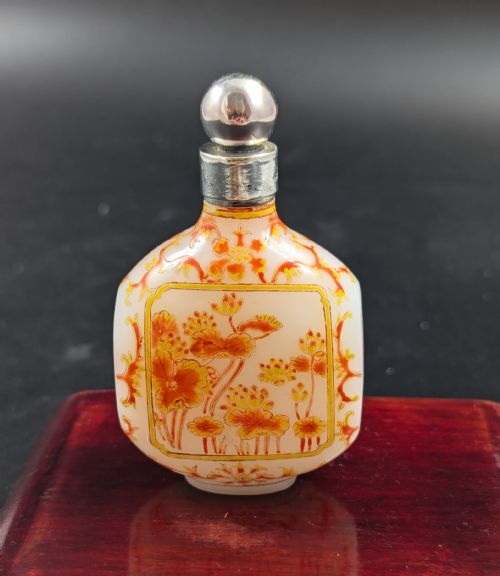


Miniature Scent Bottle
When you handle a miniature scent bottle, you hold a pocket-sized masterpiece of personal adornment designed to carry precious perfumes through the Georgian and Victorian eras.
Miniature Scent Bottle
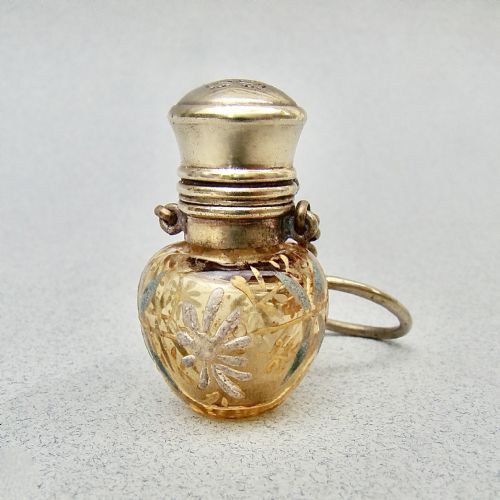
A miniature scent bottle serves as a portable container for aromatic oils and perfumes, often fashioned to be suspended from a chatelaine or tucked securely into a pocket or necessaire. These diminutive vessels appear across the eighteenth, nineteenth, and early twentieth centuries in a variety of regional styles, from English silver-mounted glass to French chatelaine pieces and Chinese carved snuff bottles.
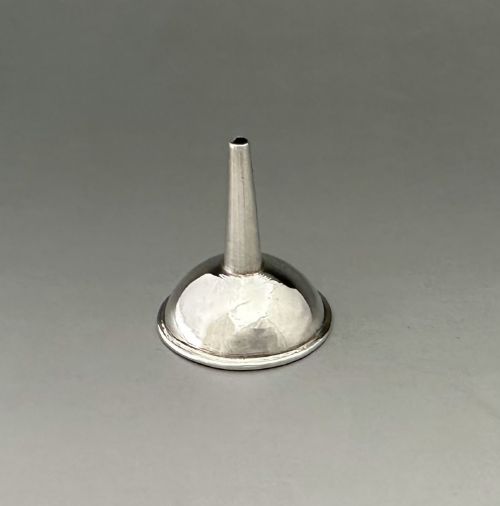
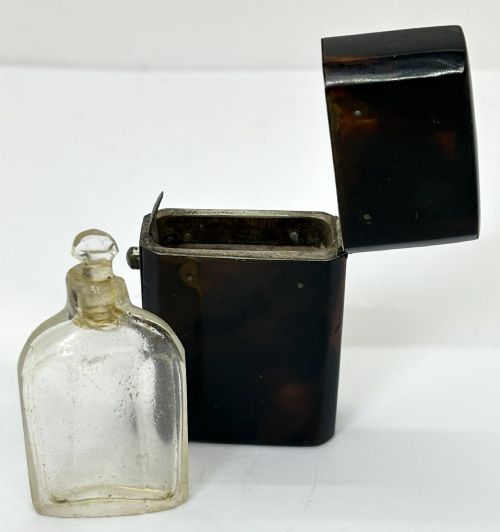
The objects on this page encompass functional perfume flasks, scent bottle holders, and novelty forms such as silver violins and liquor bottles alongside related items like perfume funnels and etuis. European examples lean heavily towards cut or overlay glass bound in silver and enamel, while Asian counterparts display carved jade, coral, and painted porcelain.
Makers and manufacturers ranging from regional British silversmiths to continental glasshouses produced these pieces to satisfy a Georgian and Victorian demand for portable luxury. Whether intended for a chatelaine hook or a velvet-lined dressing box, each miniature scent bottle reflects the intricate craftsmanship of its period.
Materials and Construction Techniques
Makers combined precious metals with decorative glass, mounting silver and silver-gilt collars, caps, and hinged lids onto blown or cut glass bodies. Techniques such as casing, overlay, and acid-etching created coloured glass layers that workers then cut through to reveal contrasting hues underneath.
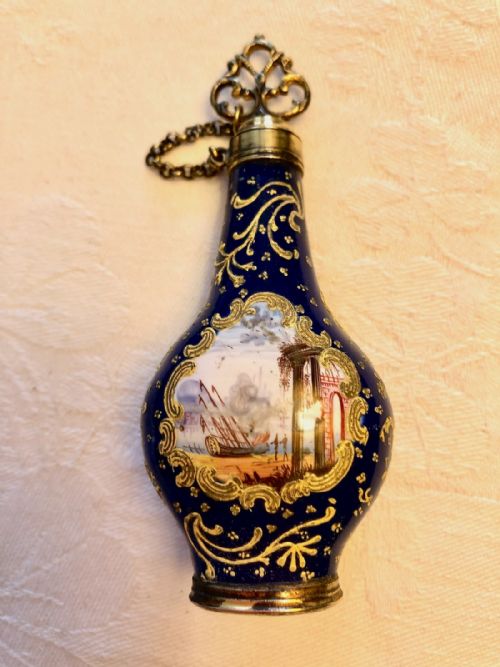
Enamelwork and metal fabrication required specialised skill, utilising hand-painted scenes on white glass or copper, alongside guilloche patterns beneath translucent coloured enamels. Carved organic materials like tortoiseshell, mother of pearl, jade, coral, and fruitwood involved precise shaping, polishing, and delicate metal pinning.
Silversmiths employed casting, chasing, and filigree work to form decorative mounts and novelty outer cases shaped like musical instruments or eggs. Screw threads and tightly fitted cork stoppers ensured that volatile perfumes remained secure inside the diminutive chambers.
The listings show materials spanning silver, glass, enamel, porcelain, copper, tortoiseshell, mother of pearl, and gilded metal across the 18th, 19th, and early 20th centuries.
Measures of Quality and Craft
Quality rests in the harmony between the metal mount and the glass or organic body, where precision in the hinged lid and the security of the inner stopper demonstrate superior manufacturing. Fine cutting on overlay glass and hand-painted detail on enamel surfaces distinguish standard production from exceptional examples.
The presence of fully struck silver hallmarks or recognised workshop signatures elevates an object, providing clear evidence of origin and maker. Superior pieces maintain their original stoppers, matching etui tools, and undamaged enamel or gilding, preserving the integrity of the design.
Mousley Brothers·Cohen and Charles·Saunders and Shepherd·Nikolay Alekseyev
The Miniature Scent Bottle Glossary
- Chatelaine
- A decorative belt hook worn with suspended chains from which useful items hung, including keys, watches, and a miniature scent bottle.
- Guilloche
- An engraved decorative pattern of intersecting curved lines produced by a mechanical engine on metal before enamel is applied.
- Overlay glass
- A vessel formed of two or more distinct layers of coloured glass where the outer layer is partially cut away to reveal the base colour.
- Etui
- A small ornamental case used to hold needles, tweezers, bodkins, and other personal implements alongside scent containers.
- Lithyalin glass
- An opaque, marbled glass developed in nineteenth-century Bohemia to imitate semiprecious stones like agate and jasper.
- Old Sheffield plate
- A composite material made by fusing a thin sheet of silver to a thicker copper base, common in Georgian metalwork.
Miniature Scent Bottle: Frequently Asked Questions
What is a miniature scent bottle?
A miniature scent bottle is a small, portable vessel designed to hold liquid perfume, smelling salts, or aromatic oils. They were essential personal accessories for carrying fragrance safely during daily outings.
These pieces were produced in varied forms, ranging from simple glass vials with silver screw caps to elaborate chatelaine flasks intended to be worn on a belt.
How were they used?
Owners used these small containers to refresh personal aromas or to combat unpleasant odours in public spaces during the Georgian and Victorian periods. The tight stoppers and screw caps prevented the precious liquids from evaporating.
Many examples hung from decorative chatelaine hooks alongside keys and seals, while others rested inside fitted velvet boxes or travel etuis.
How do I date a scent bottle?
Dating relies on examining the materials, manufacturing techniques, and any accompanying hallmarks stamped onto the silver mounts. Georgian pieces often feature simpler hand-cut glass and heavier base metals, while Victorian examples frequently utilise vibrant coloured overlay glass and intricate silverwork.
Makers' marks and assay office symbols on silver collars provide precise years of production for many British pieces.
How do I care for antique glass and silver?
Care requires gentle handling and avoiding harsh chemical cleaning agents that might damage delicate glass surfaces or strip away original silver polish. Use a soft, dry cloth to clean silver mounts without letting polish seep into glass crevices or painted enamel scenes.
Store the bottles away from direct sunlight and extreme temperature fluctuations to protect fragile organic materials like tortoiseshell and mother of pearl.