
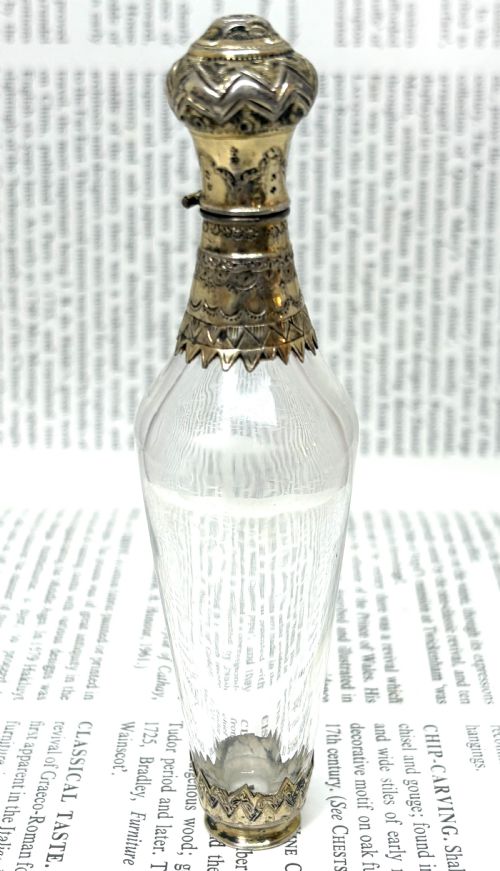


French Silver Scent Bottle
A French silver scent bottle combines fine metalwork with coloured or cased glass, offering a tangible link to nineteenth-century dressing table elegance.
French Silver Scent Bottle
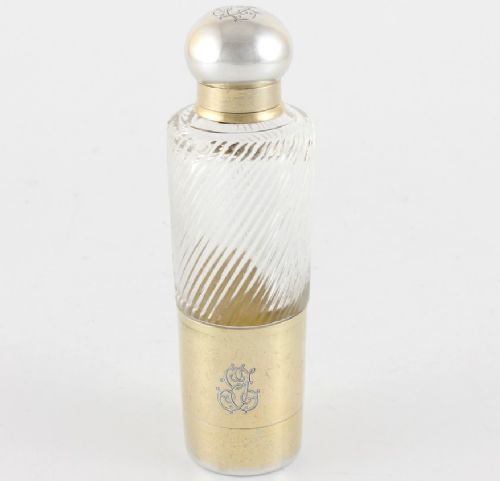
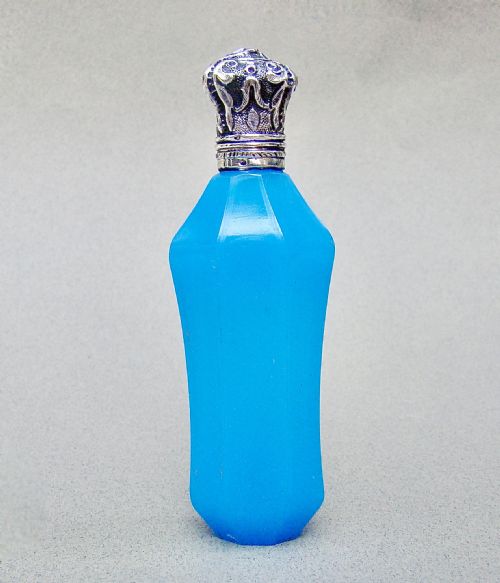
A french silver scent bottle typically comprises a glass vessel fitted with silver mounts, hinged caps, or screw stoppers designed to hold liquid perfumes safely. The selection spans the nineteenth century into the Art Deco period, capturing shifts in design from ornate Second Empire forms to geometric lines.
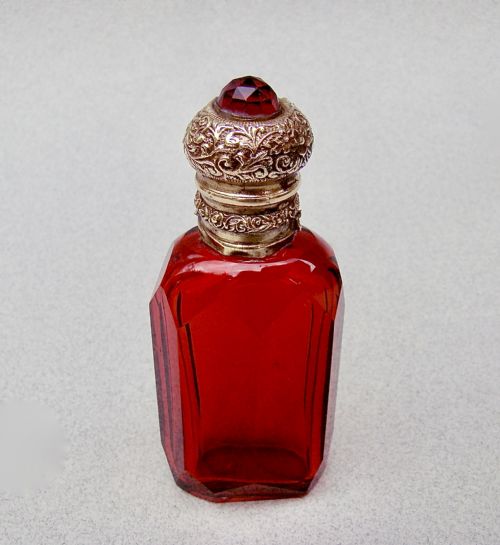
Buyers frequently encounter miniature examples intended for chatelaines alongside larger vanity bottles meant for static display on dressing trays. Coloured glass variants - including cranberry, amethyst, and opaline - appear alongside clear cut glass and layered cased glass.
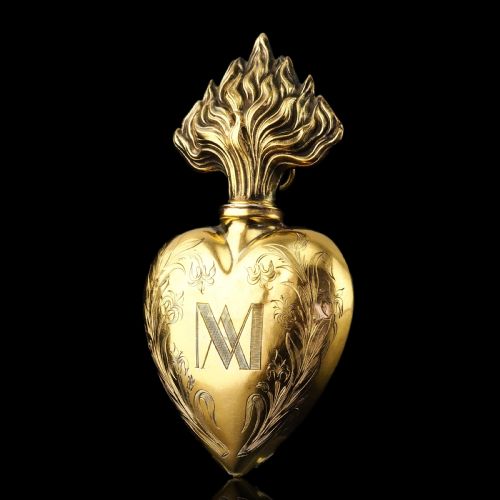
Makers utilised various forms such as tear drops, cylinders, hearts, and eggs, often pairing sterling silver or silver gilt mounts with glass bodies originating from prominent glasshouses.
How they were made
Silversmiths formed the mounts and caps using techniques like repoussé, chasing, and engine turning to create intricate surface patterns and secure closures. Molten glass was blown into moulds or gathered in multiple layers to achieve cased and overlaid colour effects before being cut and polished.
Vermeil, or silver gilt, was applied to silver mounts through fire gilding or electroplating, providing a rich gold surface over the sterling metal.
Some nineteenth-century ladies carried miniature uranium glass scent bottles that glow a striking neon green under ultraviolet light.
What varies in quality
The weight and gauge of the silver mounts distinguish standard production from superior pieces, with heavier mounts offering greater structural integrity and deeper ornamentation. Precision in the glass cutting and the clarity of layered or cased colours indicate the level of craftsmanship involved in the vessel's creation.
The complexity of the mechanism, such as a well-fitted inner stopper paired with a tightly sealing outer cap, marks a higher standard of execution. Additional decorative elements like guilloché enamel or intricate overlay work further elevate the standing of an individual piece.
Tonnel Paris·Baccarat·Limoges·Clichy·Palais Royal
The French Silver Scent Bottle Glossary
- Chatelaine
- A decorative belt hook from which women suspended utility items such as scent bottles, keys, and watches. These small flasks usually feature suspension loops.
- Cased Glass
- Glass formed of multiple distinct layers of different colours, often cut through to reveal the contrasting layer beneath. This technique created rich visual depth.
- Guilloché
- A decorative mechanical engraving technique that produced precise, intricate geometric patterns on metal surfaces. It frequently served as a base for translucent enamel.
- Vermeil
- Sterling silver plated or gilded with a layer of fine gold. This finish provided the appearance of solid gold while utilising a silver base.
- Lithyalin
- An opaque, marbled glass developed in the nineteenth century to imitate semi-precious stones. It appears in rich brownish-reds and greens.
French Silver Scent Bottle: Frequently Asked Questions
How do I clean the inside of a vintage scent bottle?
Resist using harsh chemical cleaners or submerging antique silver mounts in abrasive solutions for extended periods. Warm water and a gentle bottle brush usually suffice to clear internal residue without harming the glass or fragile seals.
Ensure the bottle dries thoroughly before replacing any stopper. If the silver mounts show tarnish, apply a gentle silver polish carefully with a cloth, avoiding contact with the glass body or enamel work.
Were these bottles meant to be carried or displayed?
Many smaller examples include suspension loops designed specifically for attachment to a chatelaine worn at the waist during the nineteenth century. These miniature pieces allowed owners to carry perfume throughout the day.
Larger vanity bottles and flasks remained stationary on dressing tables or fitted travel cases. The presence of a tight-fitting hinged cap typically indicates a piece intended for portability.
What is cased glass and how is it identified?
Cased glass consists of two or more distinct layers of glass fused together during the blowing process. Looking closely at the rim or a cut facet reveals the layered boundary lines where different colours meet.
Artisans often cut through the outer layer to expose the contrasting colour underneath, creating sharp visual patterns. This method adds considerable weight and depth to the vessel.