




Georgian Scent Flask
A georgian scent flask is a pocket-sized vessel for carrying perfume, prized for its miniature craftsmanship and tactile presence.
Georgian Scent Flask
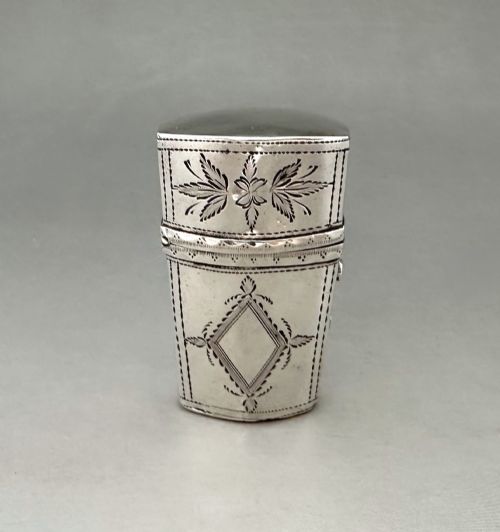
When you search for a georgian scent flask, you enter a field of small personal containers shaped by eighteenth and nineteenth century social habits. These pieces include scent bottles, perfume funnels, scent bottle holders, and etuis with tool sets.
The versions you are most likely to meet on this page span the Georgian and Regency periods, alongside nineteenth century interpretations. They arrive in silver, glass, velvet, copper, tortoiseshell, porcelain, and enamel forms.
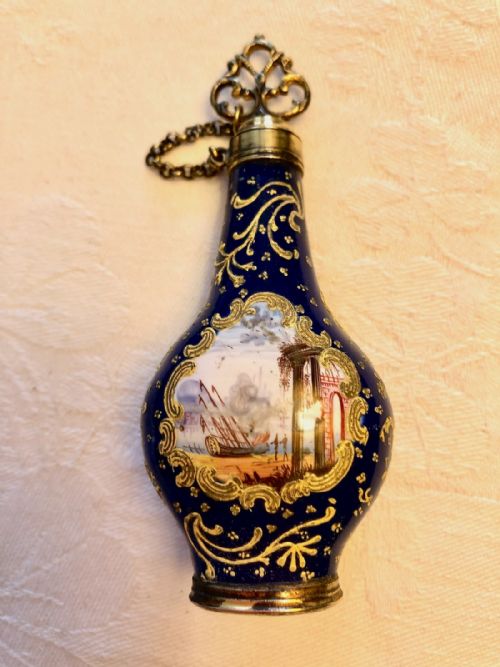
Makers such as Flight, Barr & Barr appear in Worcester porcelain rose water sprinklers, while other examples rely on silver cases or hand-painted enamel scenes.
Materials and methods
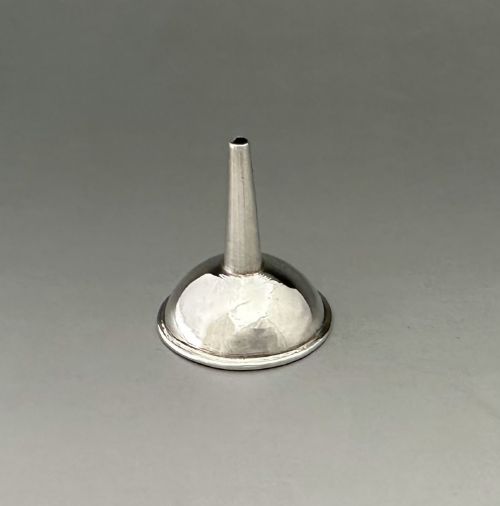
Makers shaped silver into filigree, silver-gilt frames, and cased protective holders for delicate glass vials. They also utilised Old Sheffield plate for functional accessories like perfume funnels.
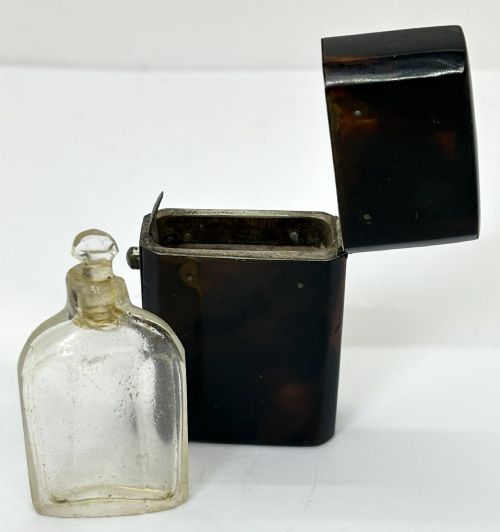
Porcelain pieces from factories like Worcester were formed with painted decoration, while tortoiseshell and enamel were shaped into small etuis and necessaires containing bodkins and tweezers.
Materials recorded in this category include silver, glass, velvet, copper, tortoiseshell, porcelain, enamel, and leather.
Judging the standard
Quality rests on the crispness of hand-painted scenes on enamel and the precision of silver filigree or engraving, such as Jacobite sympathy motifs on glass. Simpler vessels contrast with fitted etui tool sets housing specialised implements.
The integration of materials dictates the standing of a piece, from plain glass vials to tortoiseshell holders lined with velvet and fitted with silver instruments.
Flight, Barr and Barr
The Georgian Scent Flask Glossary
- Etui
- A small ornamental case for holding needles, cosmetics, or scent bottles. These portable containers often housed miniature tools.
- Perfume funnel
- A tiny funnel utilised for transferring liquid scents into narrow-necked bottles without spillage. They appear in silver and Old Sheffield plate.
- Necessaire
- A small fitted case containing multiple toilet or writing implements. Examples include tortoiseshell holders with bodkins and tweezers.
- Silver-gilt
- Silver that has been coated with a thin layer of gold. This treatment provided a rich interior or exterior finish.
- Filigree
- Delicate ornamental work of fine silver wire intertwined. It created openwork patterns on scent bottle cases.
Georgian Scent Flask: Frequently Asked Questions
What is a georgian scent flask?
A georgian scent flask is a small personal container used during the eighteenth and nineteenth centuries to carry liquid perfume or salts.
These pieces range from silver-cased glass vials to tortoiseshell holders and porcelain sprinklers.
How were these flasks used?
Owners carried them in pockets or reticules to refresh the air or combat unpleasant odours in public spaces.
Specialised tools like funnels helped transfer perfumes without waste.
What materials did makers use?
Makers worked with silver, glass, tortoiseshell, copper, porcelain, and enamel.
Some objects combined several materials, such as tortoiseshell fitted with silver tools and velvet linings.
How do I distinguish periods?
Periods are identified through stylistic cues, manufacturing techniques, and material preferences recorded across the Georgian and Regency eras.
Hand-painted enamel scenes and silver filigree point to eighteenth-century practices, while specific porcelain marks point to the early nineteenth century.