




Miniature Oil Paintings Framed
Miniature oil paintings framed offer intimate glimpses of past centuries, capturing sitters, landscapes and mythology on small panels designed for close appreciation.
Miniature Oil Paintings Framed
When you search for miniature oil paintings framed, you encounter small works executed in oil paint, often taking the form of portraits, landscapes, or still life compositions. These pieces date from the seventeenth century through to the early twentieth century, spanning periods such as the Georgian, Regency, and nineteenth century.
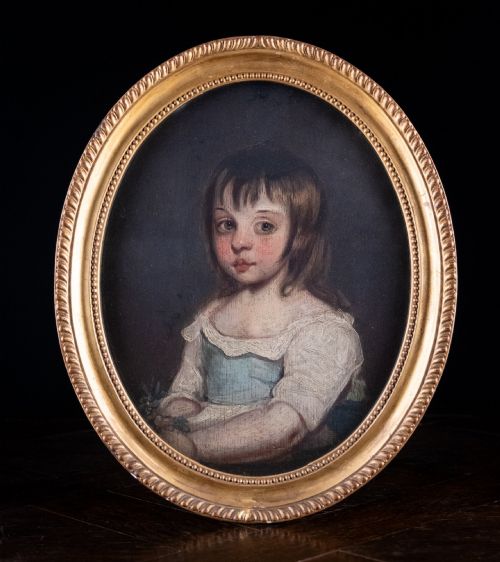
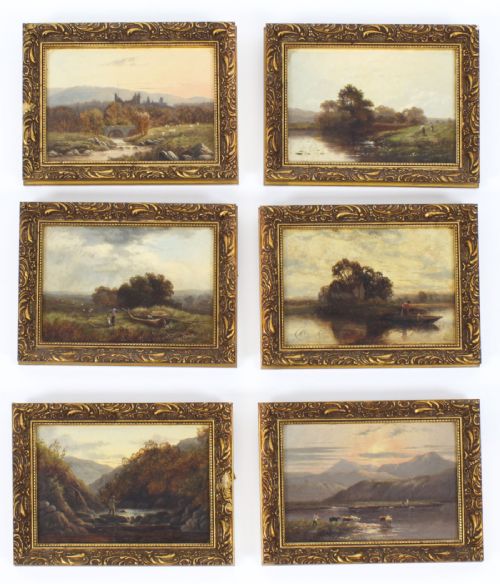
The subjects range from portraits of nobility and everyday sitters to romantic ruins, river landscapes, and floral studies. You will find works created within British, continental, and Scandinavian schools, reflecting diverse regional aesthetics.
Most examples arrive ready to hang in their original or period frames, preserving the intimate scale intended by the artist. The selection here encompasses single works, pairs, and sets representing various historical revival styles.
Materials and construction
Artists painted these small works using oil paint on supports such as wood panels, copper sheets, tinplate, and canvas boards. Oil allowed for rich colour blending and fine detail necessary on a reduced scale.
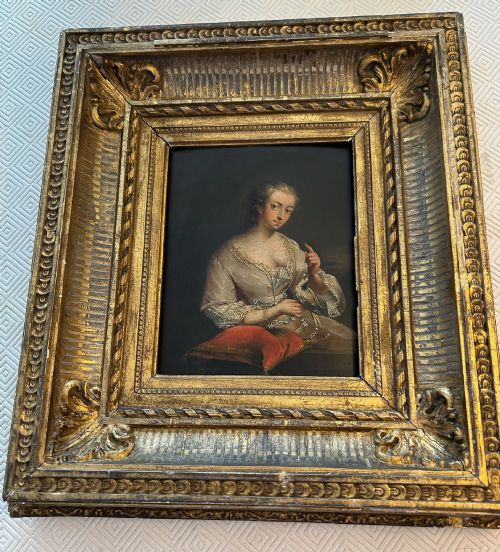
Frames utilise wood, gesso, and gold leaf, often finished with gilt wood mouldings that complement the artwork. Glass typically protects the painted surface from dust and environmental damage.
Listings span from the seventeenth century to the twentieth century, incorporating materials like wood, copper, tinplate, oil paint, and gold leaf.
Distinguishing quality in miniature works
The integrity and craftsmanship of the frame contribute significantly to the overall merit of the piece. Period frames that retain their original gilding and gesso decoration elevate the context of the artwork.
Jean-Baptiste van Loo·William Egley·Louis Léopold Boilly·Diana Hill·John Scougall·Elisabeth Vigee Le Brun·Francis Alleyne
The Miniature Oil Paintings Framed Glossary
- Oil on copper
- A technique where artists paint directly onto a prepared copper sheet, providing a smooth surface that preserves fine detail and prevents cracking. This support was favoured for small cabinet paintings.
- Gesso
- A plaster mixture applied to wood frames as a base for moulding and gilding. It allows artisans to carve intricate decorative details before applying gold leaf.
- Portrait miniature
- A small painted likeness intended for personal use or intimate display. While often executed in watercolour on ivory, many fine examples employ oil on panel or copper.
- Romanticism
- An artistic movement emphasising emotion, individualism, and awe of nature. In these paintings, it manifests in dramatic landscapes, ruins, and expressive portraiture.
- Tinplate
- Thin sheet iron coated with tin, utilised as an inexpensive and stable painting support by regional artists.
Miniature Oil Paintings Framed: Frequently Asked Questions
What subjects are most common in these frames?
Portraits dominate the selection, ranging from named historical figures and nobility to anonymous sitters captured in distinct period dress. You also encounter romantic ruins, river landscapes, and floral still life compositions.
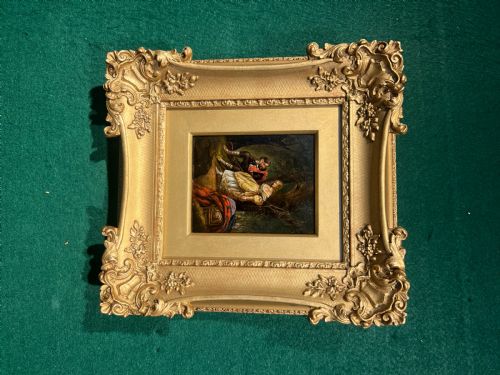
Artists frequently drew inspiration from classical mythology, religious themes, or earlier masterworks, producing smaller interpretations for private collectors.
How do I distinguish eighteenth-century pieces from nineteenth-century ones?
Dating relies heavily on the style of dress, hair styling, and the framing techniques characteristic of each era. Eighteenth-century and Georgian works often display powdered wigs, specific neckwear, and simpler neoclassical framing.
Nineteenth-century examples introduce broader stylistic movements such as romanticism and various revival styles, accompanied by heavier moulded frames finished in gilt wood or gesso.
Are these paintings signed by the artists?
Some pieces feature signatures, monograms, or inscriptions left by the painter, while others are attributed to specific schools or circles based on stylistic analysis. Unsigned works remain common, reflecting the historical practice of producing modest cabinet art for private buyers.
Inscribed frames or reverse labels sometimes provide additional provenance regarding the sitter or the artist's workshop.