

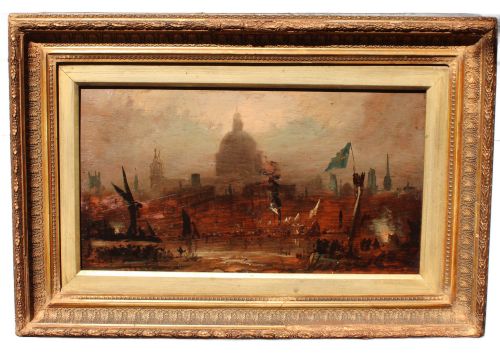
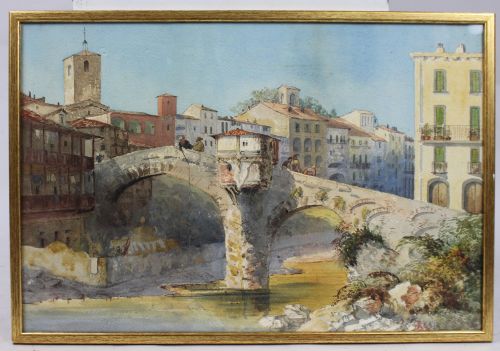
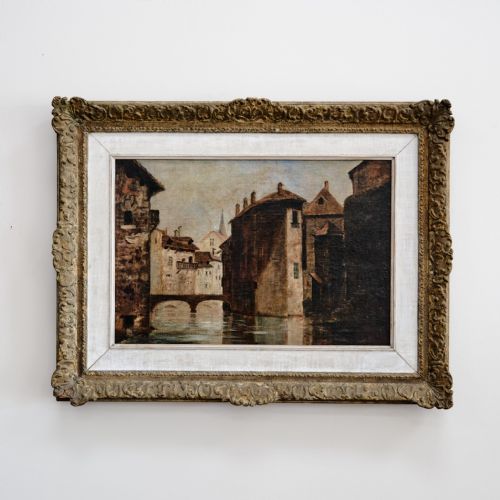
Framed River Art
Framed river art captures flowing water and pastoral banks through oils, watercolours and engravings preserved in wood and gesso.
Framed River Art
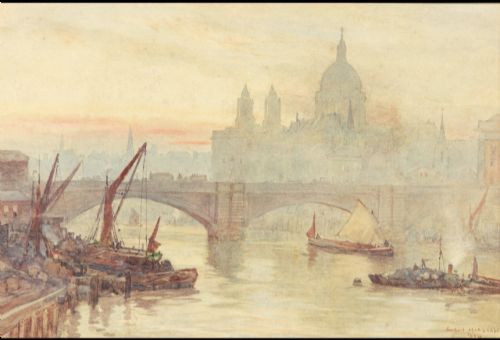
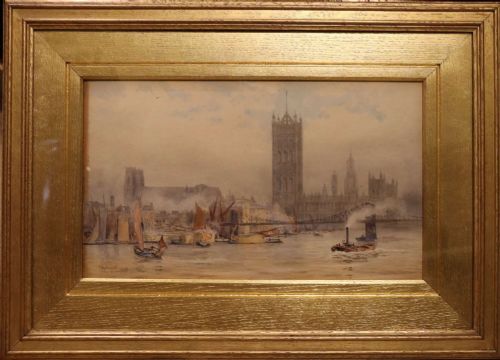
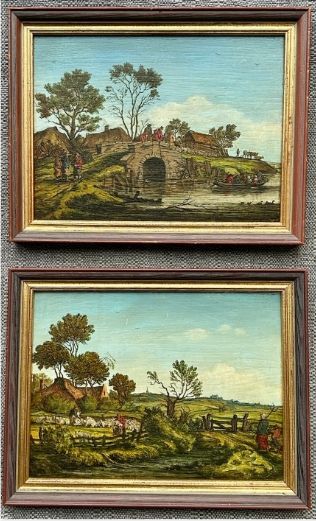
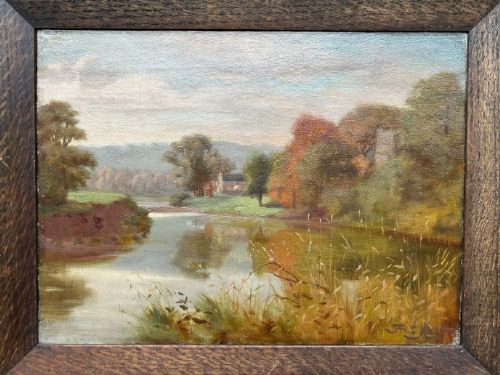
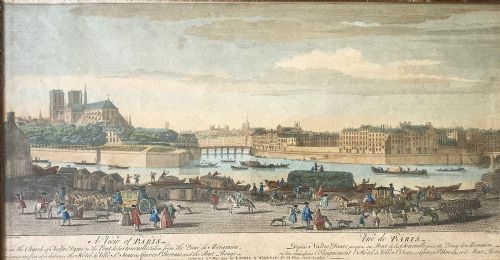
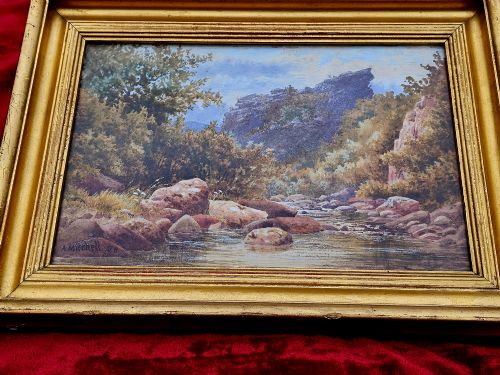
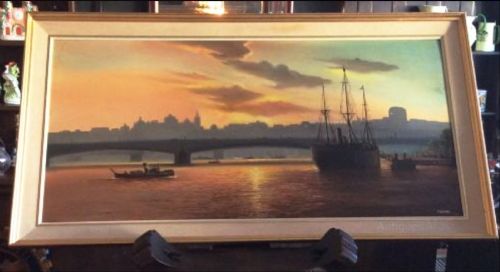
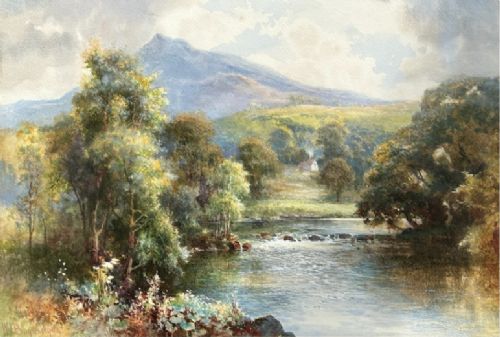
When you search for framed river art, you encounter landscape depictions centring on waterways, bridges and estuaries. The selections span rural Welsh streams, industrial London docks on the Thames and continental canalscapes.
The pieces appearing most frequently across these listings are nineteenth-century watercolours and oil paintings on canvas or wood panels. Artists of the Victorian and Edwardian periods dominate the selection, alongside earlier Georgian engravings and mid-twentieth-century scenes.
How they were made
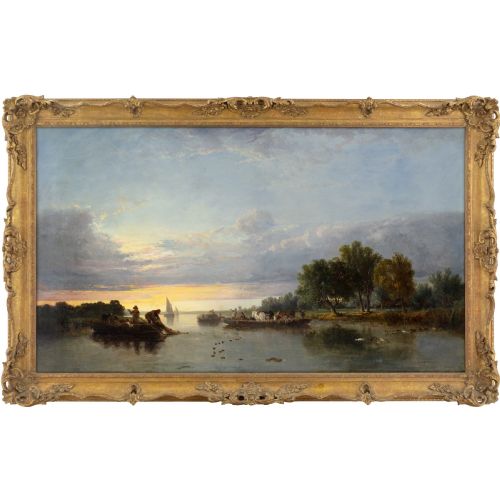
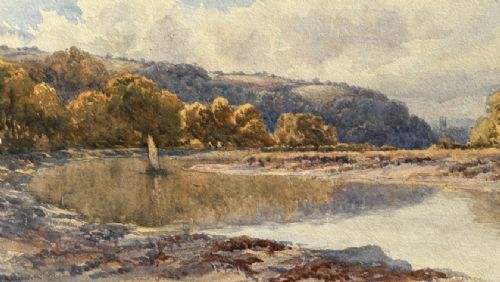
Makers utilised oil paint on canvas, wood panels and board, building up rich textures for water surfaces and atmospheric skies. Watercolours on paper appear frequently, often finished with delicate pen and ink work or charcoal underdrawing.
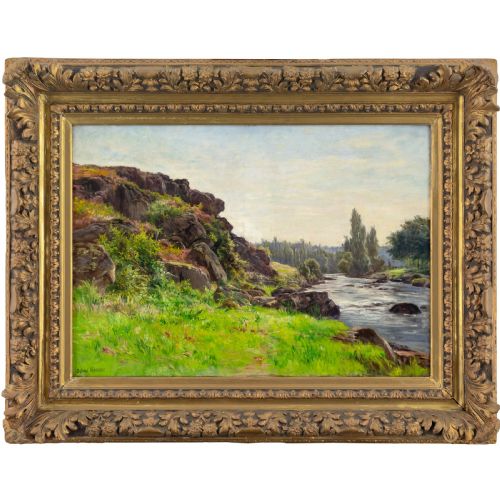
Traditional framing involved carved wood embellished with gesso moulds, protecting the fragile paper or canvas surfaces beneath glass.
Listings feature works spanning the 18th, 19th and 20th centuries, executed in oil, watercolour, charcoal and engraving.
What varies in quality
The skill in handling light on water and atmospheric perspective separates superior compositions from routine topographical records. Painters who captured the changing mood of a riverbank through confident brushwork achieve a more compelling visual depth.
The integrity of the original materials, from stable canvas stretchers to unblemished paper supports, influences the enduring presentation of each piece.
Frederick Marriott·William Joseph Boyes·Gabriel Mathieu·Robert W Macbeth·Frank William Scarbrough·Robert Thorne Waite·Francis Moltino·Willem Bos·George Oyston·T B Hardy·Alfred East·Herbert Royle·Paul Desire Trouillebert·Florence Adelina Hess·Henry H Parker
The Framed River Art Glossary
- Oil on Canvas
- Pigment mixed with drying oil applied to a woven fabric support. This combination allows for rich blending and textured impasto work.
- Watercolour
- Paint consisting of colour pigment suspended in a water-soluble vehicle. It is typically applied to paper to achieve translucent washes.
- Gesso
- A paint mixture consisting of a neutral binder mixed with chalk or gypsum. It was applied to wooden frames before gilding or painting.
- Engraving
- A printmaking process where an image is incised into a metal plate. Ink is then pressed into the grooves to create the final paper impression.
- Wood Panel
- A flat wooden board utilised as a rigid painting support. Artists favoured this surface for stability before canvas became dominant.
Framed River Art: Frequently Asked Questions
What periods do these river paintings represent?
The works span from the eighteenth century through the Victorian and Edwardian eras into the mid-twentieth century. Nineteenth-century examples form the core of the available selection.
Earlier Georgian engravings and later twentieth-century coastal scenes also appear among the offerings.
Which materials are most common?
Oil paint on canvas and wood panels appear frequently alongside watercolours executed on paper. Charcoal and pen and ink drawings are also represented.
Frames constructed from wood and finished with gesso enclose the majority of these artworks.
Where were these river scenes painted?
Subjects include British waterways such as the Thames, the River Kennet, and Welsh rivers alongside continental views in France, Italy and Holland.
Urban bridges and rural pastoral banks both feature prominently in the compositions.
How should I display framed river art?
These works suit traditional wall display away from direct sunlight to protect delicate watercolours and paper supports. Maintaining stable indoor humidity preserves the wooden frames and gesso.
Grouping pieces by period or framing style can create a cohesive gallery arrangement.