





River Fishing Artwork
River fishing artwork captures the quiet focus of anglers by banks and streams through oil paint and watercolour.
River Fishing Artwork
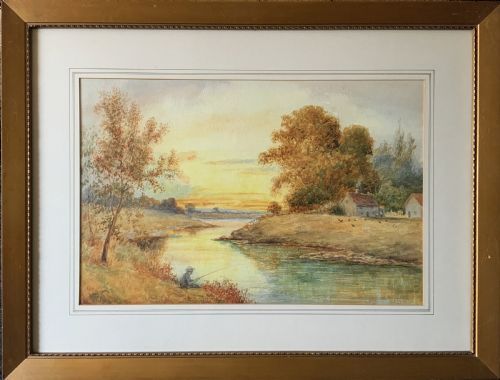
These works focus on the quiet occupation of angling set beside rivers, streams, and lakes. Buyers find oil paintings on canvas or panel alongside watercolours and prints depicting pastoral scenes and sporting moments.
Victorian and Edwardian pieces dominate the selection, often showing figures by northern rivers or southern waterways. Mid-century examples also appear, carrying the subject into the nineteen-fifties with broader brushwork.
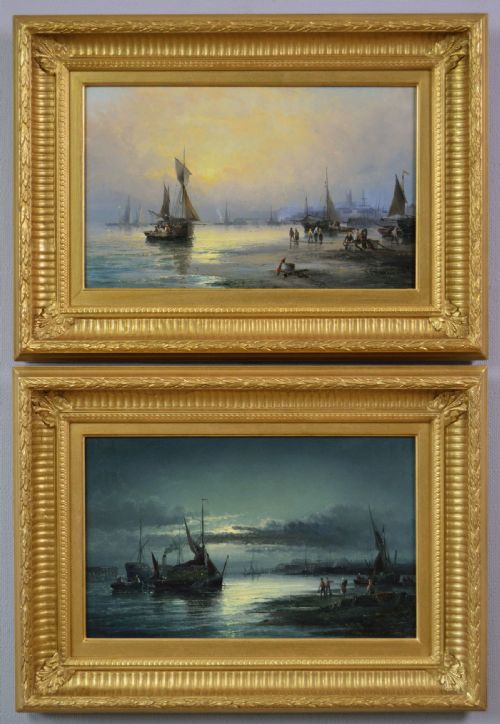
The format ranges from intimate watercolours on paper to substantial oil paintings framed in gold leaf. Collectors encounter both named artists of the British school and unsigned works from the nineteenth century onward.
Quality differences
The skill in rendering water reflections and the natural posture of the angler separate accomplished works from routine decorative pieces. Hand-mixed oil pigments and confident brushwork show the artist's direct observation of the landscape.
The preservation of the paint surface and the originality of the wooden frame influence the character of each piece. Works bearing signatures from known British artists command stronger interest than unsigned compositions.
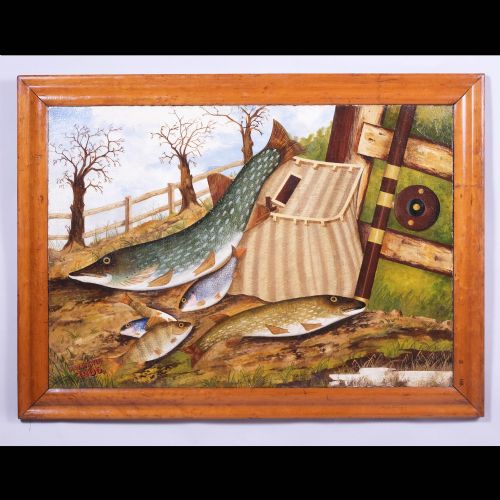
Northern pike occasionally interrupt the peaceful silence by breaking the surface right before the catch.
Kenneth Cozens·Florence Adelina Hess·Sir David Murray·Owen Bowen·Paul H Ellis·Henry Sykes·Snaffles·Henry John Sylvester Stannard·W E Barrington Browne·Hubert Thornley·Benjamin Callow·Robert John Hammond·Sonia Mervyn·John Pedder
The River Fishing Artwork Glossary
- Oil on Canvas
- Pigment mixed with drying oil applied to a woven fabric support stretched over a frame. This combination allows for deep colours and layered textures.
- Watercolour
- Paint made of colour suspended in a water-soluble binder, traditionally used on paper. It creates transparent washes of light.
- Wood Panel
- A flat wooden support used instead of canvas for painting. Artists favoured it for stability and smooth surfaces.
- Gold Leaf
- Gold beaten into extremely thin sheets used to gild picture frames. It adds a warm metallic border to the artwork.
- British Impressionism
- A style of painting influenced by French movements but rooted in British landscapes. It prioritises natural light and loose brushstrokes.
River Fishing Artwork: Frequently Asked Questions
What periods do these paintings cover?
The selection spans from the nineteenth century through the Edwardian era into the mid-twentieth century. Victorian realism sits alongside later impressionistic and sporting interpretations.
Most pieces date between eighteen-ninety and nineteen-fifty, reflecting changing tastes in British landscape and sporting art.
Are the watercolours and oils framed?
Many oil paintings arrive in period frames, often finished with gold leaf. Watercolours on paper are mounted behind glass to protect the delicate medium.
Original frames complete the presentation, though buyers should check if the moulding matches the era of the painting.
How do I care for an oil painting?
Keep paintings away from direct sunlight and dramatic shifts in temperature or humidity. Dust the surface gently with a soft, dry brush without applying pressure.
Avoid using liquid cleaners on the paint or the gilt frame to prevent moisture damage.
What subjects feature besides anglers?
The compositions frequently include rural riverbanks, bridges, locking gates, and small boats on water. Some works focus on the fish themselves, such as salmon or pike.
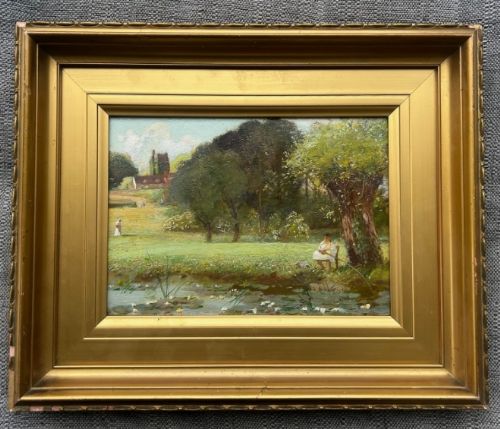
Trees, cattle, and distant village churches often anchor the background of the fishing scenes.