


Small Landscape Oil Paintings
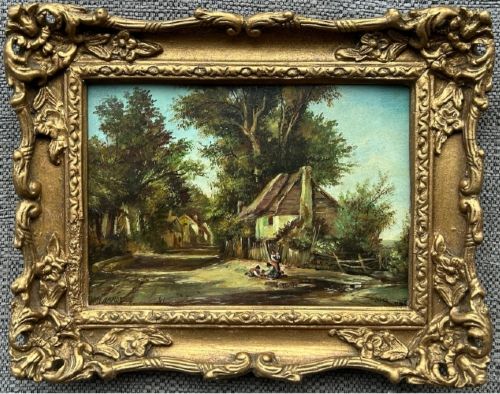
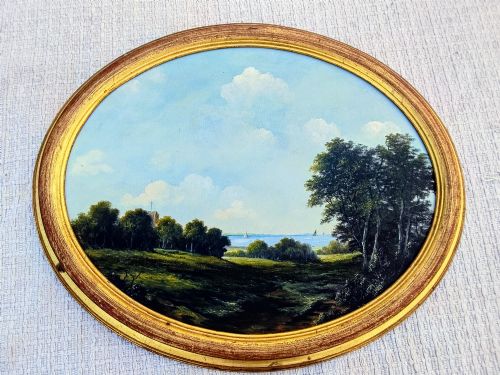
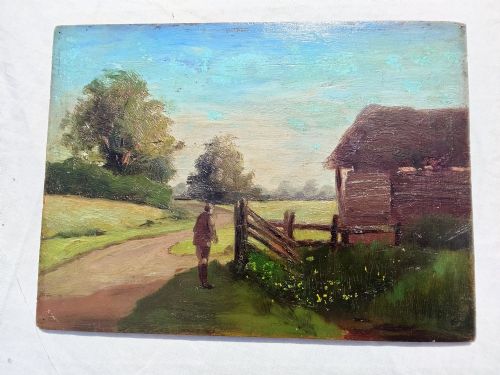
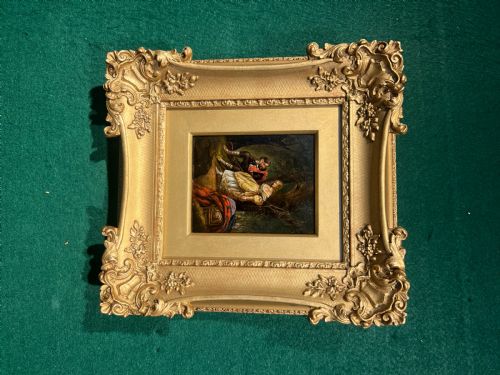
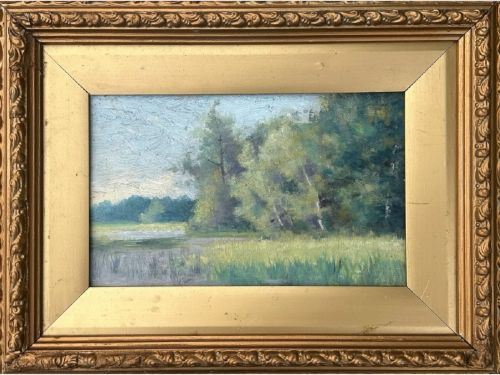
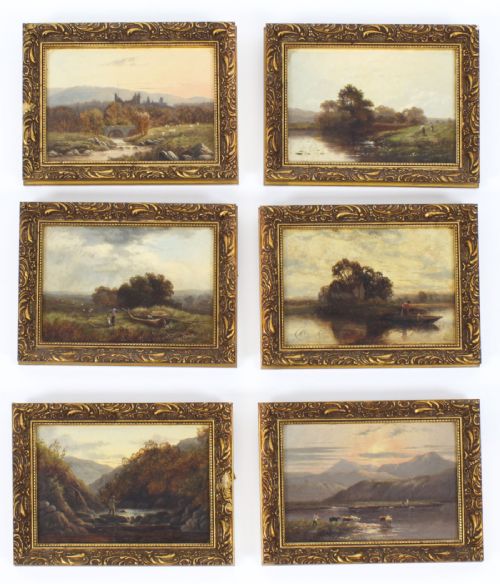
These small landscape oil paintings capture vast rural vistas and quiet coastal scenes within compact wooden panels and gilt frames.
Small Landscape Oil Paintings
Small landscape oil paintings capture rural vistas, coastal scenes, and river views in compact formats designed for intimate display. When exploring small landscape oil paintings, buyers encounter works spanning the Georgian era, the nineteenth century, and the mid-twentieth century.
Most examples present straightforward depictions of nature, including figures by lakes, farmsteads, and winter views. These works demonstrate how artists compressed expansive scenery into portable compositions.
How they were made
Artists applied oil paint to wooden panels, wooden boards, canvas, and paper supports. These traditional grounds provided stable surfaces for detailed brushwork.
Gilt wood frames and applied gesso enrich many pieces, frequently accented with gold leaf. These surrounds complement the small scale of the painted compositions.
Materials across the selection include traditional oil paint, wooden panels, gesso, canvas, and gold leaf.
What varies in quality
Depth of composition and handling of light distinguish individual works. Skilled brushwork brings movement to water, foliage, and skies within restricted dimensions.
The integrity of the original support and the quality of the surrounding frame affect the overall presentation. Period frames tailored to the panel enhance the visual impact of the artwork.
William Howard Hardy·Maud Raphael Jones·Miles Birkett Foster·Fernando Del Basso·Eugene Verboeckhoven·J. Phipps·M. C. Hider·Florence Hess·Kershaw Schofield·Andreas Schelfhout·Richard Wilson
The Small Landscape Oil Paintings Glossary
- Oil on panel
- A painting executed directly onto a prepared wooden board. This surface provides a rigid support favored for smaller works.
- Gesso
- A plaster-like mixture applied to wooden frames or panels to create a smooth base for gilding and paint. It gives frames their crisp architectural detail.
- British Impressionism
- A late nineteenth and early twentieth-century painting style focusing on light and loose brushwork. Artists captured everyday scenes outdoors.
- Oil on board
- Pigment bound in drying oil applied to a compressed paper or wood pulp board. It offers a lightweight alternative to traditional canvas.
- Gilt wood
- Timber frames finished with a thin layer of gold leaf or metallic paint. This treatment adds warmth and reflection around the artwork.
Small Landscape Oil Paintings: Frequently Asked Questions
Where should I hang a small landscape oil painting?
These compact paintings suit narrow wall spaces, hallways, or grouped arrangements in a study. Their modest scale allows them to fit comfortably among books and smaller objects.
Avoid direct sunlight to protect the oil pigments and gilt frames from fading over time. Eye-level placement generally offers the best viewing distance for detailed brushwork.
How do I identify the period of a painting?
Examine the materials of the support, the style of the frame, and any visible signatures or inscriptions on the reverse. Canvas types and wooden panel preparations often indicate specific manufacturing eras.
Stylistic elements like brushwork and subject matter also point towards nineteenth-century romanticism or mid-century impressionism.
Are these paintings usually signed?
Many works bear artist signatures, monograms, or attribution notes on the front or back of the panel. Unsigned pieces frequently emerge from regional English and Scottish schools.
Attributions often rely on recorded styles, comparable works, and historical labels attached to the framing.
How should I clean a framed oil painting?
Dust the frame gently with a soft, dry brush to remove accumulated particles. Avoid using water or chemical cleaners on the painted surface or the gilt wood.
Professional conservators should handle any deeper cleaning of the oil paint or repair of damaged gesso.