
Traditional Country Landscape
Traditional country landscape works capture rural life, quiet fields and agrarian scenes through the eyes of earlier British artists.
Traditional Country Landscape
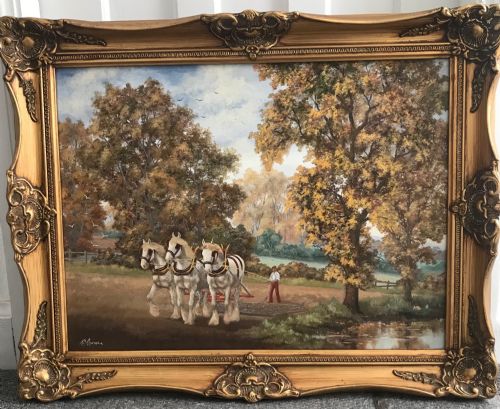
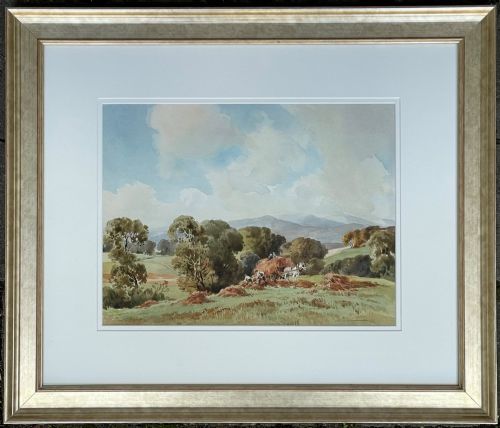
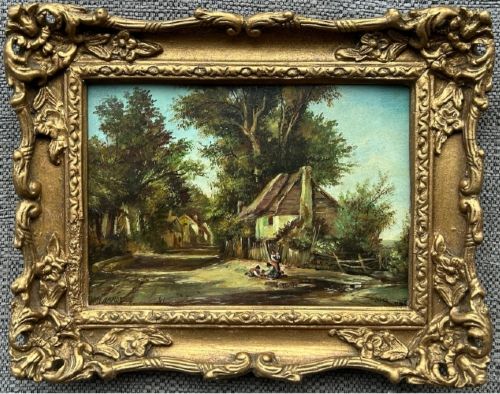
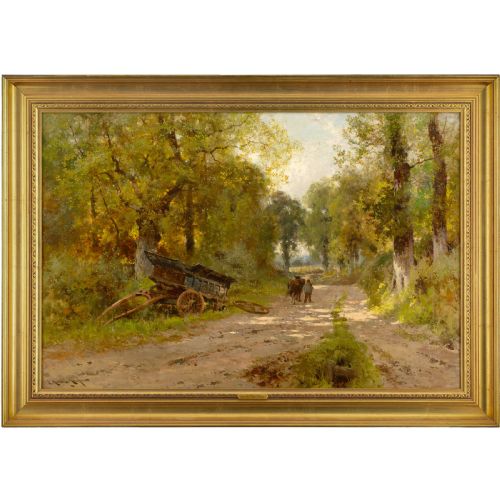
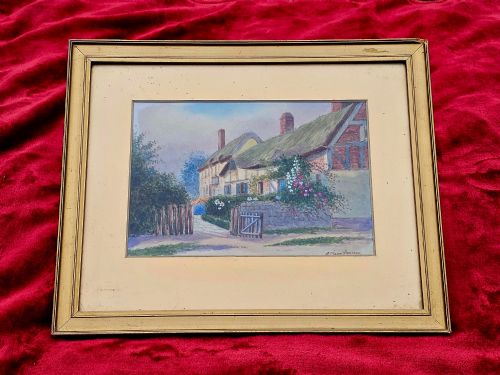
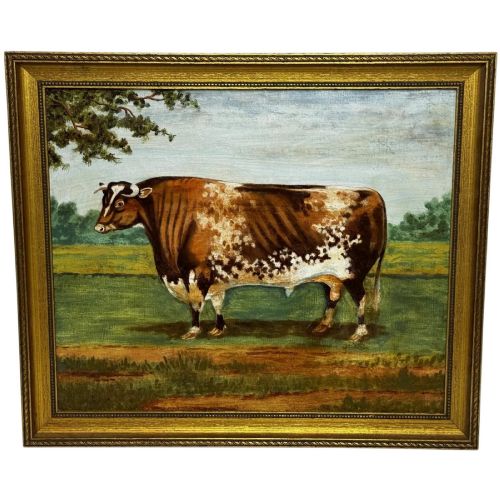
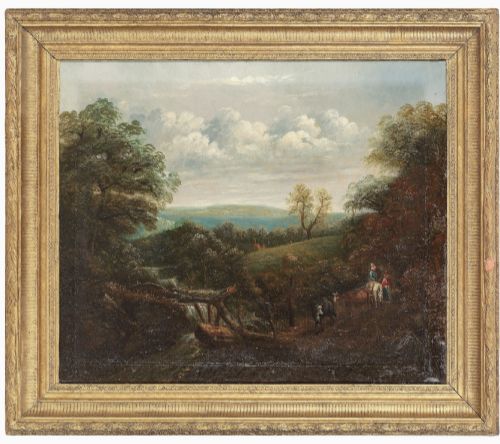
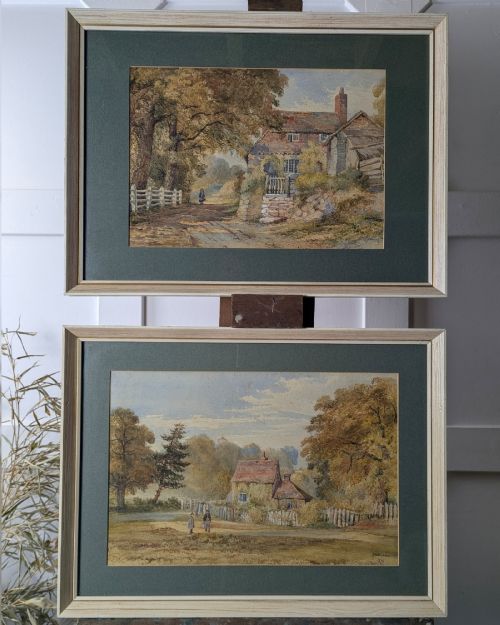
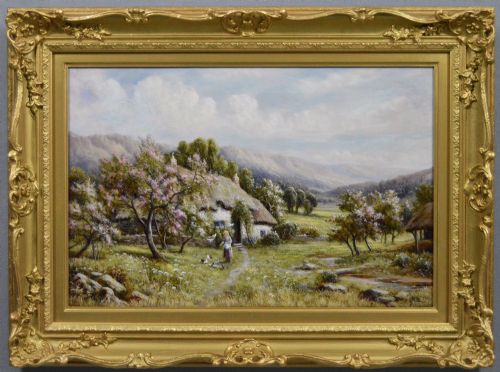
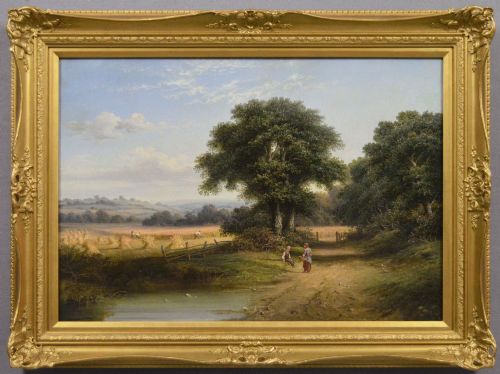
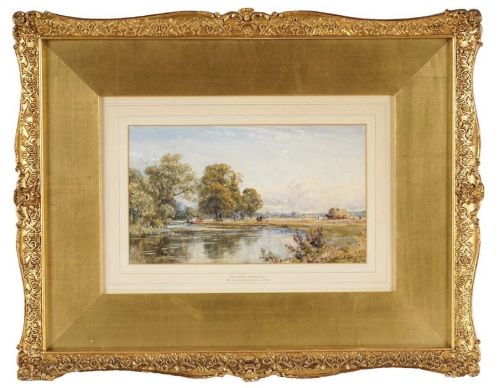
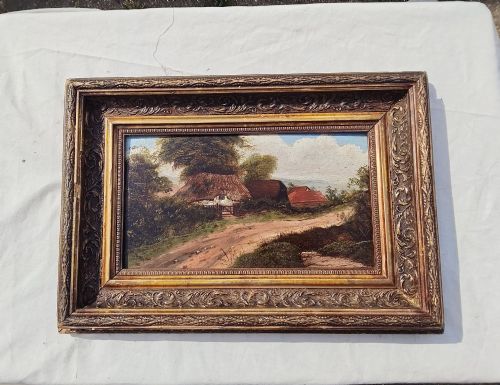
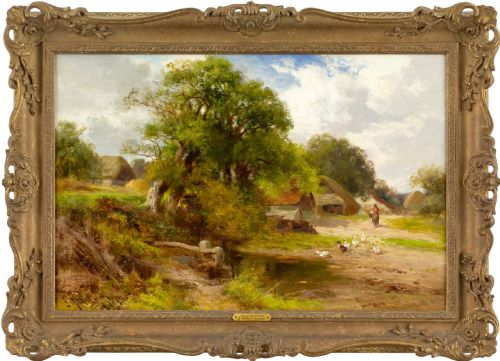
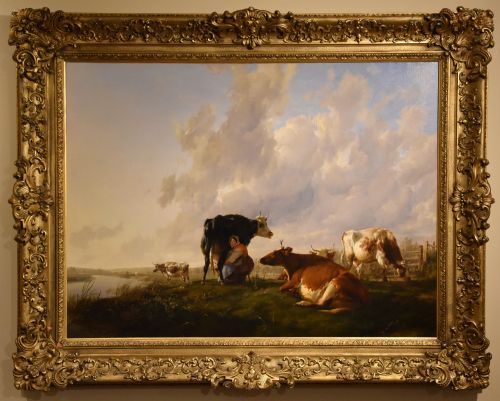
A traditional country landscape brings historical rural scenes, agricultural fields and pastoral views into domestic spaces through framed works. These pieces frequently depict harvest fields, river valleys, livestock and cottage paths across the British countryside.
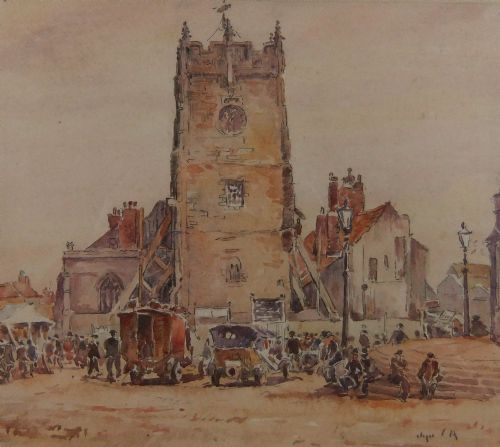
Buyers will most commonly encounter 19th-century and early 20th-century examples on this page, spanning the Victorian and Edwardian periods. Works range from intimate watercolours on paper to substantial oil paintings on canvas and wood panel.
Materials and Techniques
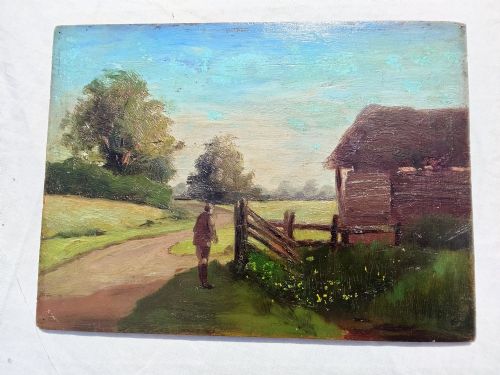
Artists painted these rural views primarily using oil paint on canvas, wooden boards, card or panel, alongside watercolours executed on paper. Canvas supports generally received a preparation layer of gesso before the application of pigments.
Many surviving examples retain their original wooden frames, frequently finished with gilding or gesso mouldings that reflect the aesthetic tastes of their respective periods.
Listings feature works from the 19th century, Edwardian era, and mid-20th century, executed in oil and watercolour on canvas, wood, card, and paper.
Distinguishing Quality in Country Views
Quality rests upon the artist's handling of light, atmospheric depth and naturalistic proportion within the composition. Stronger works demonstrate confident brushwork, nuanced colour palettes and convincing rendering of livestock, figures and foliage.
The sophistication of the secondary support and framing contributes to the overall standard. Original period giltwood frames and well-preserved panels or stretched canvases elevate the integrity of the piece.
Percy Lancaster·William Howard Hardy·John Horace Hooper·Robert John Hammond·Walter Heath Williams·Robert Thorne Waite·John Smith Atherton·Thomas Sidney Cooper·Henry Yeen King·Henry H Parker·Henry Schouten·Sydney Yates Johnson·Hubert Wellington·Owen Bowen·Charles Walter Simpson
The Traditional Country Landscape Glossary
- Oil on Canvas
- Pigments bound in drying oil applied to a woven fabric support stretched across a wooden frame. This medium allowed artists to build rich textures and deep tones.
- Watercolour
- A painting method where fine pigment is suspended in a water-soluble binder on paper. It produces transparent washes well suited to atmospheric rural views.
- Gesso
- A paint mixture consisting of a neutral binder mixed with chalk, gypsum or pigment. It served as a smooth preparatory surface for wooden panels and canvas.
- Giltwood
- Wood that has been treated with a thin layer of gold leaf or gold paint. Frames finished in this manner were standard for finer Victorian and Edwardian artworks.
- Wood Panel
- A rigid wooden support used by painters instead of canvas. These boards provide a stable surface that frequently survives in good condition.
Traditional Country Landscape: Frequently Asked Questions
What periods do these paintings date from?
The selection spans the nineteenth and twentieth centuries, with significant representation from the Victorian and Edwardian eras. Pieces reflect the prevailing artistic styles of British and European schools from those decades.
Dates range from the Georgian period through to the mid-twentieth century, including works created around 1900 and the interwar years.
How should I care for an antique oil painting?
Display paintings away from direct sunlight, high humidity and sudden temperature fluctuations to protect the canvas and pigments. Avoid hanging them near active heat sources which can dry out wooden panels and gesso.
Dust the surface gently with a soft, dry brush when necessary, and consult a professional conservator for cleaning rather than attempting restoration at home.
Are these paintings supplied with frames?
Many works retain their period frames, which are often constructed from wood and finished with gesso or gilt details. These frames complement the age and style of the artwork.
Listing descriptions specify whether a piece is framed, allowing buyers to identify works presented in period surrounds.
What subjects typically appear in these scenes?
Common subjects include harvest fields, river valleys, thatched cottages, livestock such as horses and cattle, and rural workers. These compositions celebrate traditional agrarian life across Britain.
Artists also recorded specific regional views, ranging from Yorkshire rivers to West Country pastures and Berkshire lanes.