

Miniature Jewellery Chest
A miniature jewellery chest is a small-scale piece designed to hold precious items, combining cabinet-maker skill with domestic utility.
Miniature Jewellery Chest
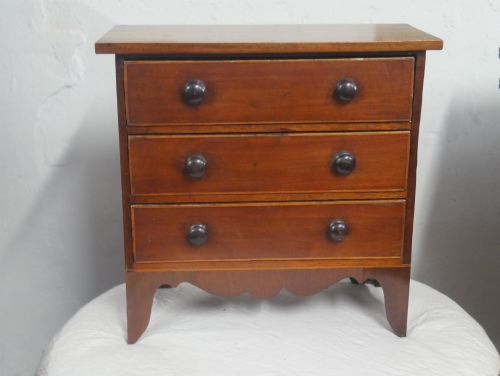
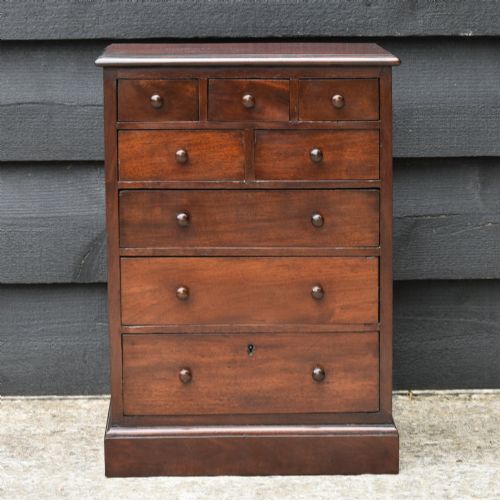
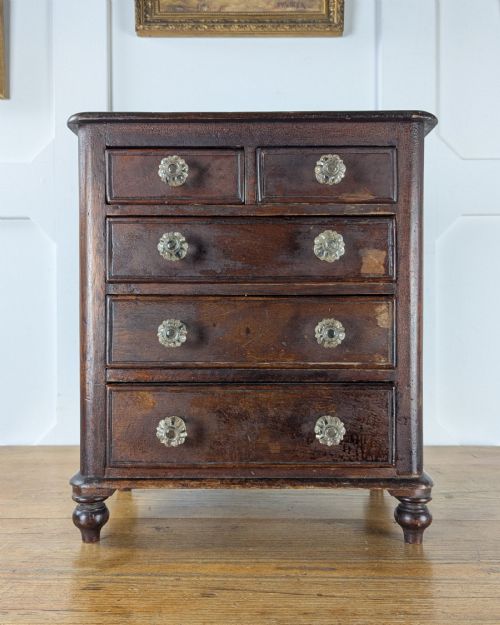
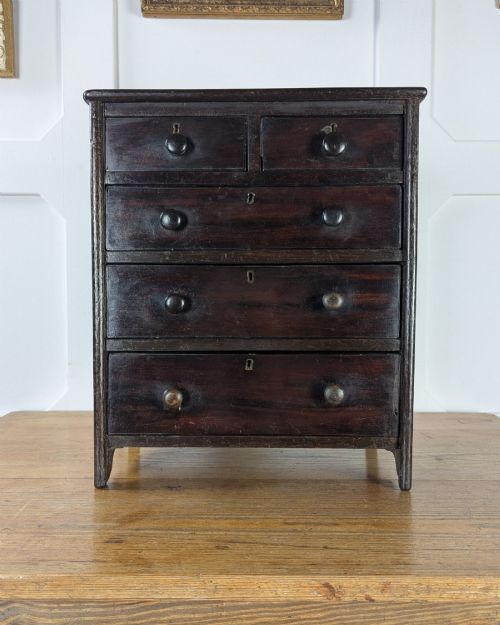
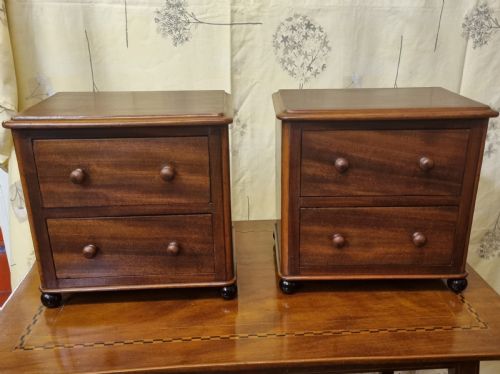
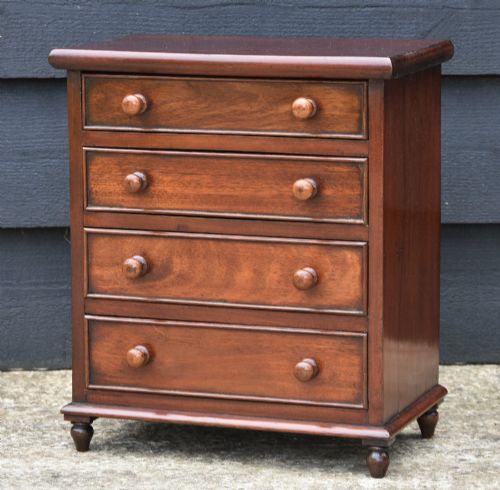
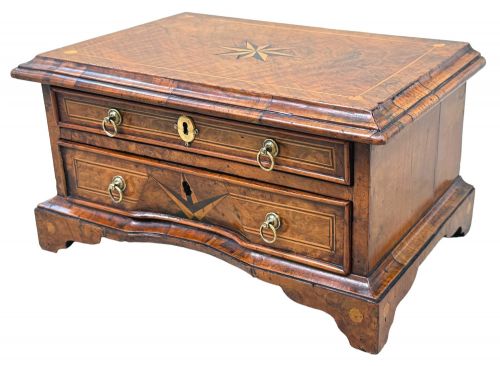
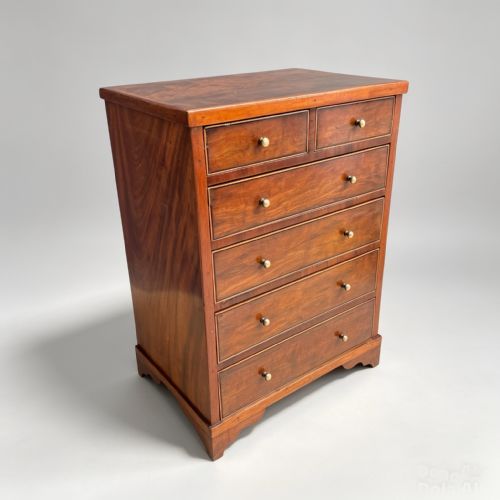
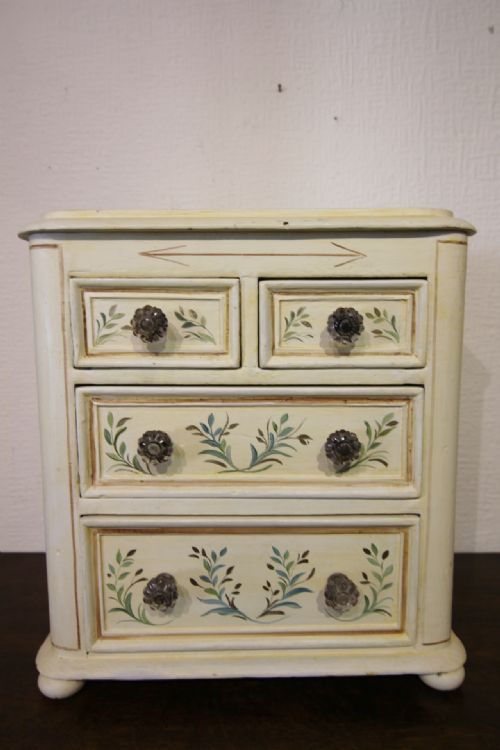
A miniature jewellery chest represents scaled-down furniture forms, most frequently encountered here as Victorian mahogany chests of drawers and apprentice pieces. These small pieces mirror full-sized household furniture from the Georgian, Victorian, and Regency periods, adapted for tabletop use or personal storage.
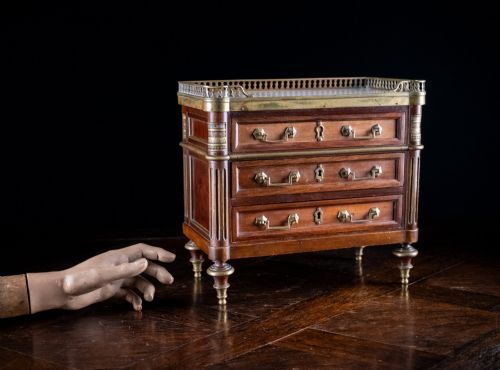
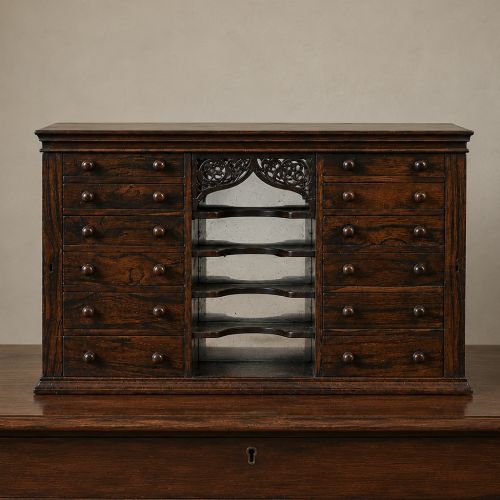
The materials seen in these cabinets span native and exotic woods such as mahogany, walnut, oak, and rosewood, alongside occasional bone, glass, and brass fittings. Makers produced table cabinets, collector cabinets, and miniature commodes that served practical storage needs while demonstrating technical proficiency.
Origins range across British workshops, French ateliers, and broader continental traditions, including specific regional expressions like Scottish apprentice chests and Welsh carved slate models. These items bridge the gap between functional storage and scale-model demonstration pieces.
How they were made
Cabinet-makers constructed these miniature chests using traditional joinery, shaping hardwoods like mahogany, walnut, and oak into small-scale carcases with fitted drawers. Timber selection relied on figuring and grain pattern to give presence to objects measuring only a few centimetres high.
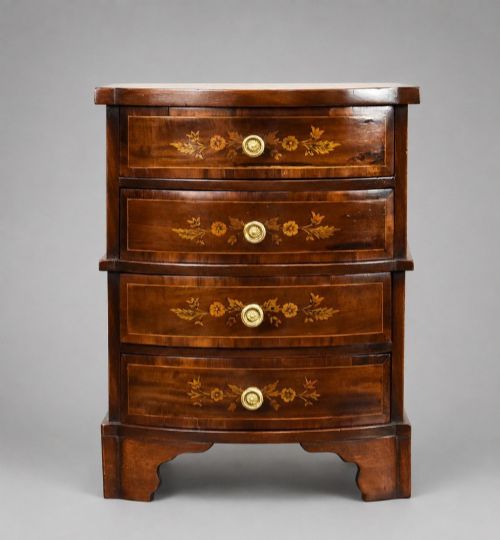
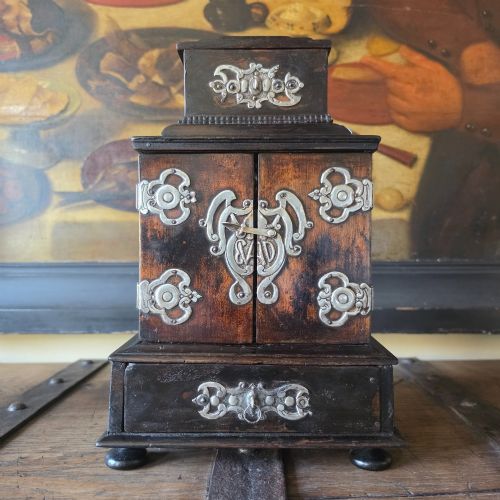
Surfaces were frequently finished with veneer, inlay, marquetry, or brass hardware such as engraved thistle plates and escutcheons. Structural elements included turned feet, secret drawers, and mirrored doors, executed with the same precision applied to full-sized furniture.
Listings feature woods such as mahogany, walnut, oak, and rosewood across Victorian and Georgian forms.
What varies in quality
Quality rests in the fidelity of the proportions and the precision of the miniature joinery, where dovetail corners and drawer linings match the standards of large furniture. Pieces built by accomplished makers exhibit careful timber selection and restrained inlay rather than heavy ornamentation.
The refinement of secondary details, including original brasses, functioning locks, and well-fitted secret compartments, elevates the standing of an individual piece. Surface condition and the natural patina of the wood further distinguish superior examples from standard workshop output.
The Miniature Jewellery Chest Glossary
- Apprentice piece
- A small furniture item created by a journeyman or trainee to demonstrate mastery of a trade before admission to a guild. These pieces often replicate standard domestic forms on a reduced scale.
- Wellington chest
- A tall, slender cabinet featuring a hinged locking stile on one side that secures all the drawers simultaneously. This form appears in miniature formats outfitted for personal storage.
- Marquetry
- The art of applying pieces of veneer to a structure to form decorative patterns and pictures. Craftsmen utilised contrasting wood tones to create geometric or floral motifs across drawer fronts and tops.
- Mule chest
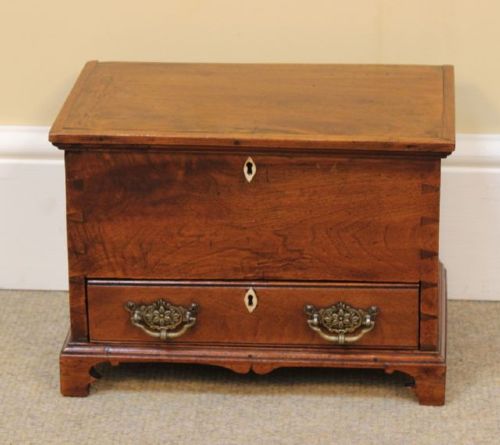
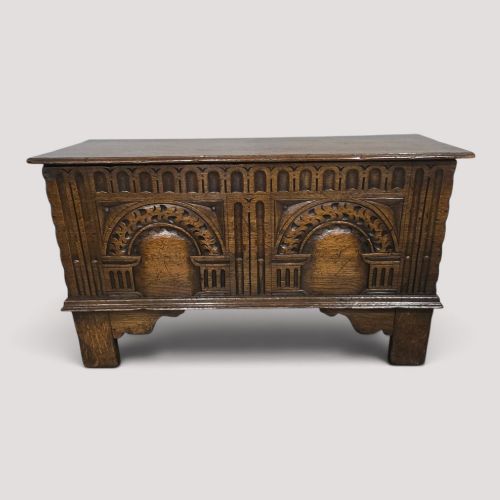
- A traditional storage chest featuring one or more drawers beneath the main lifting compartment. Miniature versions adapt this hybrid storage form for tabletop use.
- Escutcheon
- A flat plate surrounding a keyhole designed to protect the surrounding wood from wear. In these chests, they are often cast in brass and occasionally engraved with regional motifs.
Miniature Jewellery Chest: Frequently Asked Questions
What is a miniature jewellery chest?
A miniature jewellery chest is a scaled-down version of domestic furniture, such as a chest of drawers or a coffer, built to hold small valuables.
These pieces were produced in various woods throughout the eighteenth and nineteenth centuries for tabletop use.
Were these chests made by apprentices?
Many miniature chests are traditionally called apprentice pieces because craftsmen built them to demonstrate their technical proficiency in woodworking.
While some represent genuine training items, others were manufactured commercially as luxury tabletop accessories for domestic settings.
What woods were used for these chests?
Cabinet-makers utilised dense hardwoods including mahogany, walnut, oak, and rosewood to ensure structural stability at a small scale.
Finer examples frequently incorporate decorative veneers, inlay work, and contrasting secondary timbers like pine.
How do I date a miniature chest?
Dating relies on identifying the prevailing furniture style, such as Georgian proportions, Regency rosewood work, or Victorian turned feet and mahogany.
Construction methods, drawer lining materials, and hardware styles provide further evidence for placing a piece within a specific period.