
Miniature Collector Chest
These small-scale wooden drawer units combine precise cabinetry with practical storage, offering a compact way to house small items.
Miniature Collector Chest
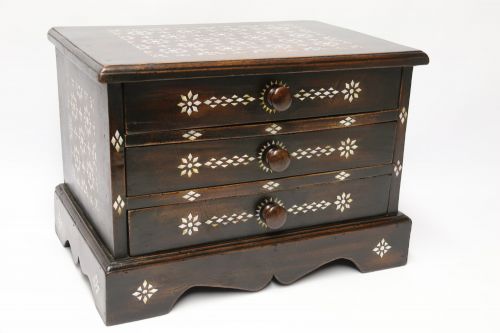
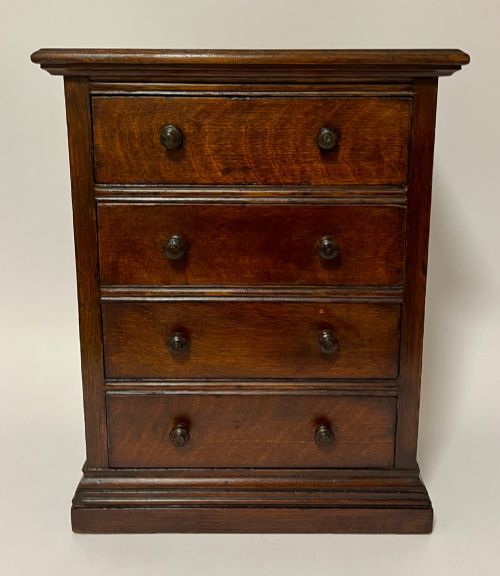
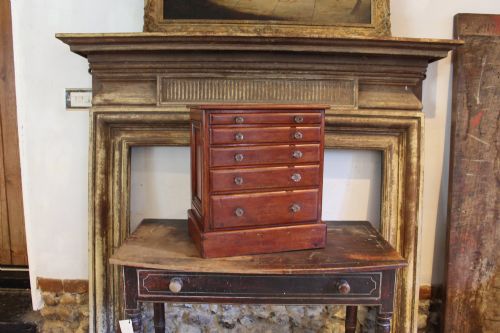
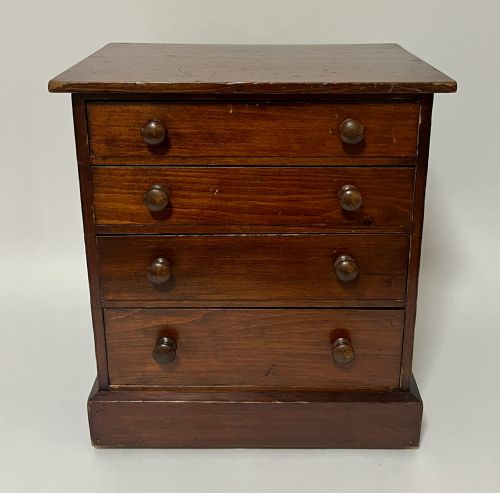
A miniature collector chest is a small tabletop case built to house specimens, jewellery or small valuables. Most pieces met here date from the eighteenth and nineteenth centuries, spanning Georgian, Victorian and Regency periods.
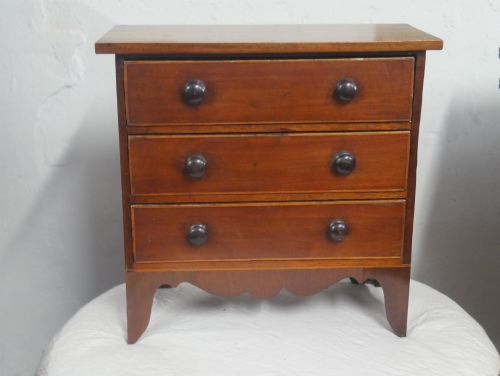
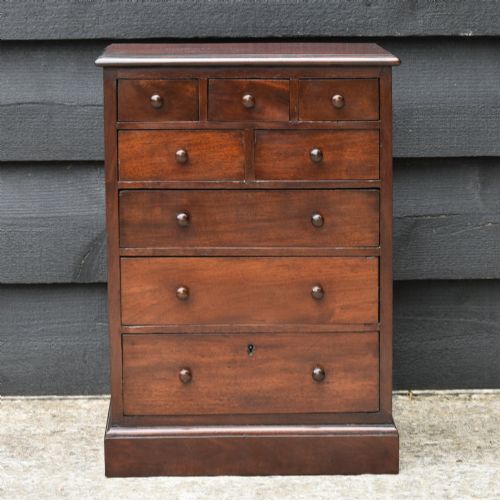
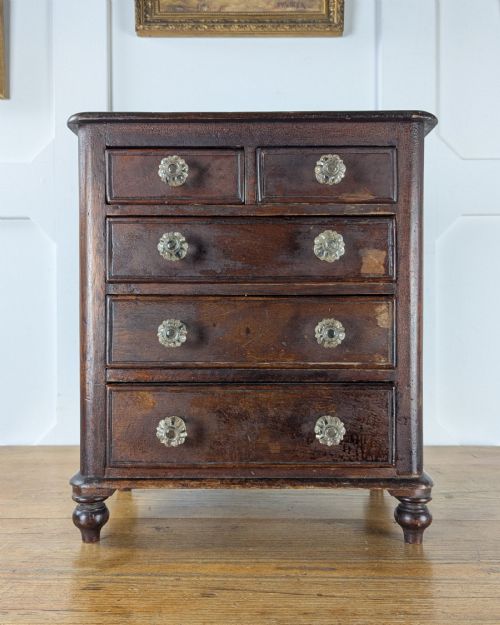
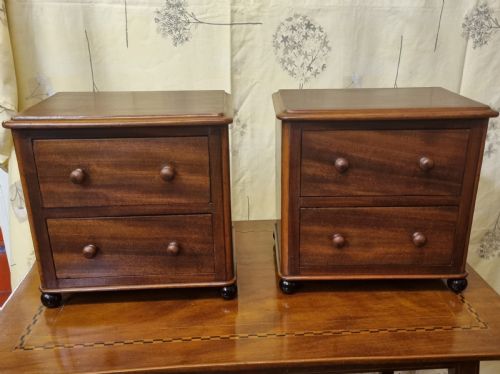
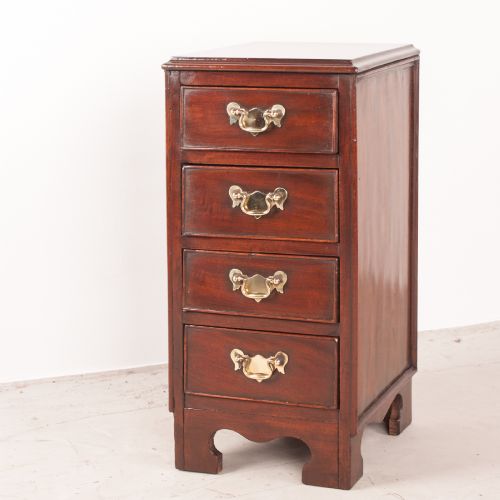
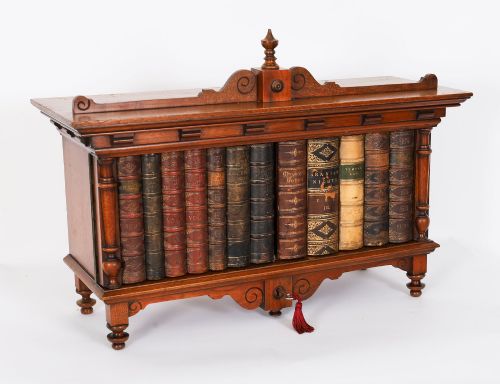
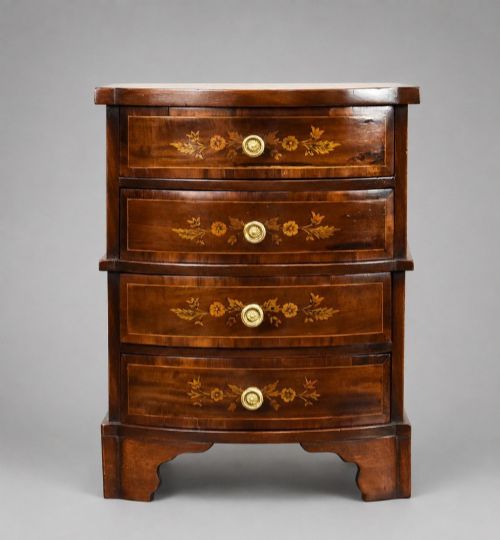
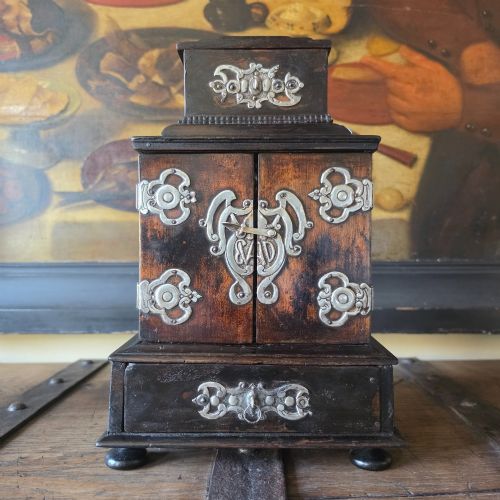
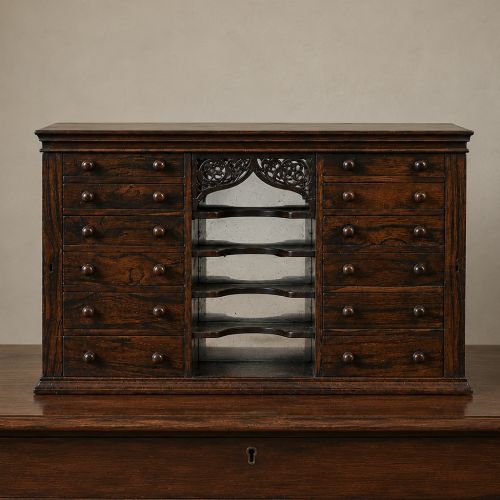
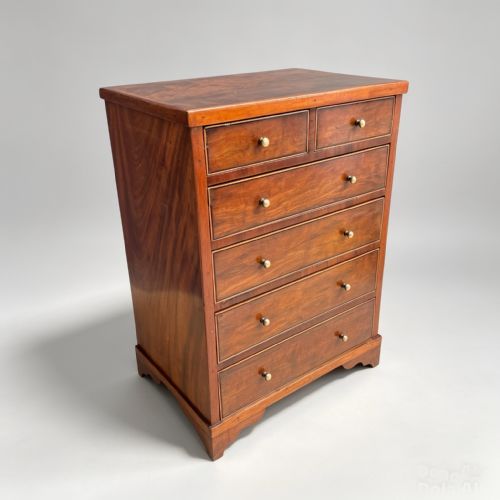
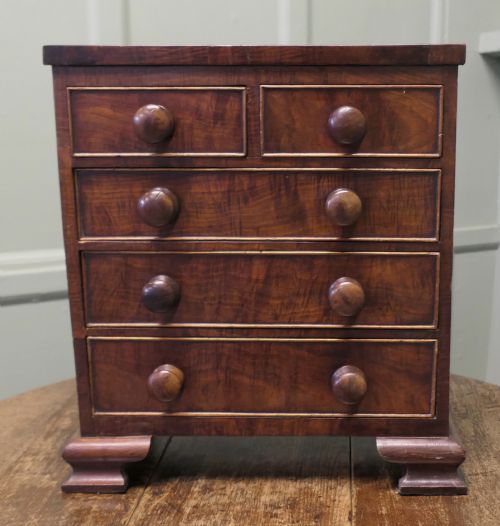
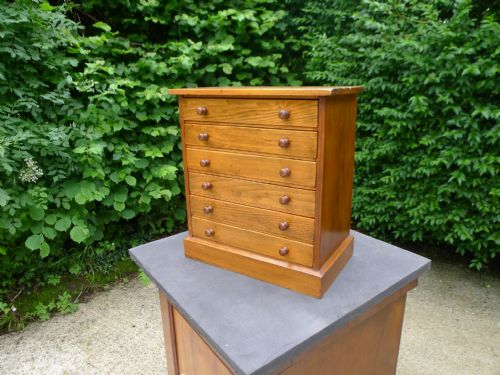
The form appears most often as a scaled-down chest of drawers, an apprentice piece, or a specialised tabletop cabinet with multiple small compartments. Woods such as mahogany, walnut and oak dominate the available selection.
What varies in quality
The standard of craftsmanship shows in the precision of the drawer dovetails and the grain matching across drawer fronts. Superior examples display careful timber selection, such as burr oak or figured mahogany, rather than plain stained pine.
Hardware choice also distinguishes pieces, with original brass escutcheons, working locks with keys, and fine inlay work elevating the overall standard above simpler utilitarian storage boxes.
The Miniature Collector Chest Glossary
- Apprentice piece
- A small item of furniture made by a craftsman to demonstrate skill for guild admission. These pieces replicate full-scale furniture accurately.
- Wellington chest
- A tall, narrow chest of drawers secured by a hinged locking side pilaster. This locking bar fastens over the drawer edges to secure the entire stack.
- Specimen cabinet
- A specialised tabletop cabinet designed to hold natural history items such as fossils, shells or microscope slides. They feature numerous shallow drawers.
- Marquetry
- Decorative woodwork where pieces of veneer are fitted into a ground material to form geometric or pictorial designs. It creates patterned surfaces on cabinet fronts.
- Parquetry
- A geometric mosaic of wood pieces used for decorative floors or cabinet surfaces. The technique relies on repeating angular wood patterns.
Miniature Collector Chest: Frequently Asked Questions
What were miniature collector chests used for?
These small chests stored delicate items such as butterfly specimens, coins, apothecary supplies, jewellery or microscope slides. Their numerous shallow drawers kept fragile collections organised and protected from dust on a tabletop.
Craftsmen also produced them as masterworks or apprentice pieces to prove woodworking skill without using the timber required for full-sized furniture.
How can I date a miniature chest?
Dating relies on timber choices, construction methods, and prevailing furniture styles visible in the piece. Georgian and Regency examples often feature flame mahogany or rosewood with delicate bracket feet.
Victorian and later nineteenth-century pieces frequently display heavier turned feet, walnut veneers, or specialised locking mechanisms like those on Wellington chests.
Where should I place one at home?
Their compact size allows them to sit comfortably on desks, sideboards, or console tables in living spaces or studies. They provide functional storage for modern trinkets while serving as decorative focal points.
Placement should avoid direct sunlight and rapid temperature shifts to protect antique wood finishes and delicate veneers.
How do I care for the wood finish?
Maintenance involves dusting with a soft, dry cloth and applying occasional applications of appropriate furniture wax to nourish the antique timber. Harsh chemical cleaners and excessive moisture must be avoided to preserve the original polish.
Keeping the pieces away from heat sources prevents the wood from drying out and stops veneers from lifting.