


Millinery Hat Block
These millinery hat block pieces are sculptural wooden and metal forms used to shape and display historical headwear.
Millinery Hat Block
A millinery hat block provides the solid armature upon which historic hats were constructed, stretched and trimmed in professional workshops.
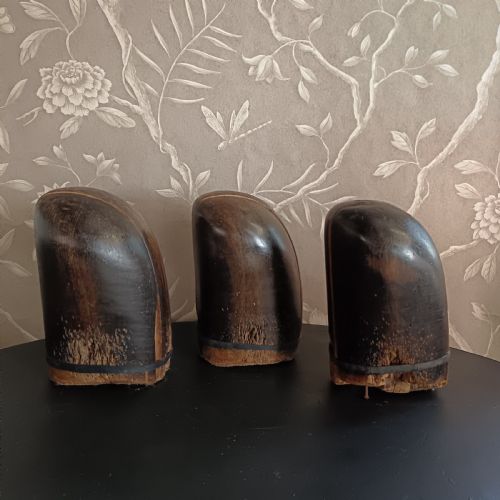
Most examples found here take the form of turned wooden blocks, carved wooden heads, or industrial aluminium moulds dating from the Georgian period through the 1930s.
Buyers encounter everything from utilitarian stacking moulds to detailed folk art carved heads and adjustable wooden stretchers used by Victorian hatters.
Materials and construction
Makers fashioned these pieces primarily from dense timbers such as fruitwood, beech, mahogany, oak and walnut, often turning them on a lathe or carving them by hand.
Later twentieth-century examples utilise cast aluminium to create durable industrial moulds designed for repeated commercial production.
Many wooden variants show signs of iron fixings, peg joints and substantial turned stems intended to mount securely into heavy workshop benches.
The inventory records pieces spanning from Georgian mahogany wig stands up to 1930s restored aluminium hat stretchers.
Assessing quality and character
Quality rests in the sculptural presence of the carving, particularly on carved wooden heads where facial definition and proportion elevate the object from a simple tool to folk art.
The integrity of the timber, surface patination acquired through decades of contact with steam and dyes, and original maker markings or address stamps distinguish superior examples.
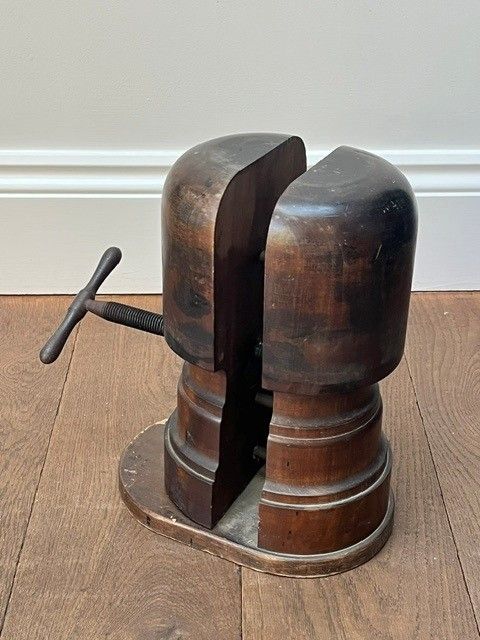
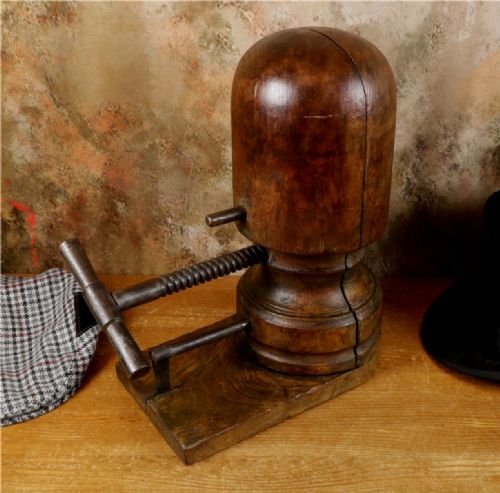
Industrial aluminium pieces depend on clean casting lines and minimal surface pitting, whereas wooden stretchers rely on the mechanical precision of their working screws and joints.
The Millinery Hat Block Glossary
- Hat block
- A solid form carved or turned to the exact inner dimensions required for shaping a specific hat crown.
- Millinery mould
- A hollow metal or wooden shell, frequently found in aluminium, used for pressing hat bodies into specific profiles.
- Hat stretcher
- A mechanical wooden device inserted into a hat to expand or maintain its circumference during sizing.
- Lay figure
- An articulated wooden mannequin head used by milliners and tailors for displaying intricate headwear.
- Wig stand
- A carved wooden display piece historically utilised for storing and styling wigs as well as hats.
Millinery Hat Block: Frequently Asked Questions
How were millinery hat blocks used?
Hatters dampened felt or straw hoods and pulled them tightly over the wooden or metal block to dry into the desired shape. Milliners then trimmed and lined the hats directly upon these forms before sale.
Workshop tools experienced heavy daily wear, often accumulating layers of glue, dye and pins that record their active working life.
Are aluminium hat blocks genuine antiques?
Aluminium hat blocks appearing from the 1920s and 1930s represent the transition into industrial millinery equipment. Factories adopted metal for durability against the moisture and heat used in hat production.
These pieces offer a clean, sculptural aesthetic distinct from nineteenth-century turned timber, while serving the identical workshop function.
How should I display a hat block at home?
Their sculptural forms make them suited for placement on bookshelves, sideboards or mantelpieces where the patinated wood or metal can be appreciated. Many collectors mount wooden heads on original stems or display them beneath glass domes.
Keep them away from direct heat sources and sudden humidity changes to protect old timber and historic finishes.
How do I date a wooden hat block?
Dating relies on timber species, tool marks, construction methods and any stamped maker details or London addresses found on the base. Georgian and early Victorian pieces often exhibit hand-turned mahogany or fruitwood with pegged joints.
Later Victorian and Edwardian examples frequently show simpler beech construction or mechanical stretcher hardware.