


Milliners Hat Block
These milliners hat block pieces are the sculptural wooden and metal forms once used to shape brimmed hats, offering bold workshop display character.
Milliners Hat Block
A milliners hat block serves as a foundational form upon which hats were shaped, stretched, and trimmed in traditional workshops. These objects survive primarily as wooden and aluminium blocks, moulds, and stretchers originating from the nineteenth and early twentieth centuries.
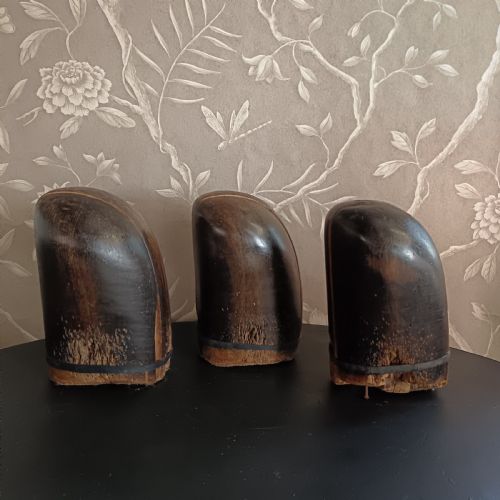
The pieces on this page span several distinct forms, including carved wooden heads, sectional aluminium moulds, and specialised blocks designed for specific styles like trilbies or military headwear. Many carry the marks of heavy trade use, shifting from functional workshop equipment into sculptural display pieces.
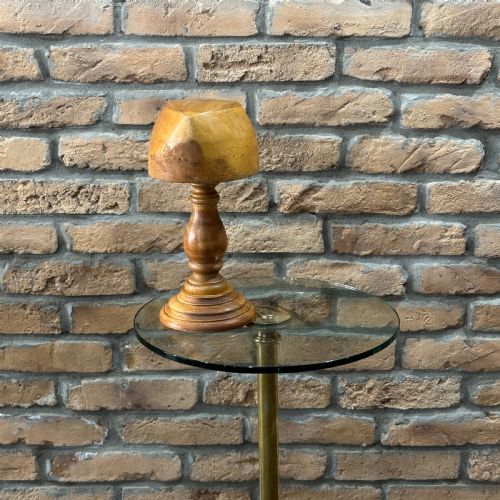
Origins range from English workshops to French and Belgian makers, utilising native hardwoods alongside industrial metals. Buyers frequently encounter French fruitwood forms alongside robust aluminium pieces dating towards the nineteen-twenties.
Materials and Construction
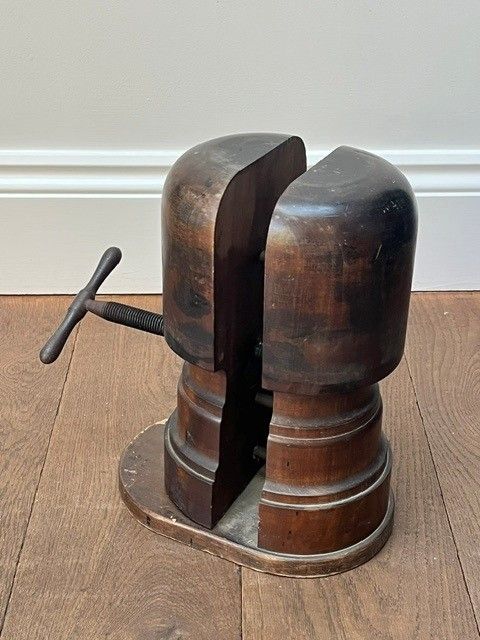
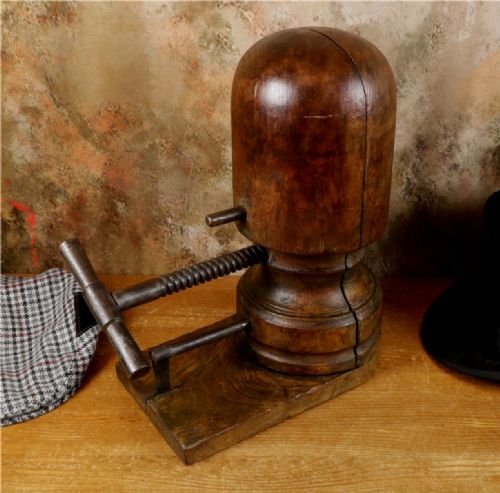
Carved wood provides the traditional medium for these objects, utilising dense timbers such as fruitwood, beech, oak, and walnut to withstand the physical pressure of hat shaping. Craftsmen shaped these hardwoods by hand, sometimes creating folk art style heads or adjustable stretcher mechanisms.
Industrial metal forms introduced cast aluminium and iron, particularly in twentieth-century production moulds designed for precision and durability. These metal sections frequently retain numbering and engineering details from their active workshop service.
The documented periods span the mid-nineteenth century through to the nineteen-twenties.
Assessing Quality and Character
Quality in a milliners hat block rests upon the clarity of its sculptural form and the integrity of the material used. Finely carved wooden human heads and detailed fruitwood trilby moulds command attention through their organic silhouette and patination.
The transition from utilitarian timber to polished aluminium changes the aesthetic weight of the object, separating decorative folk art pieces from industrial workshop equipment. Surface wear, maker stamps, and untouched patination elevate individual examples above standard utility items.
The Milliners Hat Block Glossary
- Millinery Mould
- A solid form used by hat makers to press and shape felt or straw into specific hat silhouettes. These typically match standard head sizes or specialised military designs.
- Hat Stretcher
- A mechanical device inserted into headwear to expand or maintain the interior circumference. These often feature wooden segments adjusted by a central screw mechanism.
- Fruitwood
- A dense, fine-grained timber derived from fruit-bearing trees such as pear or apple, favoured by French makers for smooth shaping surfaces. It develops a rich patina over decades of handling.
- Folk Art
- Objects created by self-taught or traditional craftspeople outside academic traditions, evident in hand-carved wooden millinery heads displaying naive charm.
Milliners Hat Block: Frequently Asked Questions
What is a milliners hat block?
A milliners hat block is a solid form made from wood or metal used by hat makers to shape and dry hats. They were essential tools in traditional haberdashery and millinery workshops.
Today, these objects are collected for their striking sculptural qualities and are frequently used as display stands for vintage hats, wigs, or artistic interiors.
How do I date a hat block?
Dating relies upon material choices, manufacturing methods, and stylistic cues present in the wood or metal. Nineteenth-century examples often feature hand-carved fruitwood or oak, while twentieth-century versions frequently utilise cast aluminium.
Maker marks, French or English origin labels, and the specific hat style they were built for also help narrow down the period of manufacture.
Were these used in shops?
While primarily utilised in workshops for manufacturing headwear, many blocks and forms also served as shop display pieces. Hatters used them to exhibit finished items to customers on the counter or in the window.
This dual life means surviving examples often display both workshop wear and the refined aesthetic required for retail presentation.
How do I display hat blocks?
Hat blocks look striking when placed on shelves, sideboards, or desks as standalone sculptures. Their organic wooden forms or industrial aluminium surfaces provide a strong focal point in contemporary or traditional interiors.
Many collectors group several blocks together of varying heights and materials to create a dynamic display celebrating trade history.