




Vintage Millinery Tools
Vintage millinery tools are functional hat-making implements in wood and metal that shape period headwear for modern display and design.
Vintage Millinery Tools
Vintage millinery tools are specialist implements designed for the creation and adjustment of headwear, spanning periods from the Victorian era through the 1930s. When you search for vintage millinery tools, you encounter functional objects that served professional hatters in shaping brims and crowns.
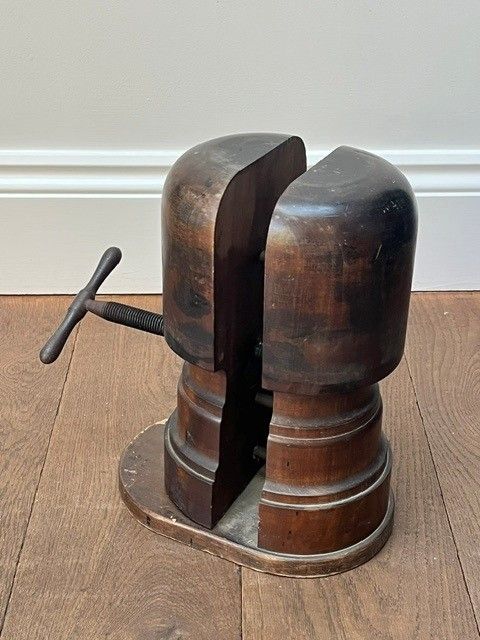
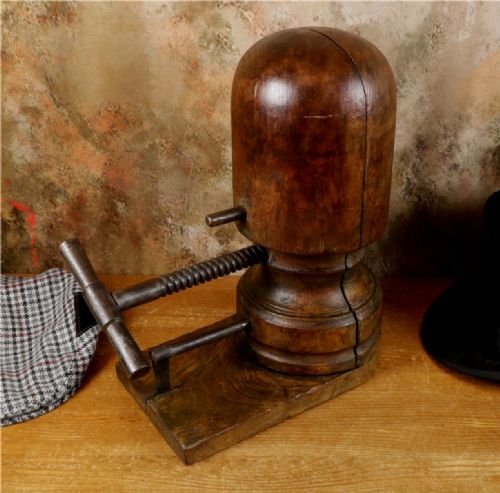
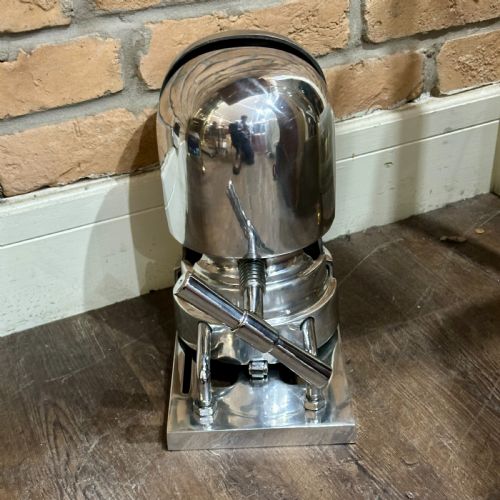
The selections on this page concentrate on hat stretchers, wooden hat blocks, millinery moulds, and equipment constructed from traditional materials. These pieces range from nineteenth-century French wooden forms to later twentieth-century aluminium workshop moulds.
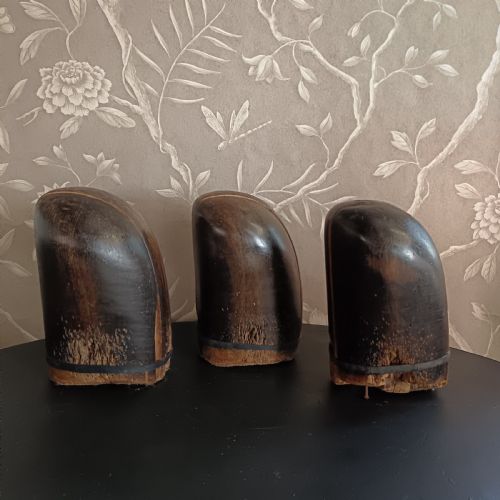
Forms include specialised items such as hat sizers, wig display stands, and blocks intended for military bearskin caps. Each piece reflects the utilitarian requirements of historical hat production rather than purely decorative manufacture.
How they were made
Makers shaped these objects using dense hardwoods like oak, walnut, and fruit wood alongside durable metals including cast iron, aluminium, and nickel. Wooden forms rely on traditional carpentry techniques to achieve smooth, grain-matched contours suitable for pressing damp felt and straw.
Metal items utilise casting methods to form rigid frames and adjustable mechanisms, such as the rotating components found on workshop irons. Combination pieces integrate wooden expansion sections with metal screws and levers to allow precise sizing control.
Specialist blocks exist solely for shaping military bearskin caps, ensuring guardsmen stood tall with perfectly cylindrical dignity.
What varies in quality
Quality in these items depends on the precision of the carving or casting and the integrity of the surviving material. Hardwood blocks with crisp edges and minimal surface splitting show superior original execution compared to heavily warped alternatives.
Mechanical elements such as stretcher screws and hinges determine functional merit. Items retaining smooth operational movement in their metal parts rank higher than those with seized or heavily oxidized mechanisms.
The Vintage Millinery Tools Glossary
- Hat block
- A solid form carved from wood over which a hat body is shaped and dried. These blocks dictate the final crown profile of the millinery.
- Hat stretcher
- A mechanical tool inserted into a hat crown to expand or maintain head size. They often feature wooden segments connected by an internal screw mechanism.
- Millinery mould
- A hollow metal or wooden form used to press specific sections of a hat. Aluminium versions became common in twentieth-century production.
- Haberdashery
- The trade goods and tools associated with sewing and dressmaking. Millinery tools form a specialised branch of this broader category.
- Sizer
- An implement used to measure or adjust the internal circumference of completed headwear. These ensure accurate sizing for the wearer.
Vintage Millinery Tools: Frequently Asked Questions
What were vintage hat stretchers used for?
Hat stretchers were utilised by hatters and outfitters to increase the internal circumference of finished hats. They allowed adjustments for individual clients.
The tool is inserted into the crown and expanded via a threaded screw handle to gently stretch the material without damaging the brim.
How do I identify wooden hat blocks?
Wooden hat blocks are identified by their solid hardwood construction, typically in oak, walnut, or fruit wood, shaped to match historical crown designs. They often display maker stamps or numbering on the base.
Usage marks, such as small pinholes from securing felt during blocking, are commonly present on genuine workshop examples.
Are aluminium hat moulds authentic?
Aluminium hat moulds represent mid-period twentieth-century workshop equipment, appearing alongside traditional wooden forms from the nineteen-twenties and nineteen-thirties.
These metal moulds offered durability and resistance to moisture during steam-blocking processes.
Can I use these tools for hat making?
Many vintage blocks and stretchers retain their structural integrity and remain entirely suitable for contemporary millinery work. Hardwood and metal forms handle steam and pressure much as they did in original production.
Collectors also utilise them as sculptural display stands for vintage hats and wigs.