


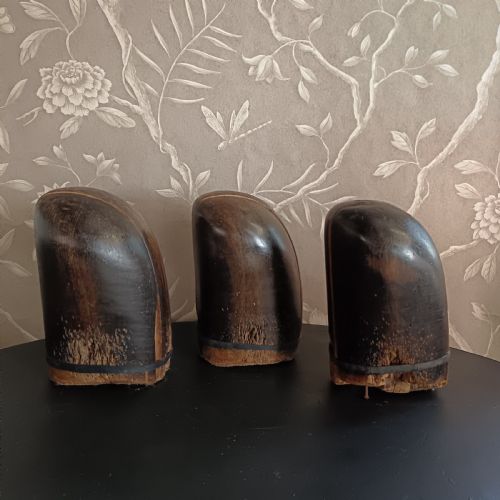


Industrial Hat Mould
An industrial hat mould brings uncompromising form into a room, offering sculptural presence born from the rigorous demands of millinery workrooms.
Industrial Hat Mould
An industrial hat mould represents the utilitarian heart of traditional millinery, created to shape and dry headwear across the twentieth century. These objects include hat blocks, millinery forms, and hat stretchers spanning from 1900 to 1920.
The versions most frequently encountered here take the form of aluminium milliners hat block moulds from the 1920s, alongside earlier carved hardwood and cast metal examples. They survive as functional tools repurposed into striking decorative objects.
How they were made
Production relied on robust materials suited to heavy workshop use, predominantly utilising cast aluminium, iron, and carved hardwood. Aluminium moulds from the 1920s utilised metal casting techniques to achieve precise contours for repeating millinery designs.
Earlier pieces from the 1900 period demonstrate traditional woodworking skills, shaped from solid timber to withstand the pressure of stretching military bearskin caps and felt headwear.
Listings for industrial hat moulds feature pieces dated across three decades from 1900 to 1920, predominantly formed from aluminium and carved hardwood.
What varies in quality
Quality rests in the integrity of the material and the clarity of the sculptural form, distinguishing utilitarian workshop pieces from finer sculptural examples. Metal casts with crisp surfaces and legible numbering show greater refinement.
Wooden blocks vary according to the quality of the timber and the depth of the carving, where visible tool marks and original paint surfaces contribute to the character of the piece.
The Industrial Hat Mould Glossary
- Hat block
- A solid form used by milliners to shape and size hats during manufacture. These are typically turned from wood or cast in metal.
- Millinery mould
- A tooling device designed to press or form hat bodies into specific profiles. They reflect the industrial processes of twentieth-century hat production.
- Cast aluminium
- A manufacturing process involving molten metal poured into a mould. It produced lightweight, durable blocks standard in the 1920s.
- Hardwood
- Dense timber selected for hat blocks to endure heavy pressure and moisture. Carved hardwood forms often date to the earliest periods.
Industrial Hat Mould: Frequently Asked Questions
What is an industrial hat mould?
An industrial hat mould is a workshop tool used by hatters to shape, stretch, and dry headwear. These items were essential in commercial millinery production.
They bridge the gap between industrial utility and modern sculpture, making them popular for interior display.
How were these moulds used?
Hatters stretched damp felt or straw over the solid forms to set the shape of the hat. Military caps and civilian headwear relied on these precise blocks for sizing.
Once the material dried, the finished hat was removed from the mould.
What materials are common?
The pieces span cast aluminium, iron, and carved hardwood. Aluminium versions dominate the 1920s examples.
Wooden and cast metal variants appear in earlier pieces from the 1900 and 1910 periods.
How do I date an industrial hat mould?
Dating relies on material shifts and manufacturing styles, moving from carved timber in the 1900s to cast aluminium by the 1920s. Numbered stampings on metal blocks also help identify the production era.
Comparing construction techniques with recorded workshop tools clarifies the timeline.