


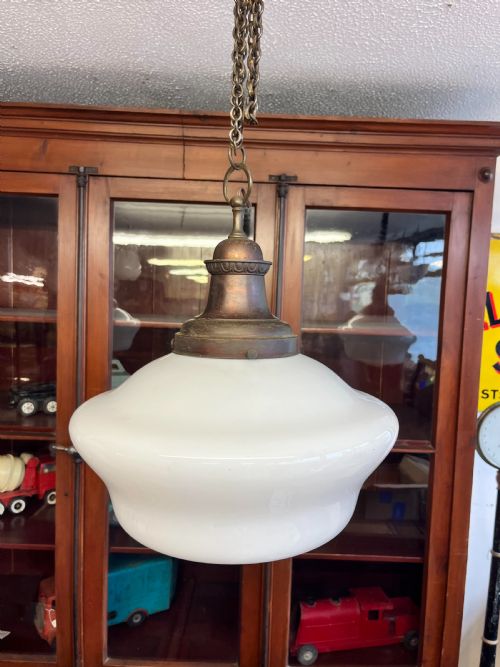


Milk Glass Ceiling Light
A milk glass ceiling light diffuses a soft, clean glow that transforms a room.
Milk Glass Ceiling Light
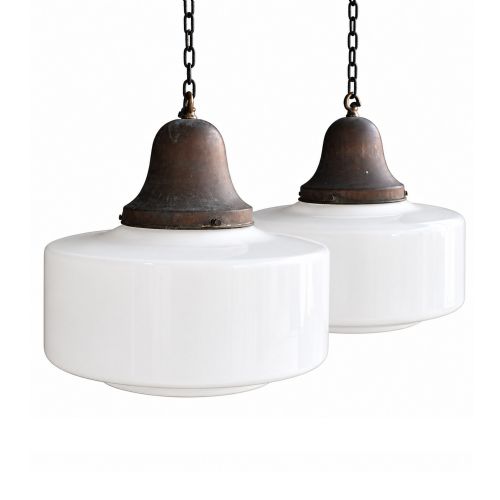
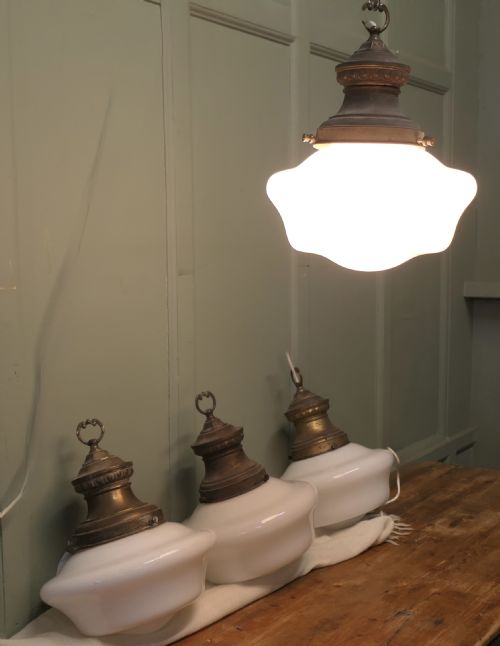
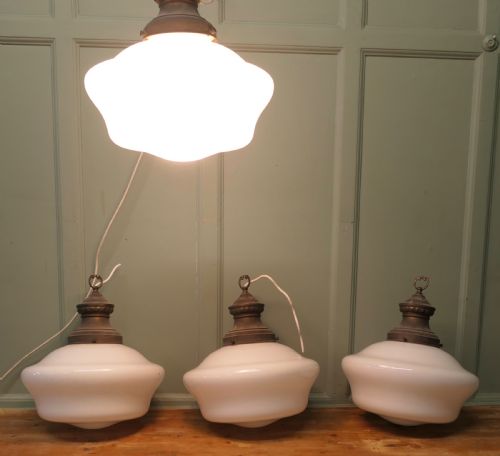
When searching for a milk glass ceiling light, buyers encounter pendant fixtures, large shades, and multi-light assemblies designed for illumination across residential and commercial interiors. The pieces span periods from the Edwardian era through the nineteen-thirties, with early twentieth-century examples appearing frequently alongside Art Deco and industrial designs.
Most items combine opaque white glass with metal components such as brass, chrome, steel, or iron galleries. Forms range from simple conical pendants and pear-shaped shades to architectural chapel lights, star lanterns, and gothic chandeliers featuring glass globes.
English origins feature prominently in the archive and current selection, alongside styles classified as industrial, modernist, and Edwardian. Buyers often select these fixtures for hallways, kitchens, and living spaces where period character and diffused light are required.
Materials and construction
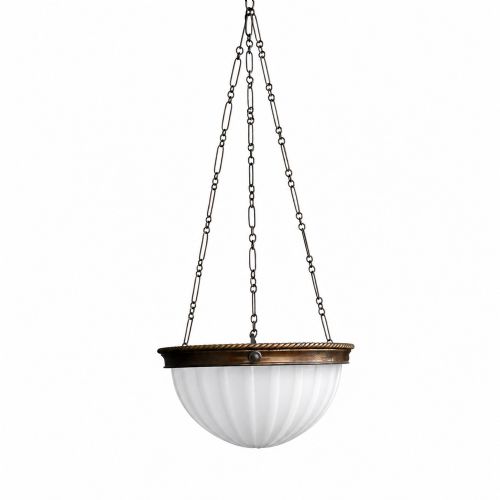
The shades utilise specialised glass formulations, principally opaline glass, moonstone glass, and milk white opaque glass, which create a milky translucency that softens the bulb glare. These glass components are shaped into cones, spheres, reeded profiles, and fish scale patterns.
Metal fitments, including galleries, canopies, and ceiling plates, use brass, chrome, or steel to secure the glass shade and suspend the unit. Surviving examples frequently retain original brass galleries and period wiring components.
Chapel lights and star lanterns prove that ecclesiastical drama looks surprisingly charming hanging in a normal hallway.
Evaluating the pieces
Quality in these fixtures rests upon the depth and consistency of the glass opacity, the subtlety of moulded details such as reeding or fish scale patterning, and the integrity of the metal gallery. Superior examples display even glass thickness and well-balanced proportions without heavy surface distortion.
The presence of original metalwork, matching sets, and uncompromised galleries elevates a piece above standard utility items. The integration of original brass or distressed galleries indicates authentic period manufacture rather than later assembly.
The Milk Glass Ceiling Light Glossary
- Opaline glass
- A type of semi-opaque glass with a milky white appearance used to diffuse light gently. It gained popularity during the nineteenth and early twentieth centuries for decorative lighting.
- Moonstone glass
- An opaque white glass variety characterised by a soft, shimmering texture resembling the gemstone. It provides a distinct atmospheric glow when illuminated from within.
- Gallery
- The metal collar or rim that grips the upper edge of a glass shade and connects it to the suspension rod or flex. Original galleries often feature maker stamps or distinctive patination.
- Pendant light
- A hanging light fixture suspended from the ceiling by a cord, chain, or metal rod. These units project direct or diffused light downwards into a space.
- Star lantern
- A hanging light fixture enclosed in a multi-pointed geometric glass and metal frame. They produce patterned shadow effects across surrounding walls.
Milk Glass Ceiling Light: Frequently Asked Questions
How do I clean a milk glass ceiling light?
Wash the glass shade gently in warm soapy water using a soft cloth, avoiding harsh abrasives that might scratch the surface. Ensure the power is switched off before removing any glass components from the metal gallery.
Dry the shade thoroughly before reattaching it to the ceiling fixture to prevent moisture damage to the electrical fittings or metalwork.
Are these lights suitable for low ceilings?
Certain designs, such as diminutive shades, flush-mounted fixtures, and short pendants, suit rooms with restricted vertical clearance. Selecting a compact profile prevents the fitting from dominating a smaller space.
Measure the distance from the floor to the ceiling carefully before choosing a pendant length to maintain adequate clearance below the light.
Can I use modern LED bulbs in these fixtures?
Modern LED bulbs function effectively inside these shades, provided the wattage matches the electrical capacity of the vintage wiring and lampholder. LED options generate less heat, which benefits fragile historic glass.
Choose warm white LED bulbs to replicate the soft, ambient glow originally produced by early twentieth-century filament lamps.