



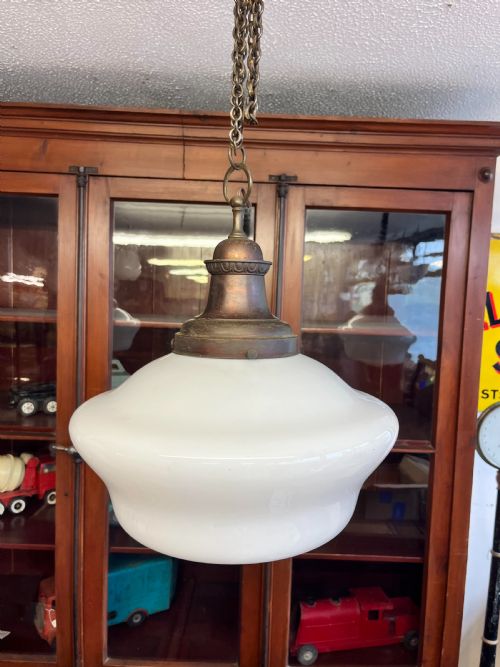


Brass Gallery Light Shade
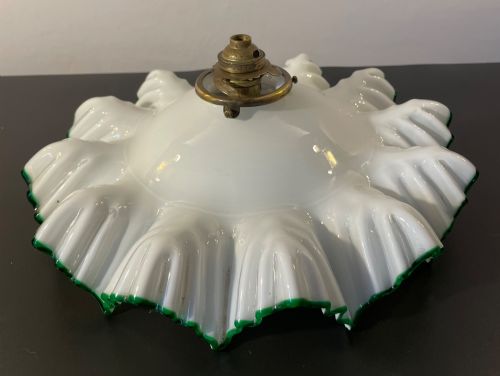
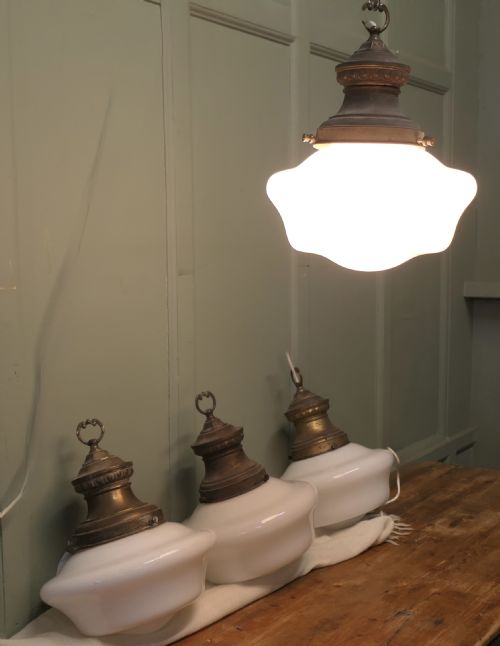
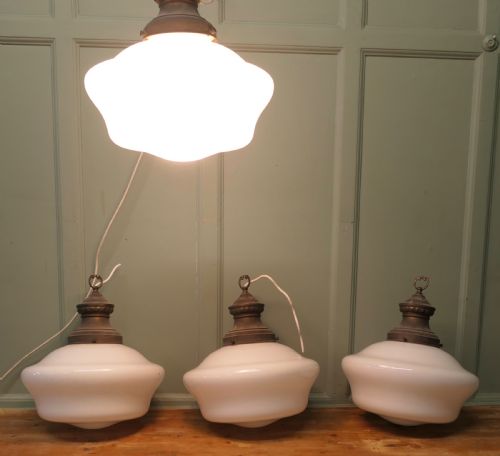
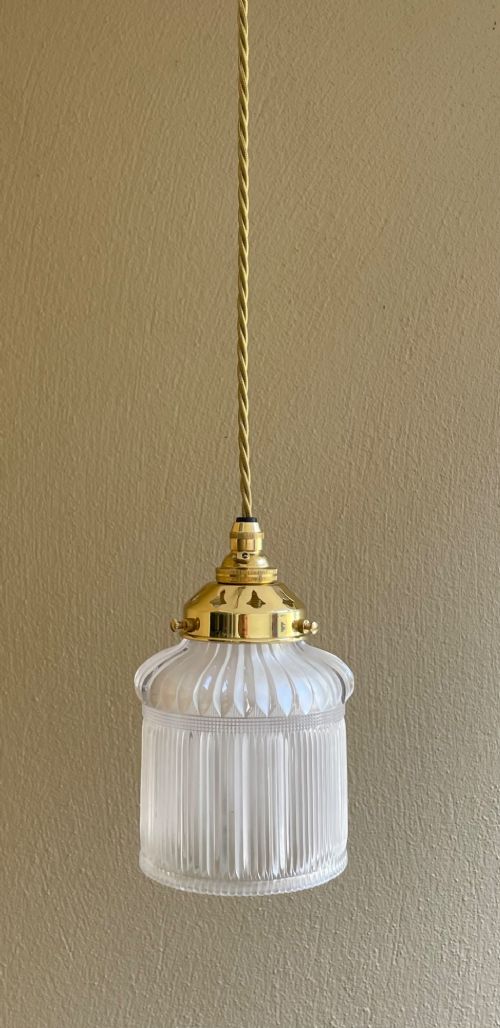
These brass gallery light shade examples combine metal mounts with glass shades to suspend practical illumination from ceilings.
Brass Gallery Light Shade
A brass gallery light shade brings together a metal fitter and a glass or enamel shade designed for ceiling suspension. These pieces span periods from the nineteenth century through the Edwardian era and into the Art Deco and mid-century modern decades.
The assortment on this page includes pendant lights, ceiling lamps and individual shades paired with brass galleries. Buyers encounter forms ranging from conical and pear-shaped opaline glass to cut glass, mercury glass and prismatic shades.
Origins stretch across English and French workshops, encompassing industrial designs, French country styles and domestic Edwardian hallway lanterns. The surviving pieces demonstrate the versatility of brass hardware supporting specialised glass work.
Materials and Construction
Makers cast or spun brass to form the structural galleries that secure and suspend the glass shades. These metal components provide the mechanical collar and screws necessary to hold heavy glass bowls and cones safely.
Glass production utilised diverse techniques, including opaline, prismatic, cut, mirrored and moonstone formulas. Workshops blew or pressed the glass into specific optical and decorative profiles designed to diffuse or direct light effectively.
Materials recorded here include brass, copper, opaline glass, prismatic glass, cut glass and mercury glass across multiple decades.
Distinctions in Quality
Quality rests in the weight and finish of the brass gallery, alongside the clarity and thickness of the glass shade. Finer examples retain heavier gauge metalwork with crisp casting detail and undamaged glass free from internal stress fractures.
The distinction between utilitarian industrial survivals and domestic decorative pieces shapes the character of each light. Superior items maintain original matched components where the gallery and shade were conceived together as a single unit.
The Brass Gallery Light Shade Glossary
- Gallery
- The metal ring or collar, typically cast or spun brass, that grips the top rim of a glass shade and connects it to the suspension wiring.
- Opaline Glass
- A semi-translucent white glass that diffuses light softly without glare. It appeared frequently in pendants and hallway lights from the nineteenth and early twentieth centuries.
- Prismatic Glass
- Glass moulded with precise geometric ribs or prisms on the inner or outer surface to refract and distribute light evenly. Holophane production is a notable example of this technique.
- Ceiling Rose
- The decorative plate attached to the ceiling that covers the wiring junction and anchors the suspension cord or chain.
- Mercury Glass
- Double-walled silvered glass blown with a reflective coating between the layers to create a mirrored interior finish. It produces a distinctive metallic sheen when unlit.
Brass Gallery Light Shade: Frequently Asked Questions
How do I hang a pendant light?
Suspension requires securing the ceiling rose to a structural joist and connecting the electrical supply within the rose. A qualified electrician should handle the wiring to ensure safety and compliance with building standards.
The weight of the brass gallery and glass shade dictates the fixing method. Heavier fixtures need direct anchoring to the ceiling timber rather than relying solely on plasterboard.
Are these lights compatible with modern bulbs?
Most vintage galleries accept standard modern lamp holders and LED bulbs, provided the physical dimensions fit inside the glass shade. Check the internal clearance of the shade before choosing a bulb.
Older fittings may require rewiring to meet current electrical safety regulations. A professional can update the internal flex while preserving the external brass gallery.
How do I clean an opaline shade?
Wash the glass gently in warm soapy water using a soft cloth to remove dust and grease. Avoid harsh abrasives that might scratch the delicate surface of historical glass.
Unscrew the brass gallery carefully before cleaning so the glass can be immersed separately. Ensure the shade is completely dry before reassembling the light.