


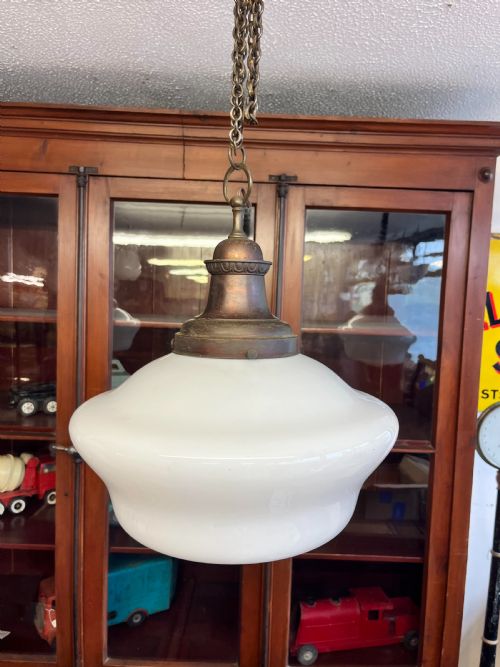


Brass Opaline Pendant Light
A brass opaline pendant light brings a warm, diffused glow to a room through milky glass paired with metal hardware.
Brass Opaline Pendant Light
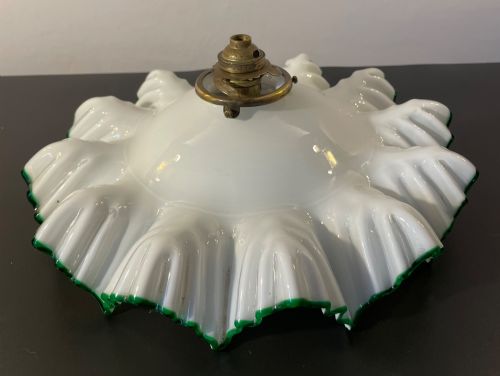
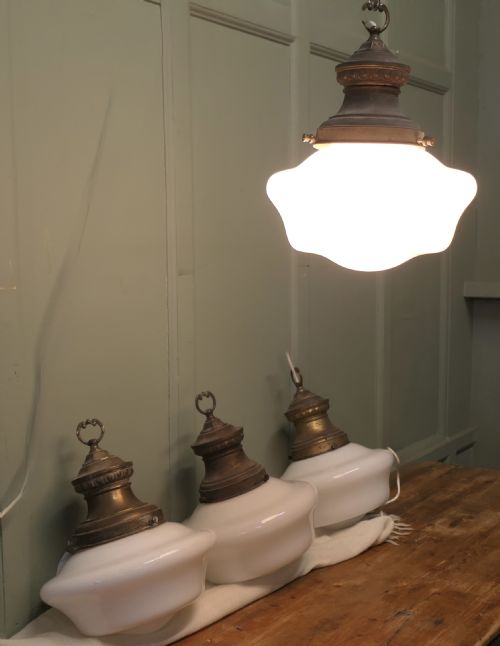
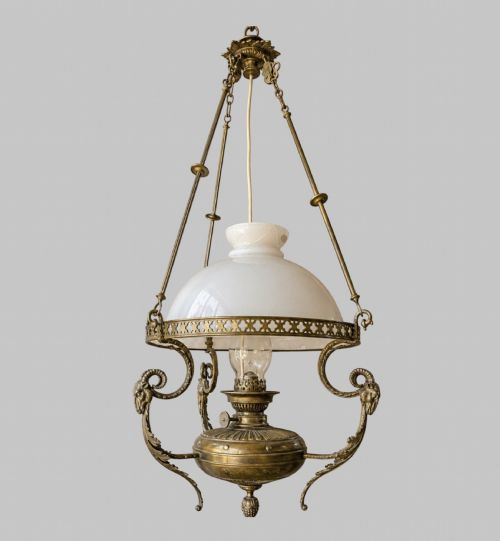
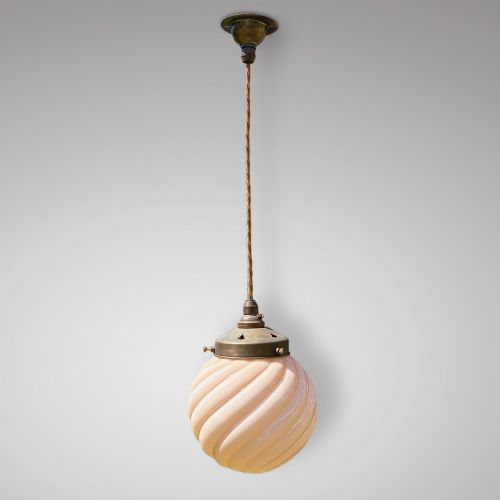
A brass opaline pendant light combines milk-like glass shades with metallic mountings, spanning periods from the Victorian era to the mid-century modern movement. These hanging fixtures appear in diverse forms such as conical shades, pear-shaped vessels, and hanging lanterns.
The most common versions met on this page date from the early twentieth century, including the nineteen-twenties and nineteen-thirties, often reflecting industrial, Art Deco, or Edwardian styles. Simpler ceiling lights sit alongside elaborate fixtures featuring gilt bronze or brass components.
How they were made
These fixtures combine blown opaline glass with cast or spun brass, bronze, and gilt bronze elements. Glassmakers achieved the characteristic milky, translucent quality by adding bone ash or metal oxides during production.
Metal components such as galleries, fitters, and chains were cast or turned to secure the glass shades. Many examples incorporate period wiring elements like fabric flex alongside traditional burners or socket holders.
Listings span multiple eras including the Victorian, Edwardian, and Art Deco periods, utilising opaline glass, brass, and gilt bronze.
What varies in quality
Quality rests upon the weight and evenness of the opaline glass, where finer pieces display a dense, smooth milkiness without streaks or thin spots. Superior metalwork shows crisp casting and substantial brass or gilt bronze gauge rather than light pressed sheet.
Design integration separates standard production from exceptional work, seen in the proportion between the shade and the metal mount. Maker attribution, such as work by Perry and Co, elevates a piece through refined chased detail and balanced form.
Perry and Co
The Brass Opaline Pendant Light Glossary
- Opaline glass
- A translucent, milky white glass used extensively for lampshades to soften and diffuse light. It can also appear in pastel tints depending on the manufacturing additives.
- Pendant light
- A hanging lighting fixture suspended from the ceiling by a cord, chain, or metal rod. These fixtures serve as central overhead illumination in rooms and hallways.
- Plafonnier
- A ceiling-mounted light fixture where the shade sits flush or very close to the ceiling rather than hanging on a long suspension. Painted glass variants are common in early twentieth-century French interiors.
- Gilt bronze
- Bronze metal that has been coated with a thin layer of gold or gold-coloured alloy. This technique provides a rich metallic finish often found on Victorian and Edwardian hanging lanterns.
Brass Opaline Pendant Light: Frequently Asked Questions
What is a brass opaline pendant light?
A brass opaline pendant light is a ceiling fixture featuring a translucent milk glass shade suspended by metal hardware. These lights distribute a soft, even illumination suited for domestic spaces.
They emerged across multiple decades, incorporating styles ranging from Victorian ornamentation to Art Deco and industrial designs.
How were these pendant lights used?
These fixtures hung from ceilings to provide primary lighting in rooms, hallways, and chapels. Earlier iterations evolved from paraffin-burning mechanisms to electricity as domestic power supplies developed.
Their design directed light downward while casting a gentle glow through the semi-opaque glass body.
How do I live with one?
Hanging a pendant light requires considering the ceiling height and the room's primary function, as they work well over dining tables or in hallways. Pairing them with modern wiring ensures safe daily operation in contemporary homes.
The neutral tones of brass and white glass coordinate easily with various interior palettes.
How do I tell periods apart?
Victorian and Edwardian examples often feature heavier cast brass, gilt bronze, or decorative burners. Later Art Deco and nineteen-thirties pieces tend toward geometric shapes like conical or pear profiles.
Material choices also help date a piece, with fabric flex and specific glass opacity pointing to early twentieth-century production.