


Brass Chain Hanging Light
These brass chain hanging light fixtures bring purposeful illumination and period character to hallways and porches alike.
Brass Chain Hanging Light
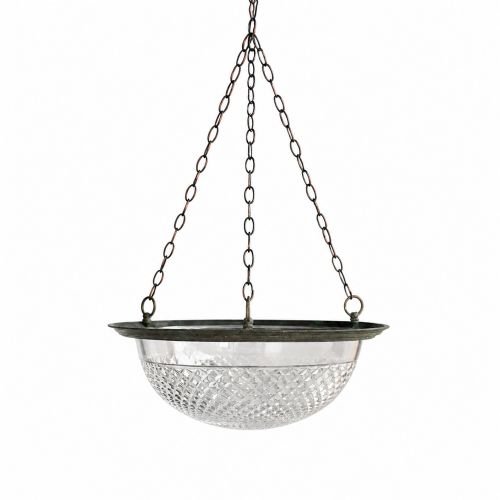
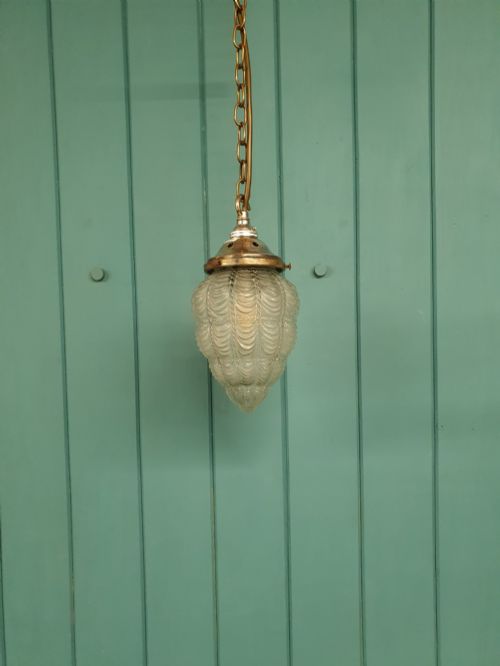
A brass chain hanging light combines a suspended metal framework with decorative glass bowls, shades, or lanterns designed for ceiling mounting. When searching for a brass chain hanging light, buyers encounter forms ranging from Edwardian pendants to Art Deco plafonniers and Victorian lanterns.
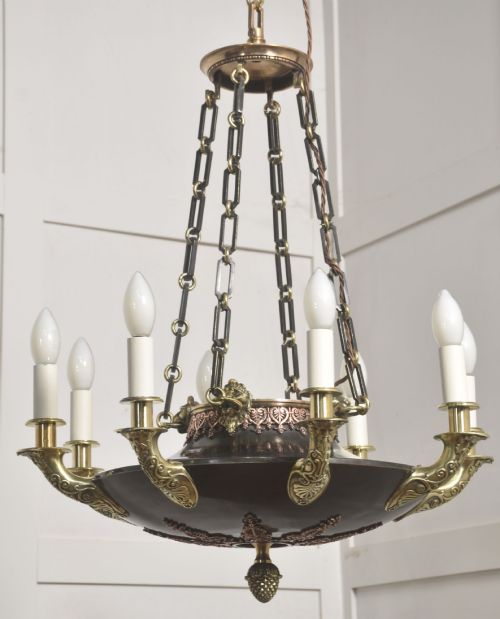
The most common versions on this page are early twentieth century English and French glass pendants and bowl shades supported by brass chains. These fixtures vary from compact hallway lanterns to larger multi-light chandeliers rooted in styles like Empire Revival and Arts and Crafts.
How they were made
Maker workshops constructed these fixtures using cast or sheet brass combined with lead, copper, and structural metal framing. Shades and bowls utilise specialist glasswork techniques, producing cut glass, frosted surfaces, opalescent finishes, and moonstone effects.
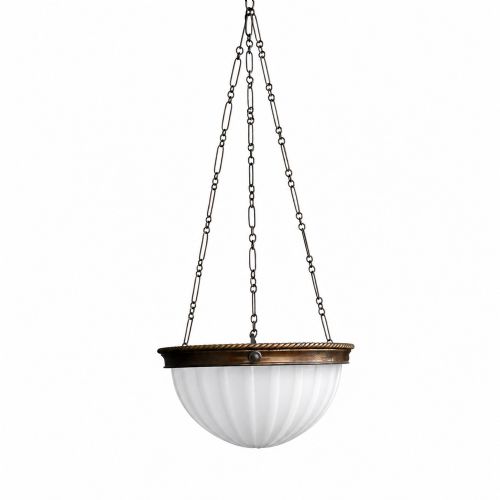
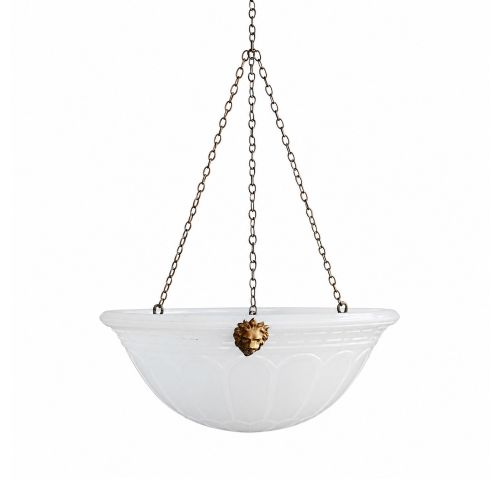
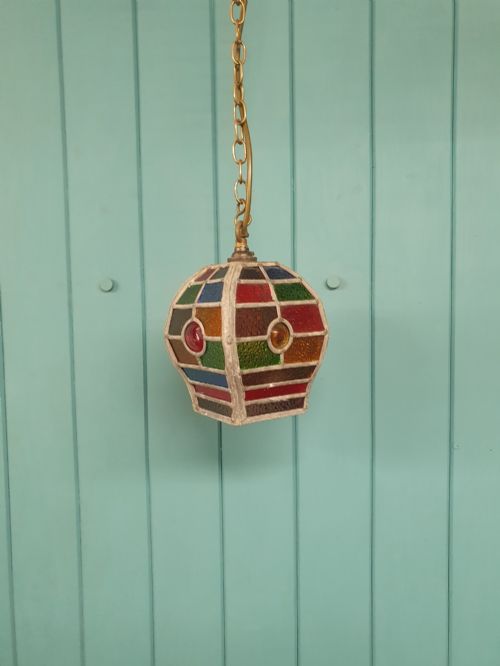
Hanging mechanisms rely on sturdy metal chains attached to ceiling fixtures, supporting heavy glass elements such as holophane shades, conical opaline bowls, and leaded stained glass panels.
Some early twentieth century glass shades were designed with prismatic ribs specifically to trick the eye into thinking a modest bulb was twice as bright.
What varies in quality
Quality differences depend upon the weight and finish of the brass metalwork alongside the optical depth of the glass shades. Superior examples feature substantial cast brass components and heavy, evenly blown or moulded glass rather than thin pressed alternatives.
Execution of decorative details separates standard production pieces from finer work, particularly in the precision of cut glass patterns, painted neo-classical motifs, and the integration of copper or lead framing.
The Brass Chain Hanging Light Glossary
- Plafonnier
- A bowl-shaped ceiling light fixture mounted close to the ceiling or suspended by short chains. This French term typically describes bowl shades made of moulded or frosted glass.
- Holophane
- A type of prismatic glass shade engineered to direct and diffuse light efficiently. These ribbed glass shades date frequently from the early twentieth century.
- Moonstone glass
- An opalescent white glass type creating a soft, glowing illumination resembling moonstone. It appears commonly in early twentieth century pendant lights.
- Empire Revival
- A decorative style reviving classical Roman and Greek motifs popular during the nineteenth century. It frequently incorporates heavy brass and copper mounting.
Brass Chain Hanging Light: Frequently Asked Questions
Where should I hang a brass chain hanging light?
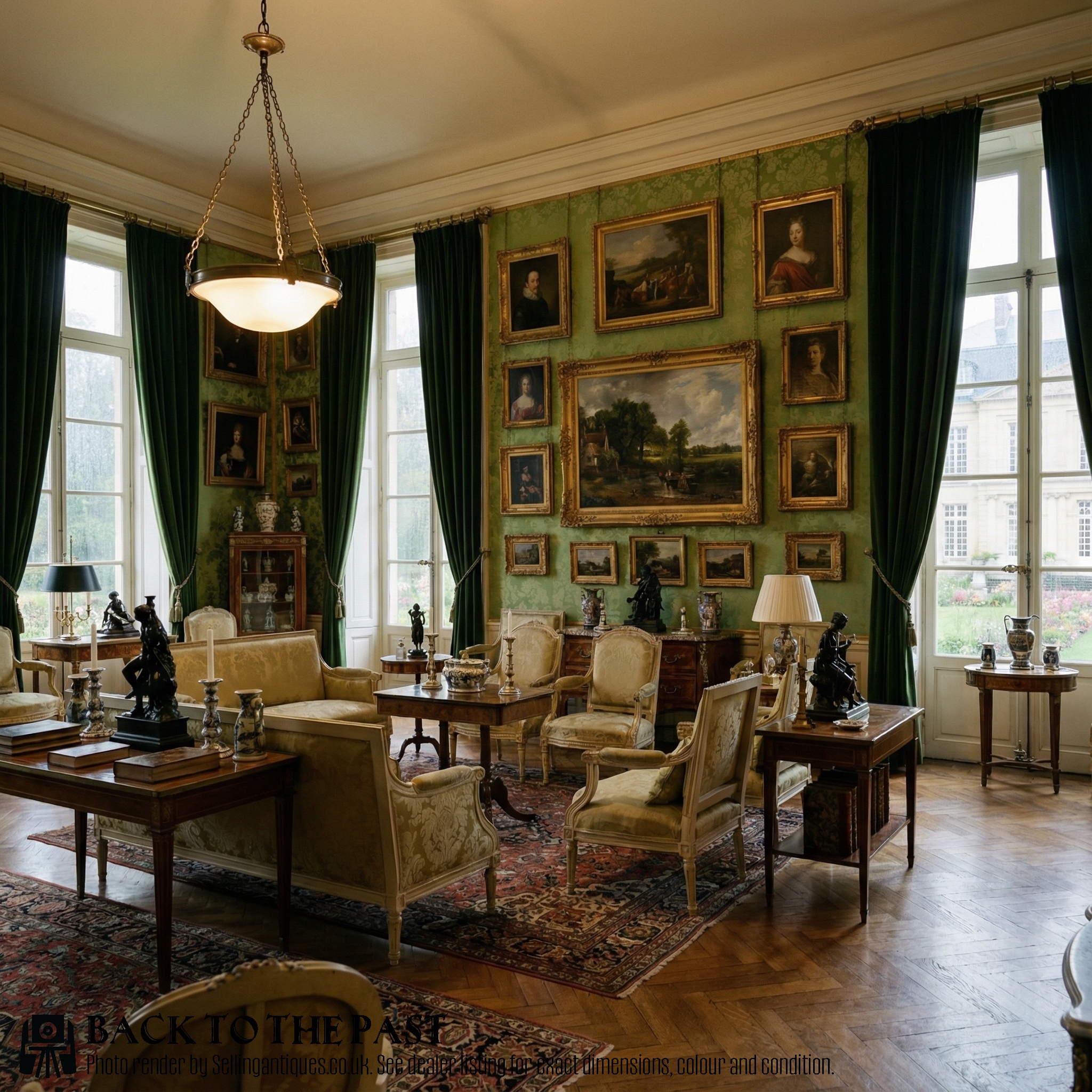
These fixtures suit entryways, hallways, and stairwells where overhead illumination and compact vertical proportions work effectively together.
They also serve well in porches or high-ceilinged rooms requiring targeted downward light from decorative glass bowls or lanterns.
How do I date an antique glass pendant light?
Dating relies upon examining the manufacturing techniques of the glass shade and the material composition of the brass framing. Stylistic markers such as Edwardian proportions or Art Deco geometric forms provide clear chronological reference points.
Hardware details like heavy cast brass chains and leaded construction methods further indicate specific manufacturing decades from the late nineteenth century onward.
What is the difference between a plafonnier and a pendant?
A plafonnier is specifically a bowl-shaped shade mounted close to the ceiling or hung tightly by short suspension chains. Standard pendants generally feature longer drops and various shade geometries including cones, globes, and lanterns.
Both forms utilise similar brass and glass construction techniques but serve different ceiling heights and spatial requirements.
How do I clean antique glass and brass fixtures?
Glass shades benefit from gentle washing with mild soapy water and soft cloths to preserve frosted, opalescent, or cut surfaces. Metal brass components require careful dusting and occasional non-abrasive cleaning to maintain their historic patina.
Harsh chemical polishes should be avoided on both aged brass and delicate nineteenth or twentieth century glass finishes.