




Brass Gallery Pendant Light
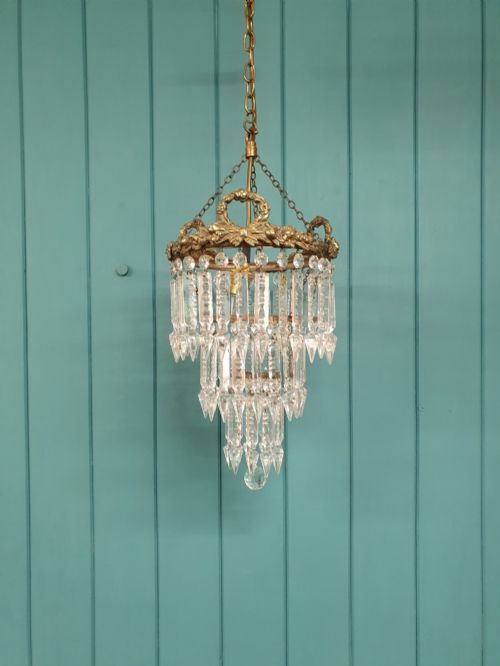
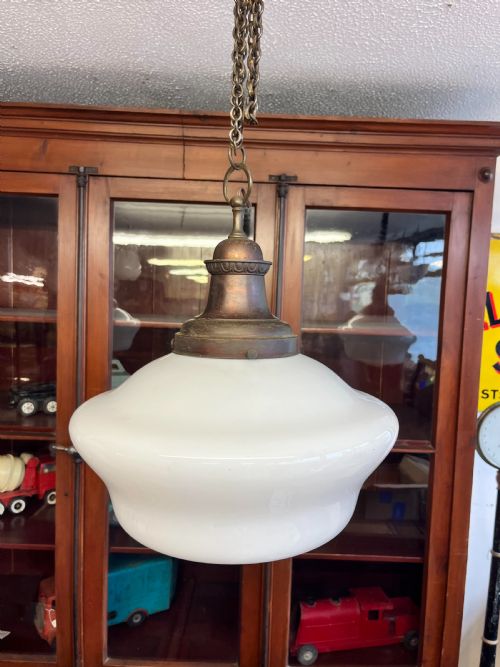
These brass gallery pendant light fixtures combine metalwork mounts with glass shades to cast a warm, focused glow over a room.
Brass Gallery Pendant Light
A brass gallery pendant light unites a metal holding ring with a glass shade suspended from a ceiling rose. Buyers searching for a brass gallery pendant light seek the functional illumination and period character found in early twentieth century domestic and industrial spaces.
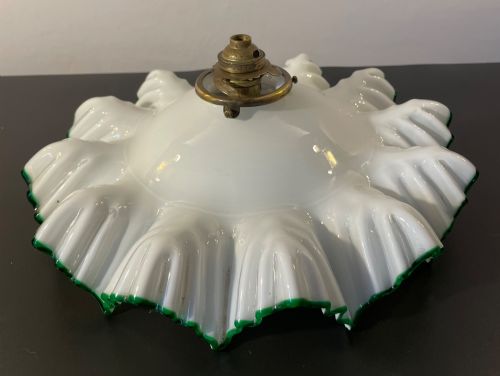
The selections span from Edwardian and Art Deco designs to mid-century industrial examples. Most pieces pair polished or aged brass collars with opaline, prismatic, cut glass, or milk glass shades.
Materials and construction
Makers formed the structural collars from cast or spun brass, securing the glass shades with thumb screws or galleries. The metalwork provides both structural support and decorative framing for the luminous diffusers.
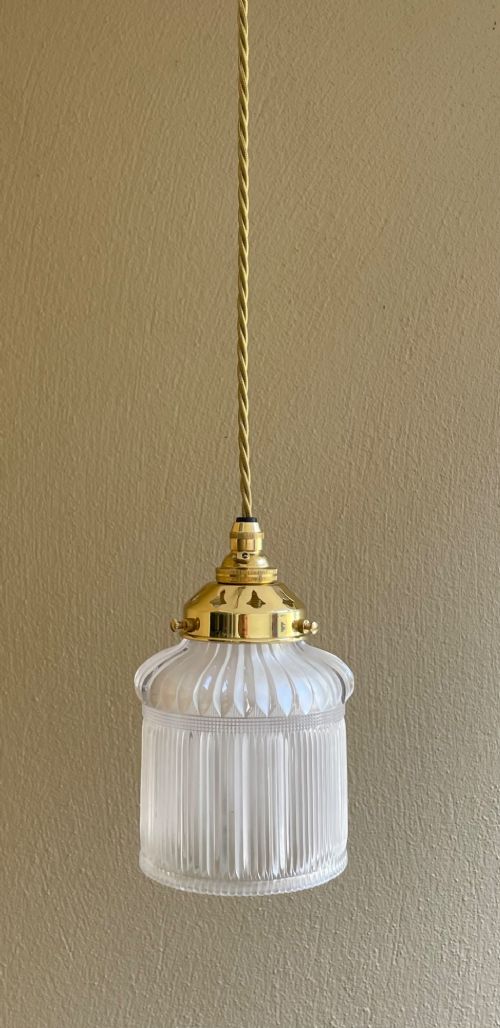
Glass types vary from pressed prismatic plates to mouth-blown opaline and cut crystal. These materials were chosen to soften and direct electrical illumination efficiently across interiors.
Brass Gallery Pendant Light Retail Price Guide 2026
Typical asking prices for brass gallery pendant light among the pieces listed under this phrase on Sellingantiques today, from the lower quarter to the upper quarter. They describe what is for sale here now, not the wider market.
Some diminutive shades were originally made for tiny Victorian hallways, proving that grandeur comes in small packages.
Evaluating quality and proportion
Quality rests in the weight of the brass casting and the crispness of the gallery detailing. Finer examples retain their original matching ceiling roses and feature thick, unblemished glass shades.
Proportion and scale dictate the visual impact of each fixture. Superior pieces display harmonious balance between the brass mount and the specific curvature of the glass element.
The Brass Gallery Pendant Light Glossary
- Opaline glass
- A milky-white translucent glass used to diffuse light gently without glare. It gained wide popularity during the Victorian and Edwardian periods.
- Prismatic glass
- Pressed glass patterned with small prisms to refract and spread light evenly. Holophane produced notable examples of this technique.
- Ceiling rose
- The decorative plate attached to the ceiling that conceals the electrical wiring connection. Many period fixtures retain their matching brass plates.
Brass Gallery Pendant Light: Frequently Asked Questions
How do I hang a pendant light?
Suspension involves securing the ceiling rose to a joist or mounting box and connecting the internal wiring. Professional installation ensures the weight of the brass and glass is safely supported.
Adjusting the drop height requires setting the flex or chain to suit the ceiling height of the room. Most fittings use standard British lamp holders suited for modern LED bulbs.
What is an opaline shade?
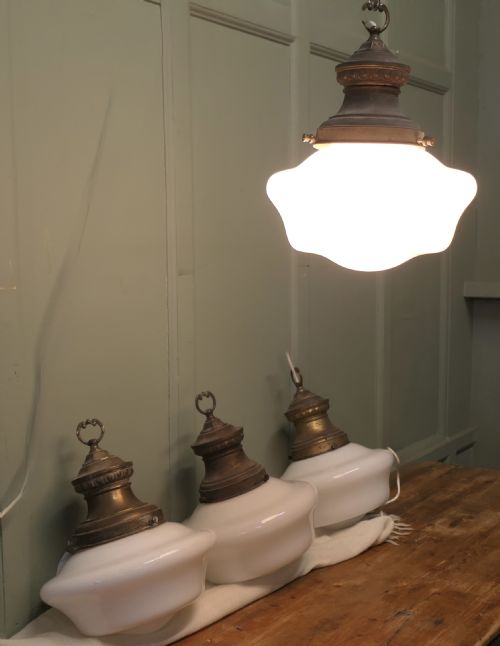
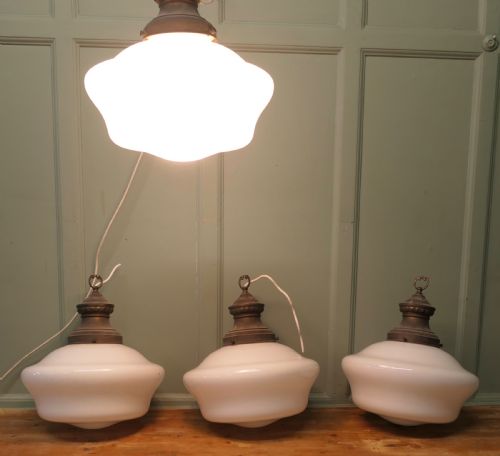
Opaline glass shades are semi-opaque white diffusers that create a soft, ambient glow. They were widely used in hallway and chapel lighting during the early twentieth century.
The density of the glass masks the internal bulb while maximising light output. This makes them practical for functional spaces.
Are these lights rewired?
Many surviving fixtures retain vintage brass galleries paired with updated electrical flex and modern safety components. Rewiring ensures compatibility with current domestic electrical standards.
Buyers should check individual listings to confirm whether a piece has been fitted with new cable and certified lamp holders.
How do I clean brass and glass?
Glass shades detach easily from their brass galleries for gentle washing in warm soapy water. This removes accumulated dust without risking the vintage finish.
Brass galleries benefit from dry dusting or light cleaning with a soft cloth to preserve their natural patina. Avoid harsh chemical polishes on aged metal surfaces.