

Pair of Ceiling Pendants
A pair of ceiling pendants brings balanced illumination and period character to a room, offering matching forms designed to hang in harmony from above.
Pair of Ceiling Pendants
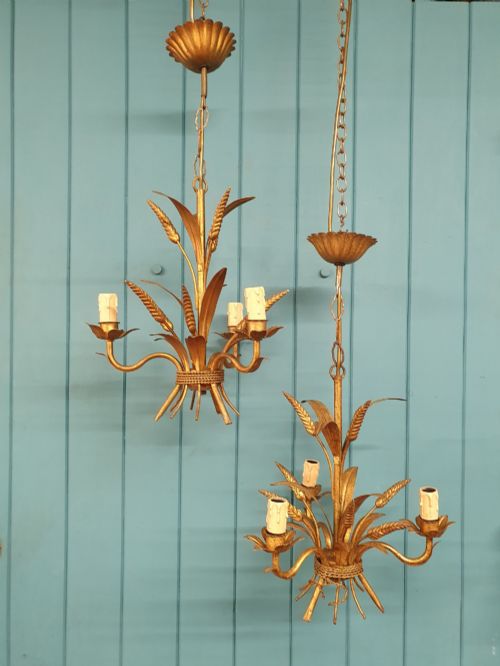
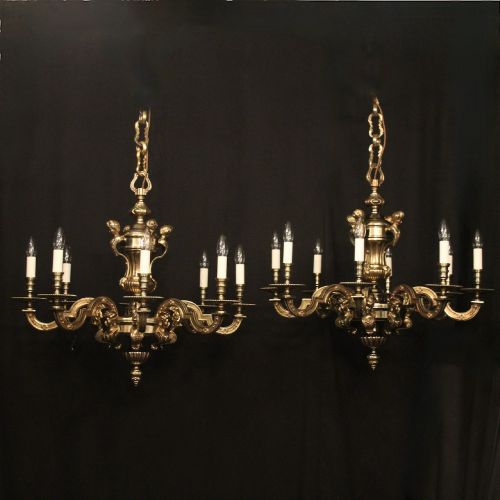
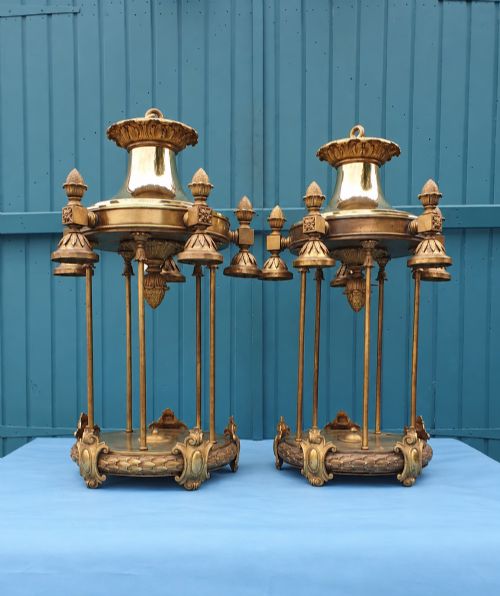
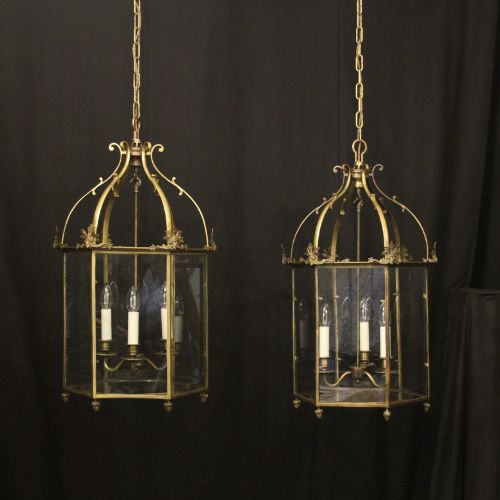
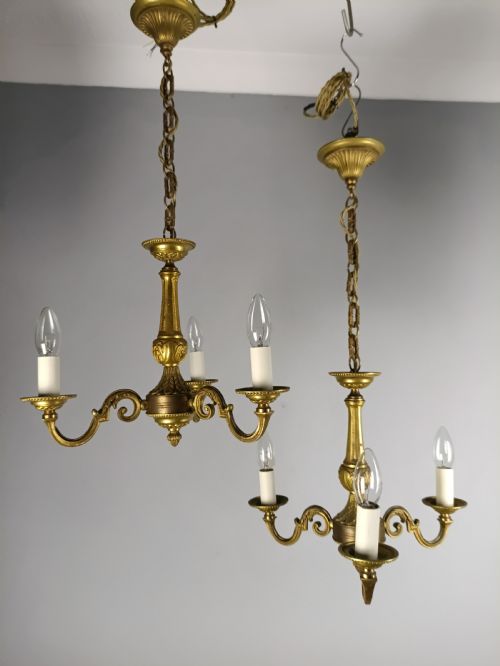
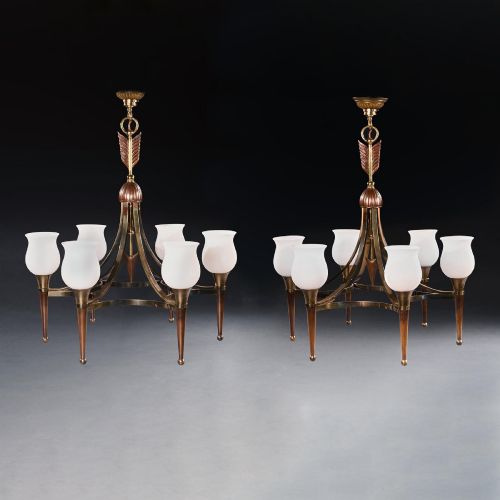
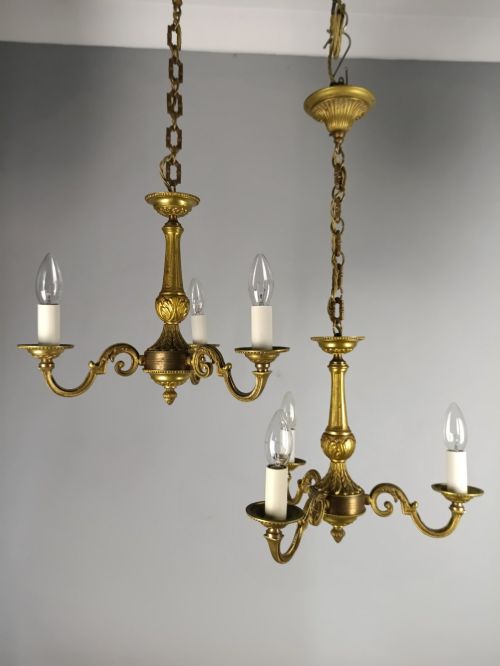
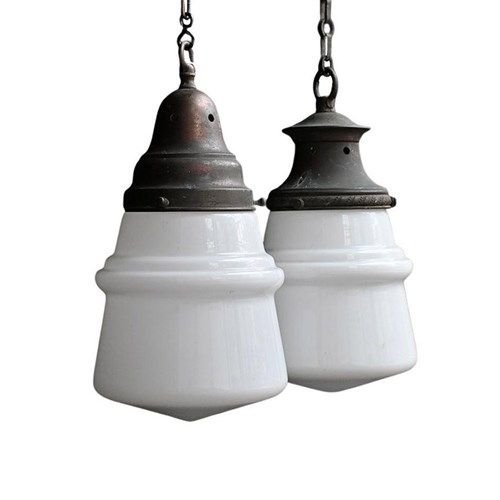
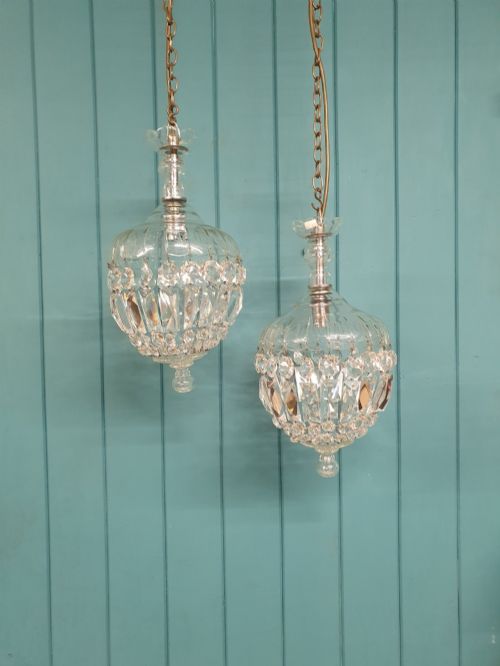
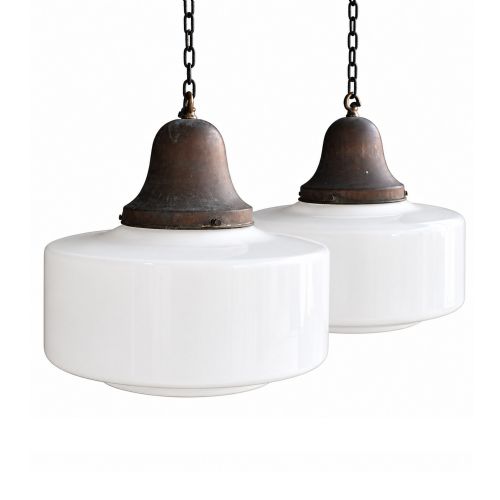
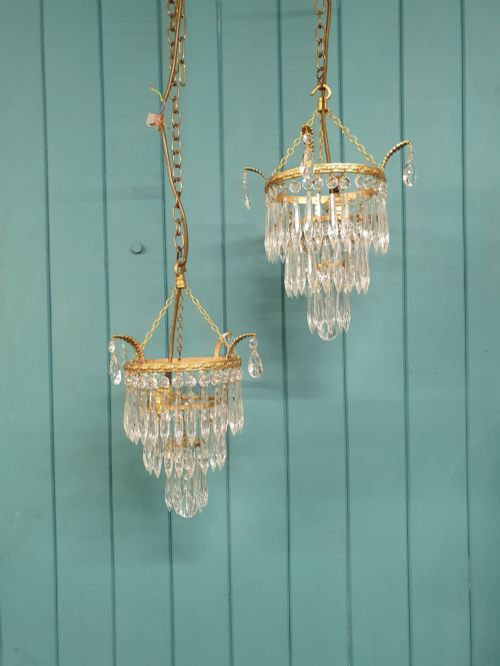
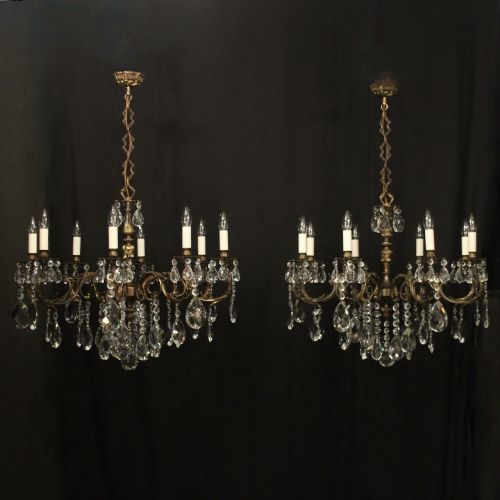
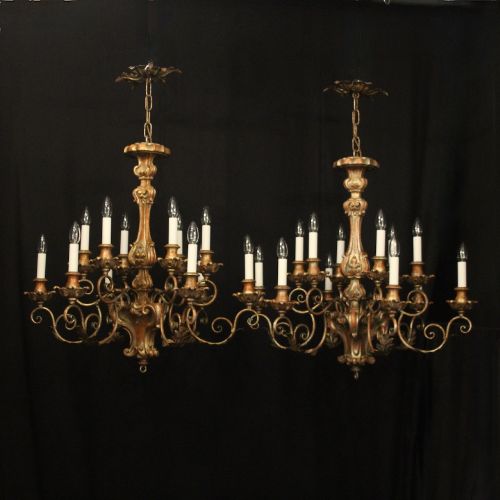
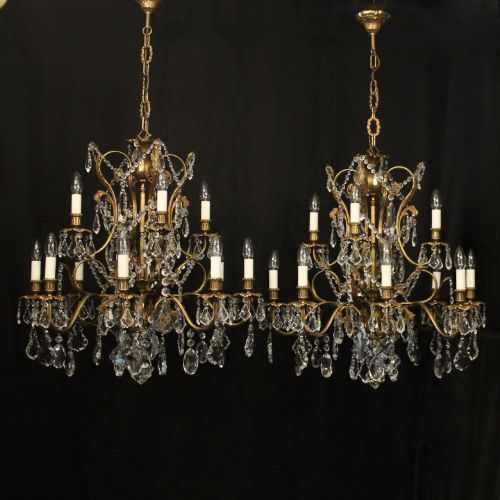
When searching for a pair of ceiling pendants, a buyer encounters matching overhead light fittings spanning the nineteenth century through to the middle of the twentieth century. These fixtures encompass multi-arm chandeliers, hall lanterns, and single glass shades designed to provide symmetrical illumination across two matching suspension points.
The selections on this page draw heavily from early twentieth-century production, particularly the 1920s and 1930s, alongside Edwardian examples and nineteenth-century pieces. French designs dominate the groupings, ranging from gilded bronze and crystal chandeliers to convex glass lanterns, alongside English church lights, Arts and Crafts ceiling fixtures, and Florentine polychrome works.
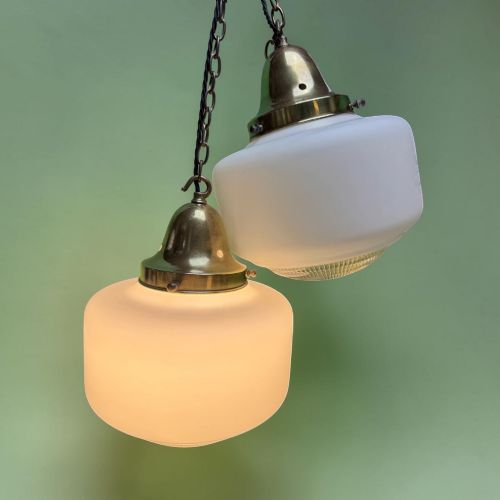
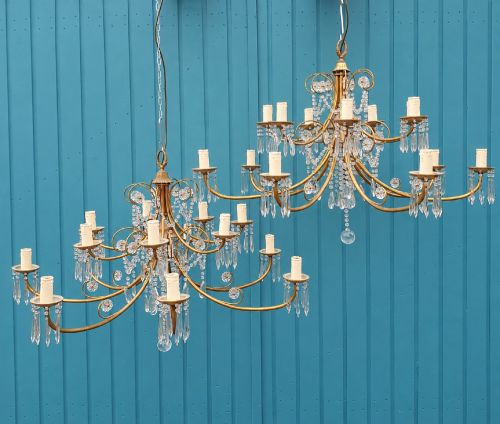
Buyers meet diverse forms, from monumental brass lanterns and multi-tier cut glass crystal chandeliers down to compact spike chandeliers and frilly opaline glass pendants. Symmetrical hanging pairs most frequently serve entrance halls, dining spaces, and grand reception rooms where balanced architectural lighting is required.
Materials and construction methods
Metalwork forms the structural core of these fixtures, utilising cast and chased brass, bronze, silver-gilded bronze, and plain metal frameworks. Artisans shaped these metals into complex lantern cages, scrolling arms, and multi-tier chandelier frames, often applying gilding or polychrome finishes for decorative effect.
Glass and crystal elements define the refractive qualities of the pieces, incorporating cut glass, moulded crystal, opaline glass, and mercury mirrored glass. Components such as tent drops, spike drops, and glass shades are wired or pinned into the metal armatures by hand, creating complex assemblies that catch and scatter light.
Pair of Ceiling Pendants Retail Price Guide 2026
Typical asking prices for pair of ceiling pendants among the pieces listed under this phrase on Sellingantiques today, from the lower quarter to the upper quarter. They describe what is for sale here now, not the wider market.
Some early twentieth-century pendant shades feature frilly glass edges that give industrial electricity a surprisingly delicate petticoat.
Distinctions in quality
Quality rests upon the crispness of the metal casting and the depth of the hand-finishing, where superior bronze and brass mounts display sharp relief work rather than soft, blurred edges. Finer pieces integrate heavier gauge metal frames that support substantial crystal or glass arrays without sagging or misaligning.
The grade of the glass and crystal components creates a distinct tier of craftsmanship, marked by clear, hand-cut facets that refract light sharply instead of pressed glass with dull edges. Maker attribution and design cohesion across both matching pendants also separate standard commercial production from high-tier decorative lighting.
Maison Jansen·Andre Arbus·Schneider·Vestaray
The Pair of Ceiling Pendants Glossary
- Tent chandelier
- A lighting fixture featuring a cascading upper canopy of glass drops arranged in a triangular tent shape above the main arms.
- Spike chandelier
- A central stem design where glass or crystal drops radiate outward along a vertical spiked configuration.
- Hall lantern
- An enclosed hanging light fixture, often glazed with glass panels within a brass or bronze frame, designed for corridors and entrance spaces.
- Opaline glass
- A milky, semi-translucent glass type utilised for diffusing light softly through pendant shades.
- Gilded bronze
- Metalwork finished with a thin layer of gold leaf or gilt wash, providing a lustrous decorative surface.
Pair of Ceiling Pendants: Frequently Asked Questions
How do I hang heavy crystal chandeliers safely?
Suspension requires fixing directly into ceiling joists or structural nogging using appropriate weight-rated fixings and steel chains. Professional electrical installation ensures the structural load rests on the hardware rather than the internal wiring.
Heavier multi-tier designs and monumental brass lanterns demand reinforced ceiling mounts to prevent movement or structural failure over time.
Can these antique pendants be rewired for modern use?
Most antique lighting fixtures require rewiring to meet modern electrical safety standards and local building regulations. Professional restorers can update internal wiring while preserving the original lampholders and external metalwork.
Using low-heat LED bulbs helps protect delicate vintage glass and silk cords from thermal degradation during daily operation.
How do I clean cut glass and crystal pendants?
Routine maintenance involves dusting the glass drops with a soft brush and wiping metal surfaces with a dry cloth. For deep cleaning, crystal components are typically washed in warm soapy water and dried individually before reattachment.
Harsh chemical cleaners should be avoided to prevent stripping the original gilding or patina from the bronze and brass frames.
What rooms suit a pair of ceiling pendants?
Matching pendants provide balanced illumination over long dining tables, kitchen islands, or through extended hallway corridors. Placing them symmetrically creates a formal visual axis within drawing rooms and reception spaces.
Ceiling height dictates the scale, with shorter spike or tent configurations suiting standard rooms and taller lanterns requiring elevated spaces.