

Pair of Brass Chandeliers
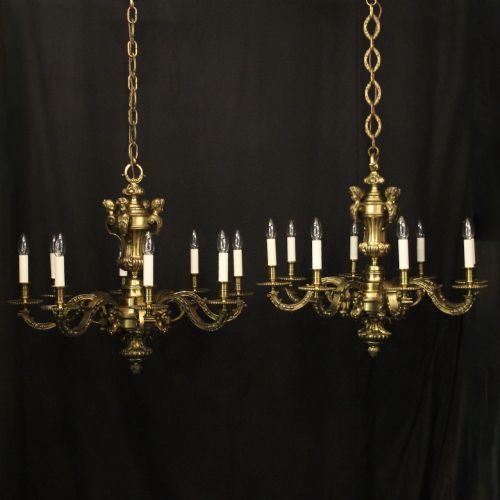
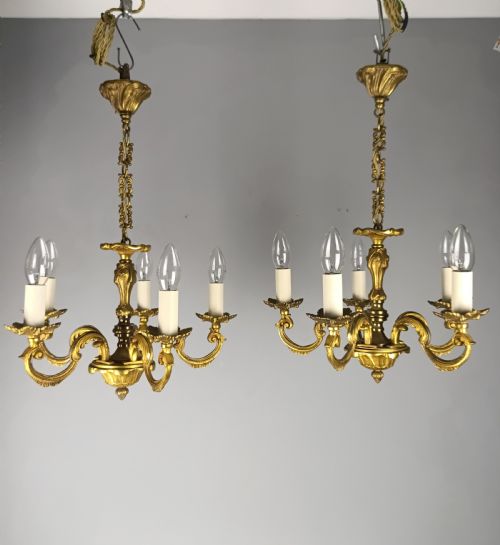
A pair of brass chandeliers brings balanced illumination and period character to a room, offering matched fixtures that unite high ceilings or grand spaces.
Pair of Brass Chandeliers
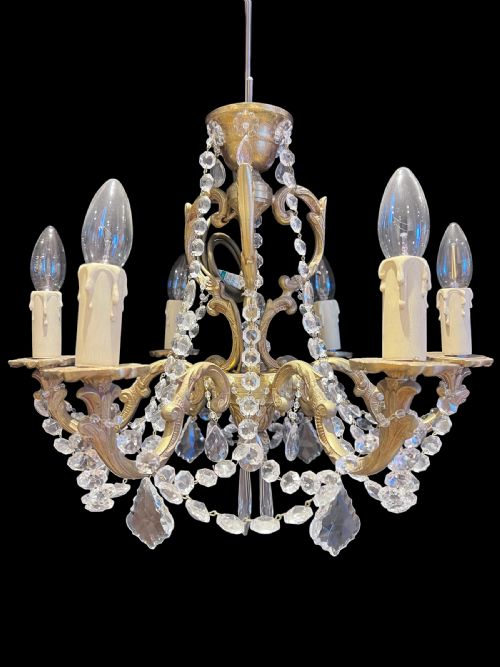
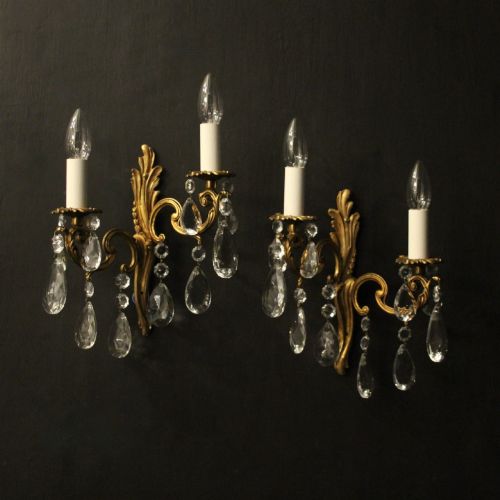
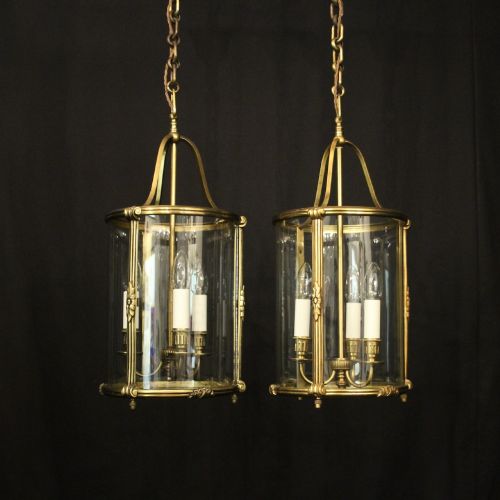
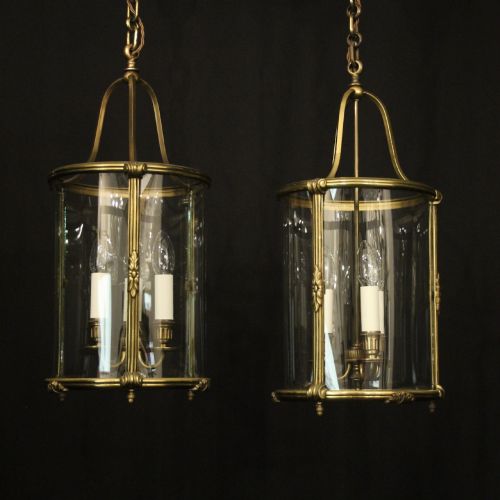
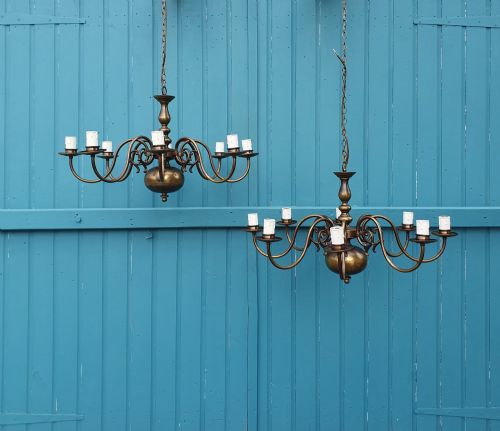
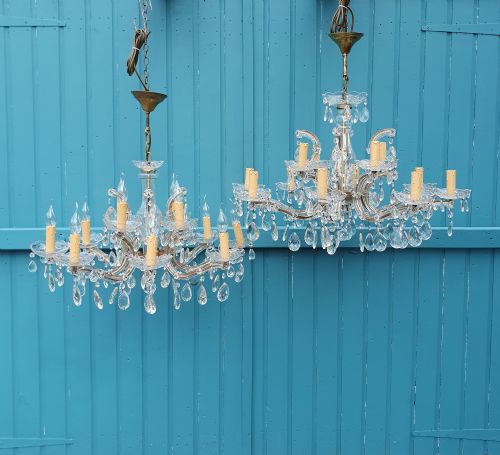
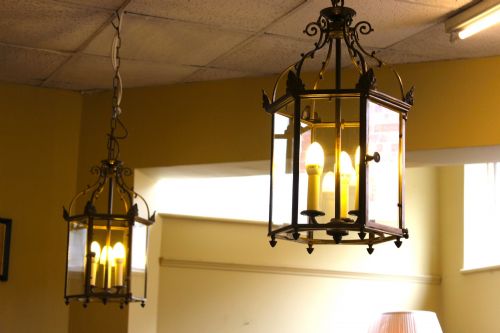
Buyers frequently encounter examples featuring multiple light arms, glass drops, and crystal prisms, often originating from French workshops or English makers. Smaller formats like spike chandeliers, bag chandeliers, and hexagonal hall lanterns also appear alongside larger twelve-arm configurations.
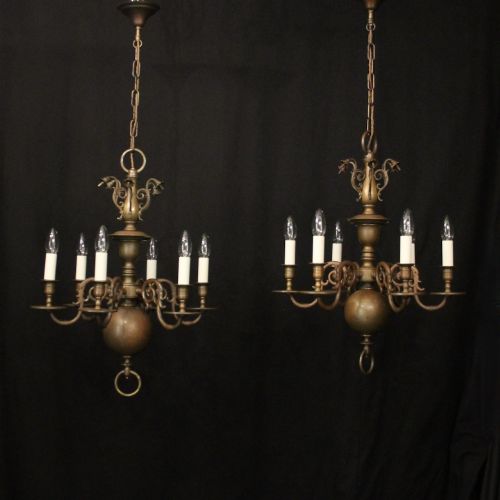
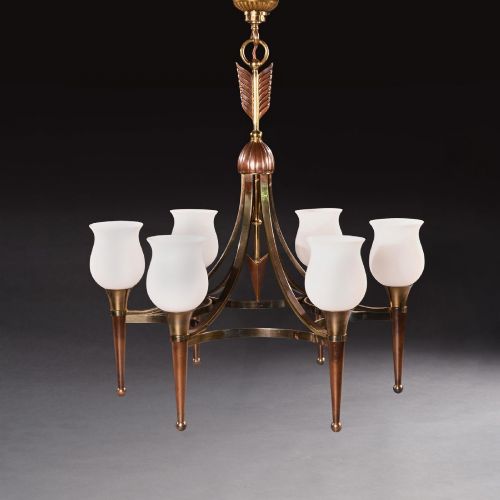
The selection ranges from robust cast brass English chandeliers and Flemish designs to gilded bronze French chateau pieces and mid-century modern interpretations. Matching pairs offer symmetry for dining rooms, halls, and principal reception spaces.
How they were made
Construction relies heavily on cast and spun brass components, joined with threaded rods, nuts, and pins to form the structural skeleton of the chandelier. Frames are frequently augmented with gilded bronze or gilt brass surface treatments, providing a decorative metallic sheen.
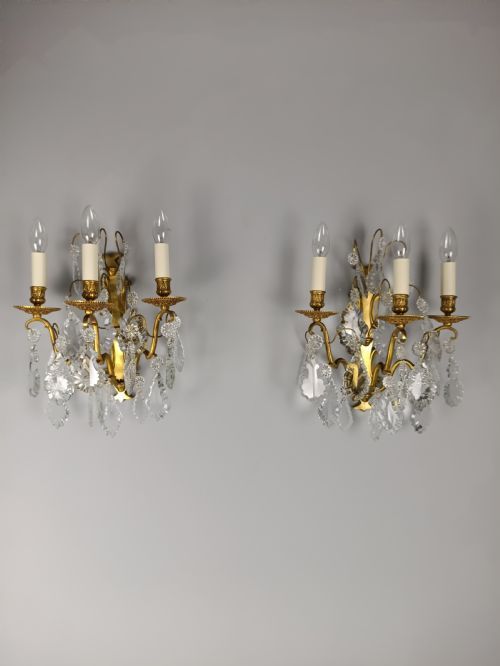
Prisms, drops, and decorative panels introduce glass and cut crystal elements, suspended from the metal framework using wire loops or pinned connections. Lantern variants integrate glazed glass panels within hexagonal or square brass and steel frames, housing internal candle branches or electrical fittings.
Some mid-century brass chandeliers incorporate unexpected marine accents, featuring whimsical brass seahorses paired with wrought iron frames.
What varies in quality
Quality rests upon the crispness of the casting work and the depth of the metal finishing, where hand-chased details and heavy gauge cast brass distinguish finer pieces from lighter spun or stamped metal alternatives. The integration of high-grade cut crystal and faceted glass drops adds substantial weight and brilliance to the overall composition.
Design coherence determines the upper tier of the range, seen in balanced arm distributions, harmonious proportions, and authentic stylistic adherence to periods such as the Edwardian era or French Empire. Maker attribution, original gilding, and intact structural integrity elevate specific examples above standard production models.
Maison Jansen·Andre Arbus
The Pair of Brass Chandeliers Glossary
- Spike chandelier
- A compact lighting form featuring an upright central spindle from which small arms or candle cups project. These pieces are typically dated to the early twentieth century and measure under a foot in height.
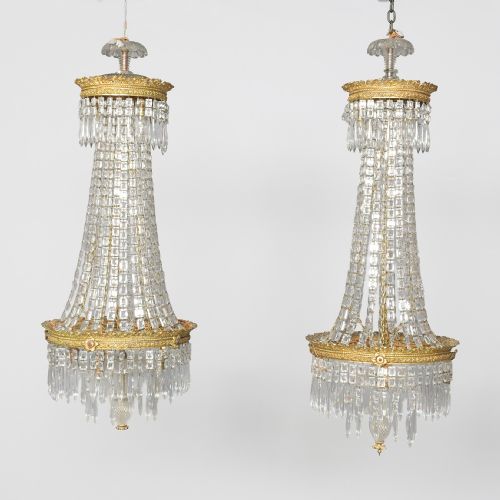
- Bag chandelier
- A lighting fixture characterised by a cascading cluster of crystal drops gathered in a conical or bag-like silhouette beneath a metal ring. This configuration maximises light refraction from a tight profile.
- Gilt bronze
- Metalwork composed of a bronze base coated with a layer of gold, frequently utilised in French decorative lighting to achieve a warm, enduring lustre. The material is also known as ormolu.
- Hexagonal lantern
- An enclosed hanging light fixture possessing six glazed sides held within a brass, bronze, or steel framework. These hall lights shield candles or bulbs from draughts.
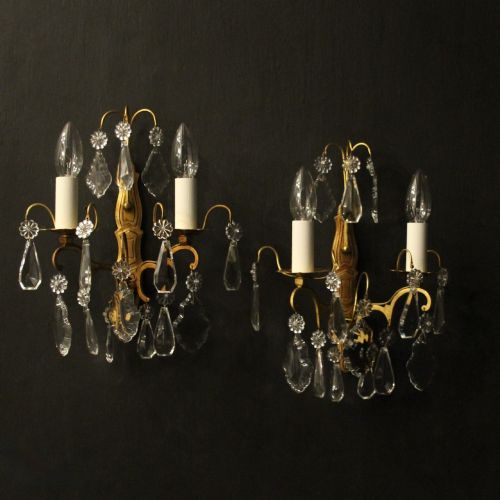
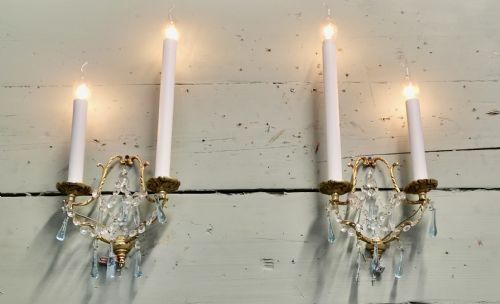
- Twin arm
- A structural configuration where two lighting branches extend from a single mounting point on a wall light or sconce. This layout provides balanced illumination without occupying excessive wall space.
Pair of Brass Chandeliers: Frequently Asked Questions
How do I clean a crystal chandelier?
Maintenance involves wiping individual glass drops and brass arms with a soft, lint-free cloth dampened with a mild, soapy solution. Avoid harsh chemical cleaners that can strip original gilding or lacquer from the metal surface.
Dry each component thoroughly after cleaning to prevent water spots and protect internal wiring connections from moisture damage.
Were these chandeliers originally wired for electricity?
Many examples originating from the nineteenth and early twentieth centuries were originally designed for candles or gas before being converted for electric lighting. Rewiring is standard practice for safe domestic installation.
Some surviving fixtures retain evidence of their original gas keys or candle drip pans alongside modern electrical components.
What is the difference between brass and gilt bronze?
Brass is an alloy of copper and zinc, valued for its warm metallic tone that can be polished or left with an aged patina. Gilt bronze utilises a copper and tin alloy treated with a gold surface layer.
Gilt bronze generally allows for sharper cast details and displays a richer, more uniform golden colour than standard brass.
How do I hang a heavy pair of chandeliers?
Installation requires anchoring the fixtures directly into ceiling joists or structural nogging using heavy-duty steel hooks rated for the combined weight of the metal and crystal. Standard ceiling plaster cannot support these substantial weights safely.
Professional consultation with an electrician ensures the electrical supply box and support bracket remain secure.