
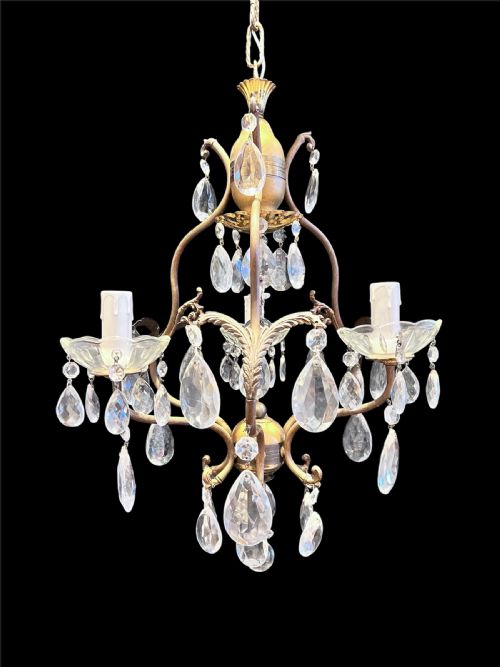


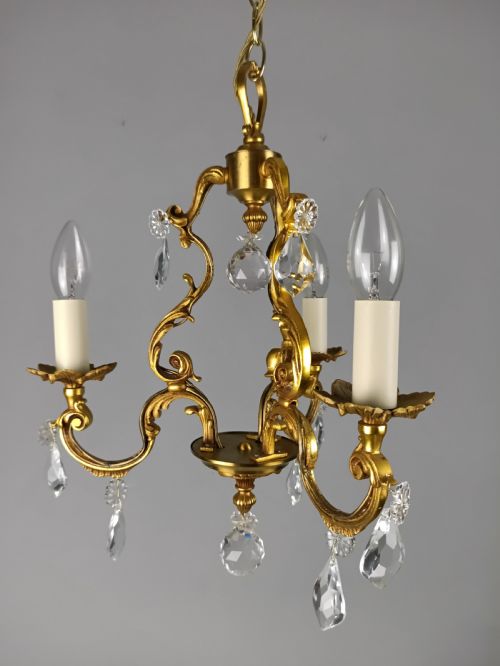


Three Arm Ceiling Light
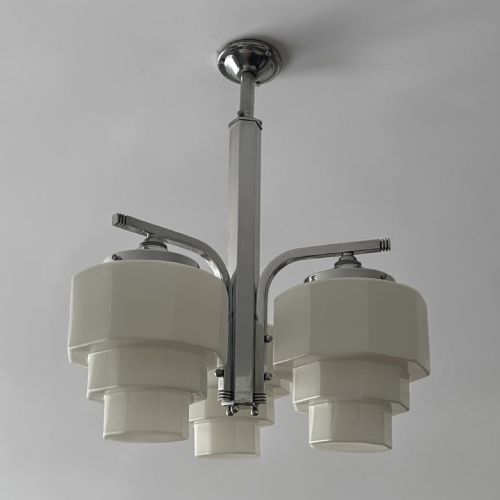
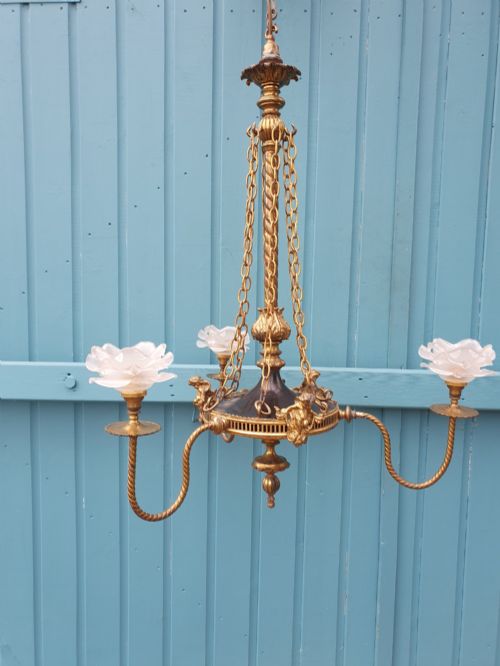
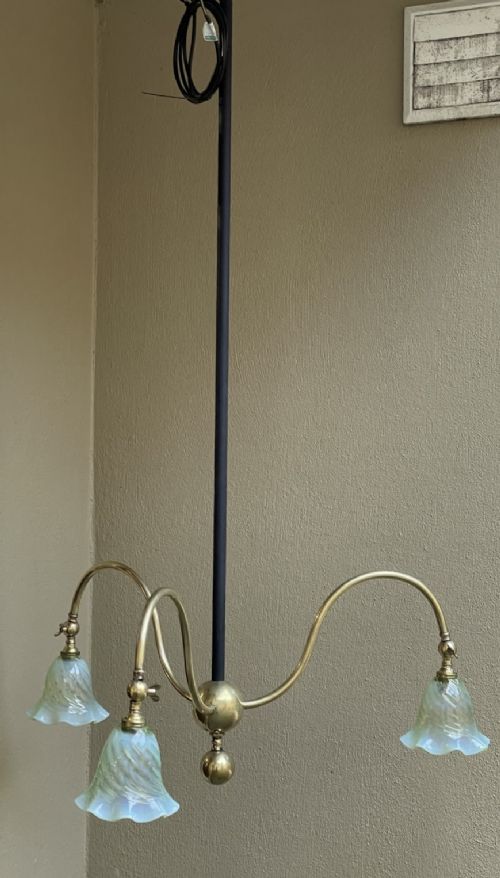
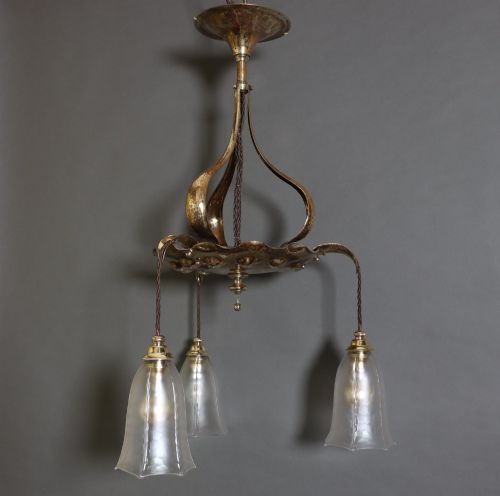
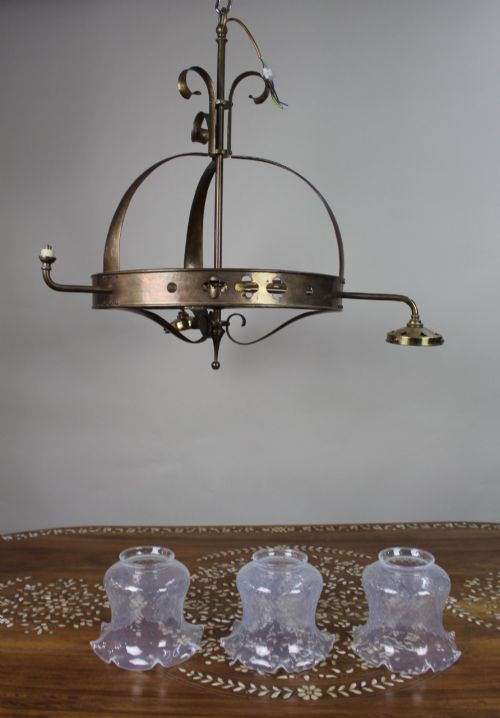
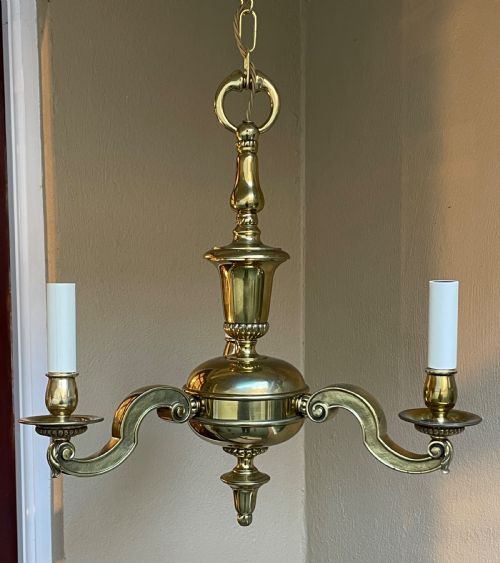
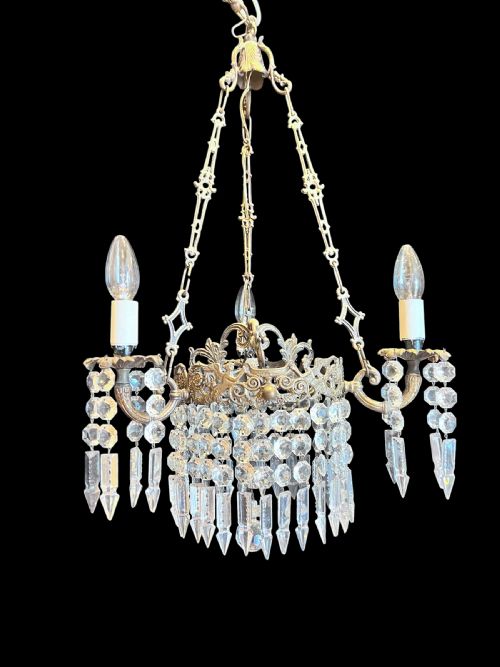
A three arm ceiling light brings balanced downward illumination and period character to a room, spanning styles from Arts and Crafts to French Rococo.
Three Arm Ceiling Light
When you search for a three arm ceiling light, you encounter multi-branch fittings designed to light medium-sized spaces with three distinct points of illumination. These fixtures appear across several eras, including the nineteenth century, Edwardian period, and the 1920s and 1930s.
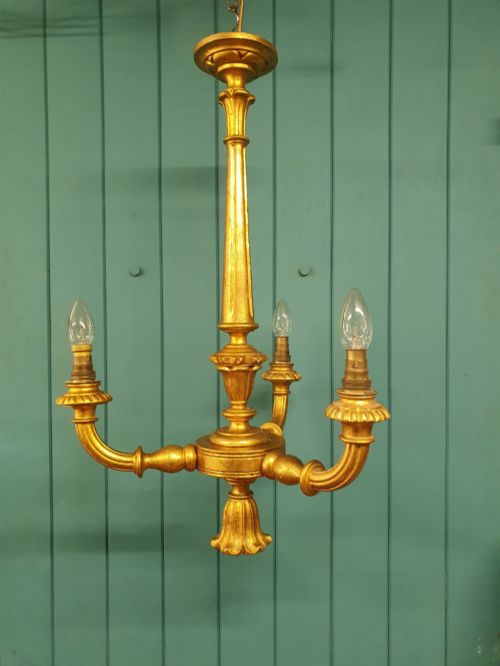
The selection here includes chandeliers, ceiling lights, and gasoliers configured with three branches or arms. You find styles ranging from French Chateau and Art Deco to Arts and Crafts and Gothic Revival.
Materials span brass, gilt brass, gilt metal, wrought iron, and carved giltwood, frequently accented with glass, crystal, or opalescent shades. Origin points vary widely, taking in English municipal buildings, French workshops, and Italian studios.
How they were made
Metals form the structural backbone of these fixtures, utilising cast and wrought brass, bronze, gilt metal, and iron to shape the arms and central stems. Artisans cast or forge the metal branches before applying gilt layers or patinated finishes.
Glass and crystal elements complement the metalwork, appearing as blown or crimped shades, opalescent bowls, and cascading crystal drops. Carved giltwood and gesso provide lightweight alternatives for ornate frames, particularly in Italian and French designs.
Materials in the listings include cast brass, wrought iron, and carved giltwood paired with crystal and opalescent glass.
What varies in quality
The refinement of the casting and carving separates standard production from exceptional work, visible in the crispness of foliage, cherub arms, or scrollwork on the brass and giltwood frames. Heavier gauge metals and detailed hand-finishing elevate the presence of a fixture.
Integrity of the components matters greatly, distinguishing pieces that retain their original crystals, matching shades, and ceiling roses from those assembled from mixed periods. Original gilding and untouched patination hold more visual depth than later repaint layers.
F&C Osler
The Three Arm Ceiling Light Glossary
- Gasolier
- A light fixture originally designed to burn coal gas before the widespread adoption of electricity. Many examples are later converted to electric power while retaining their original brass keys and burner arms.
- Giltwood
- Timber coated with a thin layer of gold leaf or gesso powder and gold size. It provides a bright reflective surface for carved chandeliers without the weight of solid metal.
- Opalescent glass
- Glass containing ingredients that diffuse light and create a milky, multi-toned appearance. It softens the output of the bulbs inside the shade.
- Gesso
- A paint mixture consisting of a neutral binder mixed with chalk, gypsum, or pigment. It is applied to wood surfaces to create a smooth base for gilding.
Three Arm Ceiling Light: Frequently Asked Questions
How do I install an antique ceiling light?
Most vintage fixtures require mounting to a sturdy ceiling joist and connecting to modern household wiring by a qualified electrician. Brackets and ceiling roses often need careful alignment with existing junction boxes.
Older fixtures may require rewiring with modern cable to meet current safety standards while preserving the visible metal components and lampholders.
Can I replace missing crystal drops?
Sourcing replacement crystals requires matching the cut, size, and glass clarity of the existing drops on the chandelier. Antique glass markets and specialist restorers supply period-appropriate glass elements.
Pin attachments and wire loops should match the gauge and metal tone of the original frame for a seamless appearance.
How do I clean a brass and glass chandelier?
Dust the arms and crystals regularly using a soft feather duster or microfiber cloth. For deeper cleaning, remove glass shades and crystal drops to wash them in warm soapy water.
Avoid harsh chemical polishes on aged brass surfaces to preserve the natural patina developed over the decades.
What rooms suit a three arm light?
A three-branch fixture provides moderate illumination suited to hallways, bedrooms, and smaller reception rooms. The spread of three arms casts balanced light without overwhelming compact spaces.
Ceiling height dictates the drop of the chandelier, ensuring adequate clearance beneath the lowest point of the glass or metalwork.