


Middle Eastern Platter
A middle eastern platter brings rich metalwork into a room, offering grand circular trays and chargers fashioned by nineteenth-century artisans.
Middle Eastern Platter
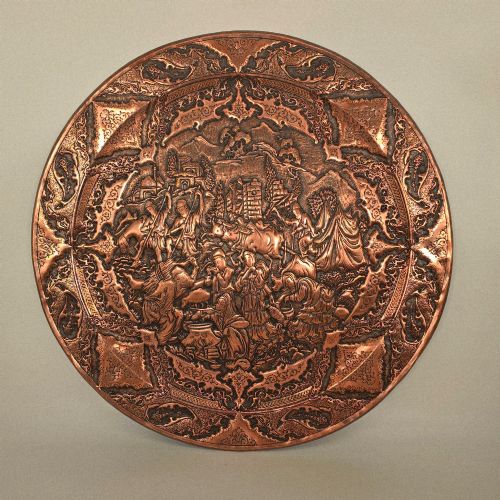
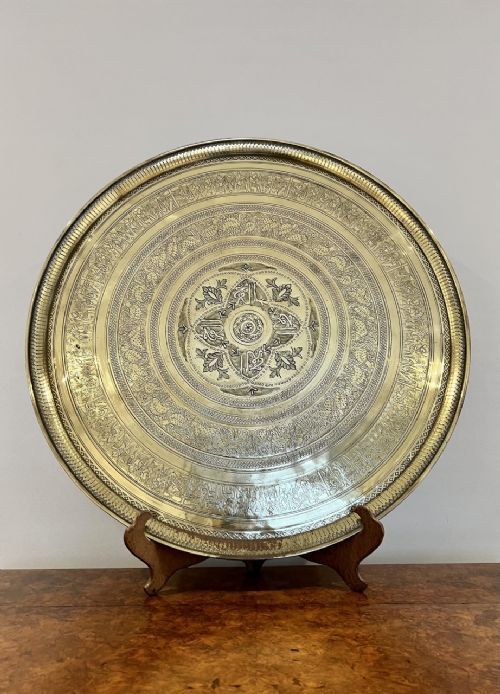
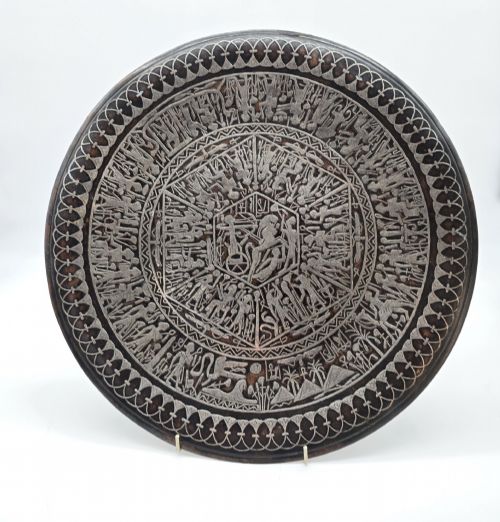
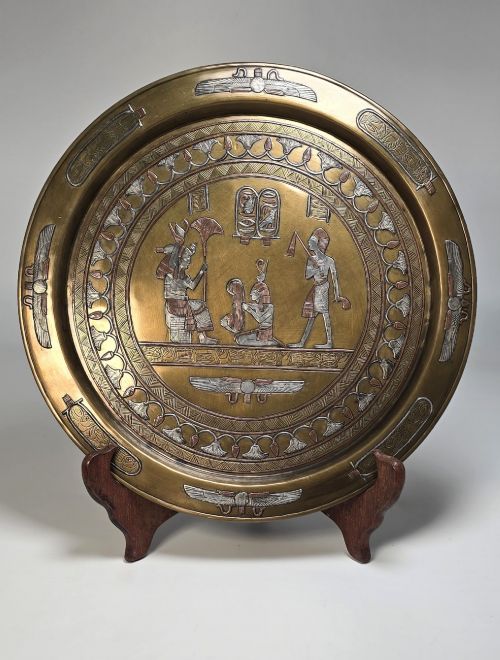
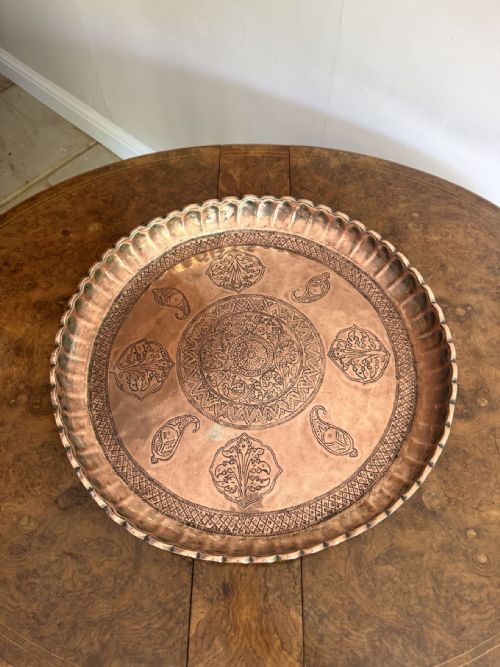
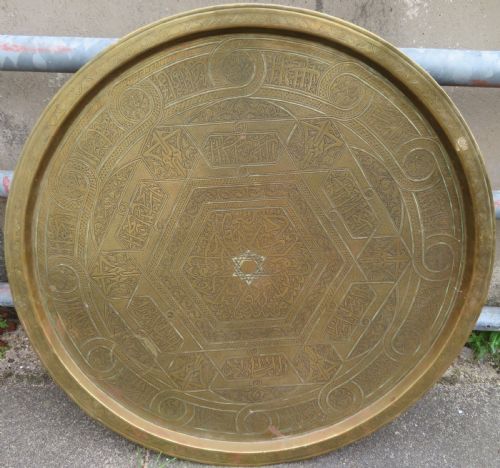
A middle eastern platter comprises large circular trays, wall chargers, and decorative dishes originating from the nineteenth century. These items include Victorian productions alongside pieces associated with the Egyptian Grand Tour and Persian workshops.
The objects seen here span styles such as Cairo Ware, Islamic metalwork, Mamluk Revival, and Egyptian Revival. Large circular copper and mixed metal trays form the most common format encountered on this page.
Buyers look for these metal chargers to serve as focal points for wall display or table placement. Their wide surfaces carry intricate decoration that reflects nineteenth-century interest in Middle Eastern and Persian design.
How they were made
Makers utilised copper, brass, bronze, and patinated copper as the foundational metals for these chargers. Mixed metal compositions appear frequently, combining different metal tones within a single plate.
Artisans applied hand engraving and repoussé work to shape the surface patterns. Many pieces incorporate silver inlay or mixed metal inlays set directly into the copper or bronze body.
Materials recorded on this page include copper, brass, silver, bronze, and mixed metal.
What varies in quality
Quality rests in the precision and depth of the engraving and repoussé work across the metal surface. Finer examples display crisp, detailed patterns rather than shallow or hurried incisions.
The integration of silver and copper inlays distinguishes superior pieces from simpler utilitarian vessels. Rich patination and heavy gauge metal indicate thoughtful workshop production.
The Middle Eastern Platter Glossary
- Cairo Ware
- Nineteenth-century metalwork produced in Egypt for European and domestic markets. These pieces typically feature dense silver and copper inlay on brass or bronze.
- Repoussé
- A metalworking technique where the artisan hammers the metal from the reverse side to form a raised design on the front. This method creates tactile relief on chargers and trays.
- Charger
- A large ornamental plate or tray used traditionally for service or wall display. In this context, they serve as prominent decorative wall hangings.
- Grand Tour
- The nineteenth-century practice of affluent travellers collecting souvenirs abroad. Items acquired on these journeys often included Egyptian and Middle Eastern metalwork.
Middle Eastern Platter: Frequently Asked Questions
How were middle eastern platters used originally?
These large metal pieces served primarily as decorative chargers or presentation trays in domestic and formal settings.
Many examples were also produced specifically as souvenirs for travellers during the nineteenth century.
How do I hang a heavy metal charger?
Displaying these large trays safely requires a robust wall hook and a supportive adjustable plate hanger that grips the rim securely.
Ensure the weight of the copper or bronze is anchored directly into solid walling.
What is Cairo Ware?
Cairo Ware refers to nineteenth-century Egyptian metalwork featuring intricate silver and copper inlay set into brass, bronze, or copper surfaces.
These objects were heavily collected during the period of the Egyptian Grand Tour.
How do I clean an antique copper tray?
Dust the surface gently with a soft dry cloth to preserve the historical patinated copper and embedded metal inlays.
Avoid abrasive polishes that strip away the aged finish and damage the hand engraving.