




Hand Engraved Copper
Hand engraved copper brings together domestic and ceremonial vessels marked by the patient, linear work of the artisan across centuries.
Hand Engraved Copper
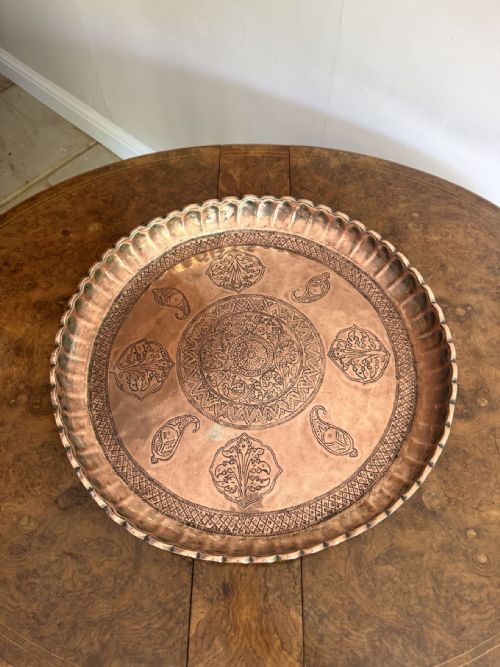
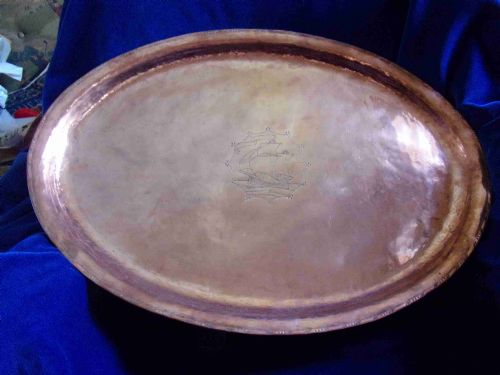
When you search for hand engraved copper, you encounter trays, chargers, bowls, and coffee pots spanning the eighteenth, nineteenth, and early twentieth centuries. These objects range from Middle Eastern and Persian domestic vessels to British Arts and Crafts pieces and Anglo-Indian wares.
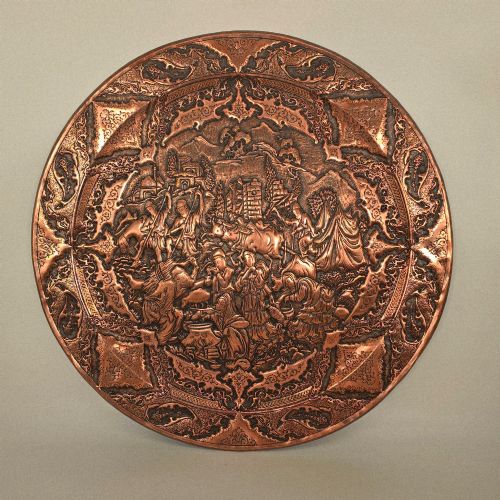
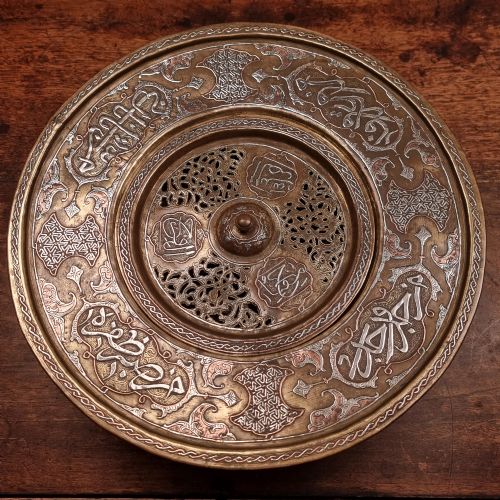
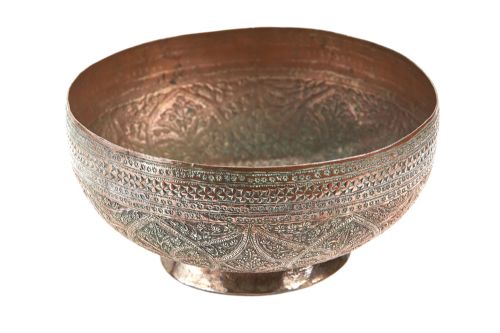
The version you are most likely to meet on this page is a nineteenth-century Middle Eastern or Persian circular dish or tray, frequently displaying patinated surfaces and silver inlay alongside the primary engraving.
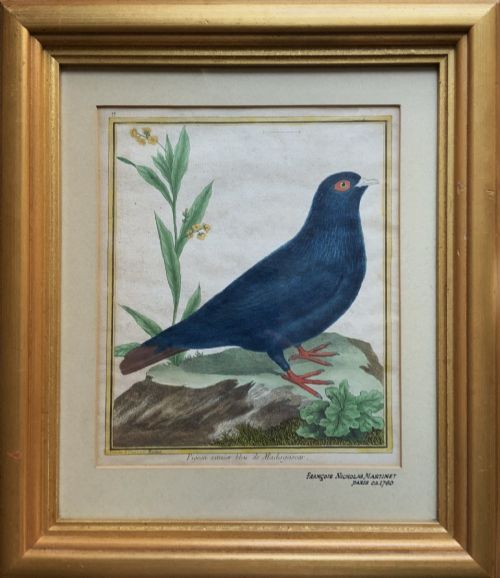
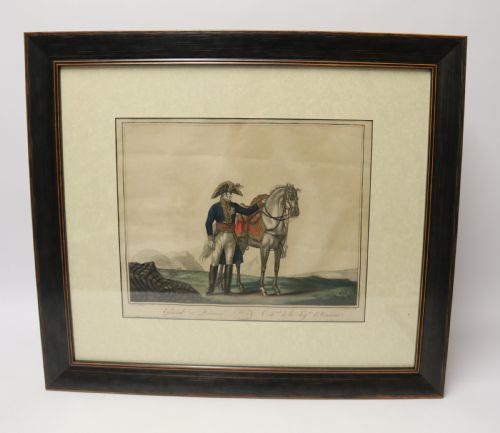
Alongside these metal items, the selection includes eighteenth-century hand-coloured prints and engravings on paper, reflecting the broad nineteenth-century and earlier use of the term engraving in mixed inventories.
Materials and technique
Makers shaped these items primarily from copper sheets, sometimes utilising brass or incorporating mixed metal elements and silver inlay to create contrast across the surface.
Artisans applied hand engraving and repoussé work directly to the metal, pressing and cutting patterns into the copper to form intricate Islamic, Middle Eastern, or Arts and Crafts motifs.
Materials documented in the inventory include patinated copper, brass, silver inlay, and paper sheets carrying hand-coloured copperplate prints.
What varies in quality
The distinction between standard domestic items and finer pieces lies in the depth, clarity, and complexity of the engraved and repoussé decoration across the copper surface.
The integration of mixed metals, silver inlay, and patination elevates certain chargers and trays above plain copper vessels, demonstrating a higher level of workshop skill.
François-Nicolas Martinet·Hugh Wallis·E Jackson Stodart·George Dionysius Ehret
The Hand Engraved Copper Glossary
- Repoussé
- A metalworking technique where the artisan hammers the design from the reverse side to form a raised pattern on the front. This method gives texture and dimension to trays and chargers.
- Patinated Copper
- Copper that has developed a darkened or altered surface finish through age or intentional chemical treatment. It highlights the engraved details by creating contrast.
- Charger
- A large ornamental plate or tray used historically for display or service. These pieces frequently carry the most ambitious engraved and inlaid designs.
- Stipple Engraving
- A printmaking method utilising dots rather than continuous lines to form the image. This technique appears on nineteenth-century paper works associated with the listings.
Hand Engraved Copper: Frequently Asked Questions
How do I clean hand engraved copper?
Harsh polishes remove the aged patination and surface character that collectors value on antique copper vessels. Gentle dusting with a soft cloth preserves the delicate engraved lines.
Avoid chemical dips or abrasive compounds, particularly on pieces with silver inlay or applied patination. Keeping the metal in a stable environment prevents active corrosion.
Are these copper trays for daily use?
Most antique copper chargers and trays function primarily as decorative objects or display pieces rather than active tableware. Their age and hand-worked surfaces make them sensitive to heavy handling.
Smaller bowls and pots can safely hold dry items, but prolonged contact with moisture may alter the historic patina of the copper.
How do I date a copper tray?
Dating relies on stylistic markers, tool marks, and the specific composition of the metal alloys used. Pieces from the Arts and Crafts period often exhibit distinct workshop signatures or characteristic British manufacturing techniques.
Middle Eastern and Persian vessels are assessed through decorative motifs, script styles, and the integration of silver inlay traditional to specific nineteenth-century periods.
Why are prints listed with copper items?
Historical cataloguing practices and mixed dealer inventories occasionally group hand-coloured paper engravings alongside metalware under the shared heading of engraved works. These eighteenth- and nineteenth-century prints document natural history and military subjects.
Paper pieces from this era provide context for the broader definition of engraving utilised across period collections on the marketplace.