



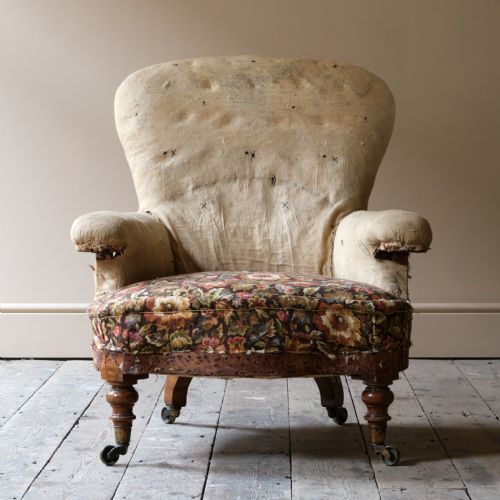


Mid Victorian Walnut Seating
Mid victorian walnut seating brings substance and dark timber warmth into a room, spanning dining chairs, armchairs, and low nursing seats.
Mid Victorian Walnut Seating
Mid victorian walnut seating encompasses a wide variety of domestic furniture shapes produced during the middle decades of the nineteenth century. Buyers encounter formal dining sets alongside individual pieces designed for specific domestic rooms, such as low nursing chairs, salon seats, and chaise longues.
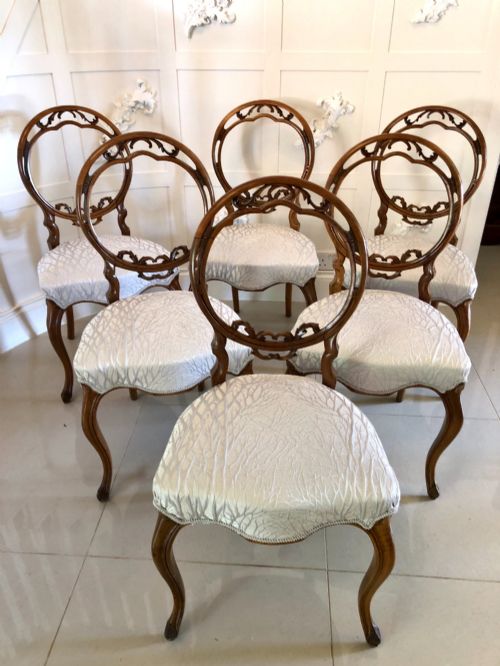
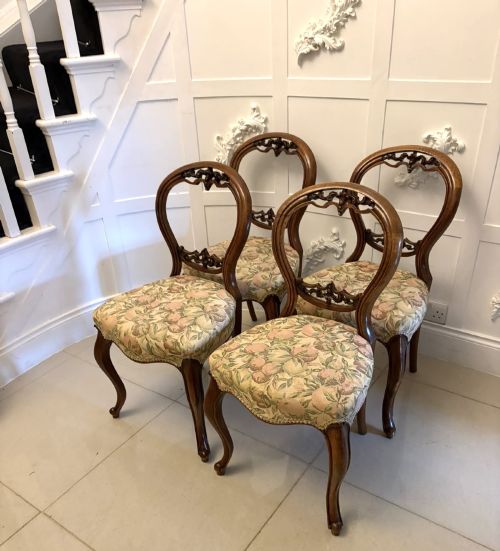
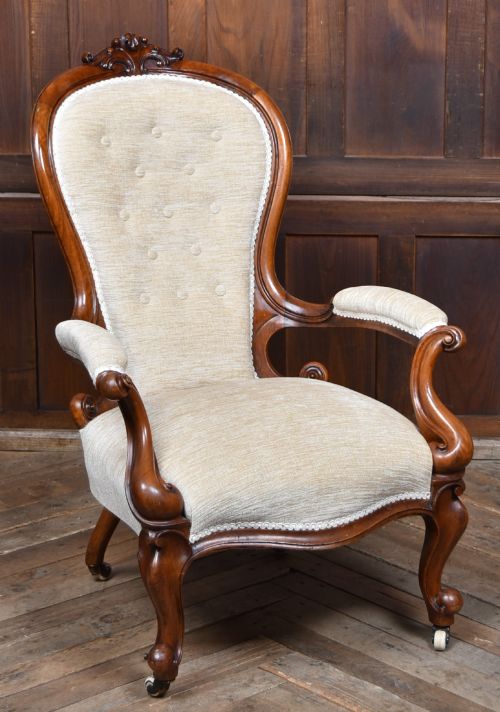
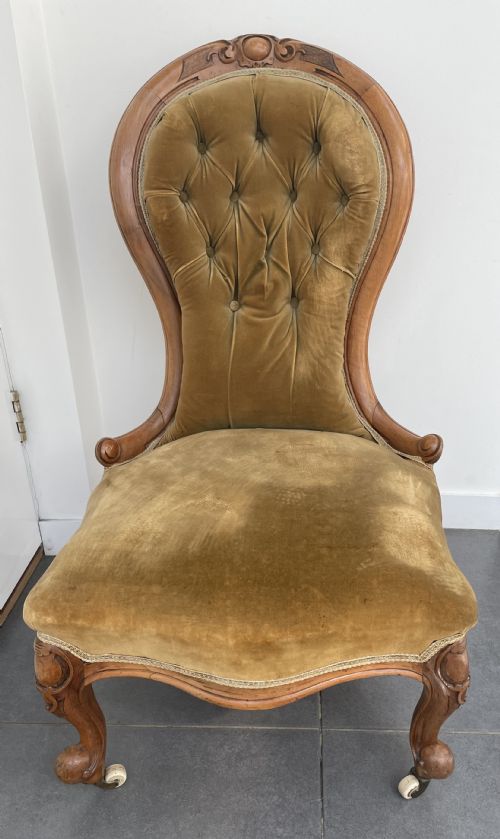
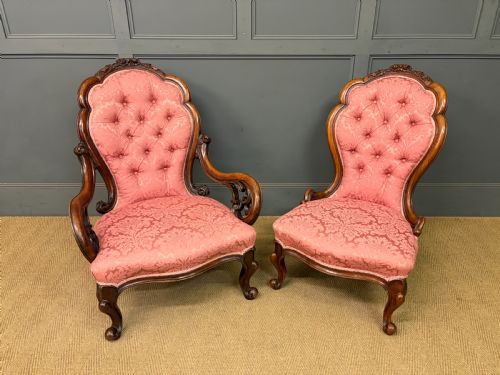
The pieces on this page reflect the aesthetic preferences of the period through distinct styles including Victorian Rococo Revival and Louis XV Revival. Dining chairs frequently feature balloon backs, while drawing room and bedroom chairs often incorporate carved frames and buttoned upholstery.
Materials and Construction
Cabinet makers of the period utilised solid walnut and walnut veneers for the structural frames, shaping them with carved details and fretwork. This timber provided a rich, dark grain that suited the elaborate curves of revivalist design.
Upholstered forms rely on traditional stuffing materials contained within covers of fabric, velvet, and hessian. Visible construction details often include brass elements and ceramic castors supporting the lower frame.
Mid Victorian Walnut Seating Retail Price Guide 2026
Typical asking prices for mid victorian walnut seating among the pieces listed under this phrase on Sellingantiques today, from the lower quarter to the upper quarter. They describe what is for sale here now, not the wider market.
Low nursery seats gave Victorian sitters a safe way to tend the grate without scorching their petticoats.
Distinctions in Quality
The refinement of the carved woodwork dictates the standing of individual pieces, ranging from plain functional frames to deeply sculpted ribbon and floral motifs. Crispness in the execution of walnut carving indicates the skill level of the original workshop.
Originality of components and the integrity of the frame construction further define the grade of the seating. Matching sets maintain higher uniformity across frames, whereas single salon or library chairs rely on the proportions of their specific design.
Howard and Sons·Gillows
The Mid Victorian Walnut Seating Glossary
- Balloon back
- A chair back shaped in a continuous curved loop resembling the outline of a balloon. This form is common in dining and salon chairs from the period.
- Nursing chair
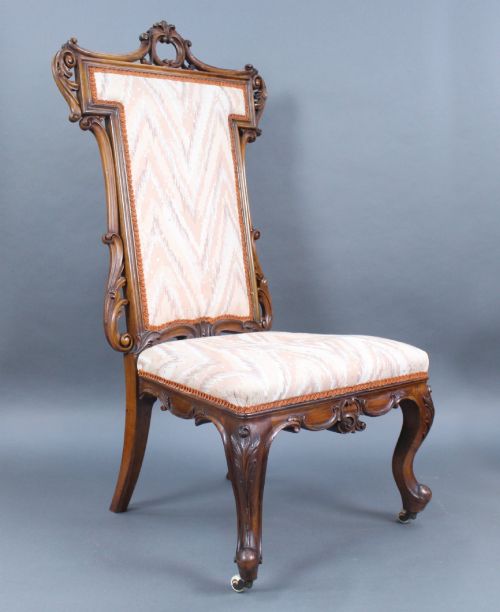
- A low-seated chair designed for comfort near a fireplace or nursery. These typically feature upholstered button backs and compact proportions.
- Chaise longue
- An upholstered couch or day bed with an elevated headrest. Examples from this era utilise carved walnut frames and rich fabric coverings.
- Spoon back
- A padded chair back hollowed out in the centre to resemble the bowl of a spoon. It offers ergonomic support for the sitter's spine.
- Rococo Revival
- A design style drawing on mid eighteenth-century French motifs with asymmetrical scrolls and naturalistic floral carvings. Walnut frames adapt readily to these curving contours.
Mid Victorian Walnut Seating: Frequently Asked Questions
How do I identify a nursing chair?
A nursing chair stands lower to the ground than a standard armchair and usually lacks arms to accommodate bulky nineteenth-century dresses. They were intended for sitting close to fires or nurseries.
Most surviving examples feature upholstered seats and buttoned backs supported on short turned or cabriole legs.
What styles are common in walnut seating?
The listings show Victorian, Victorian Rococo Revival, and Louis XV Revival styles. These incorporate naturalistic carved details, cabriole legs, and undulating frame contours.
Craftsmen adapted French eighteenth-century motifs to suit the heavier proportions favored by Victorian households.
Where were these chairs used?
These pieces served various functions across domestic interiors, including formal dining rooms, drawing rooms, libraries, and bedrooms. Different chair types matched specific social uses within the nineteenth-century home.
Dining chairs were produced in matched sets, whereas library chairs, salon seats, and chaise longues served as individual accent pieces.