



Period Walnut Dining Chairs
Period walnut dining chairs bring rich timber grain and classic forms to the table, uniting durability with centuries of English design.
Period Walnut Dining Chairs
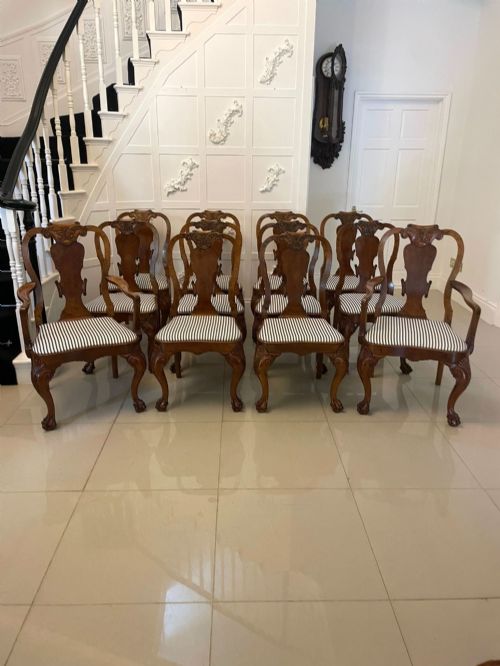
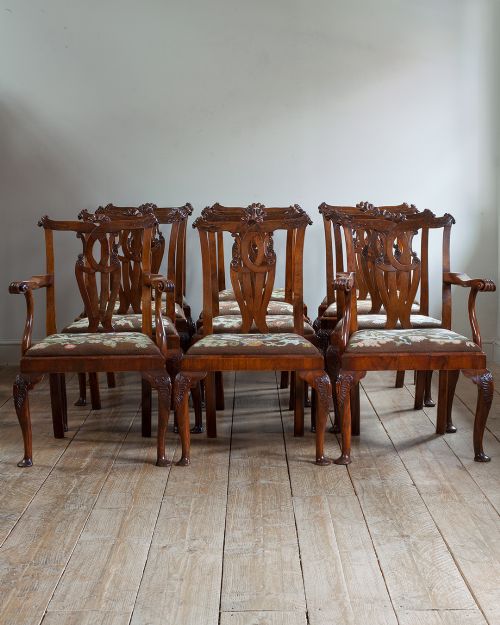
Period walnut dining chairs span from the late seventeenth century through the Georgian era and into the Victorian revival periods. Buyers encounter individual side chairs, matched pairs, and larger dining sets numbering up to fifteen pieces.
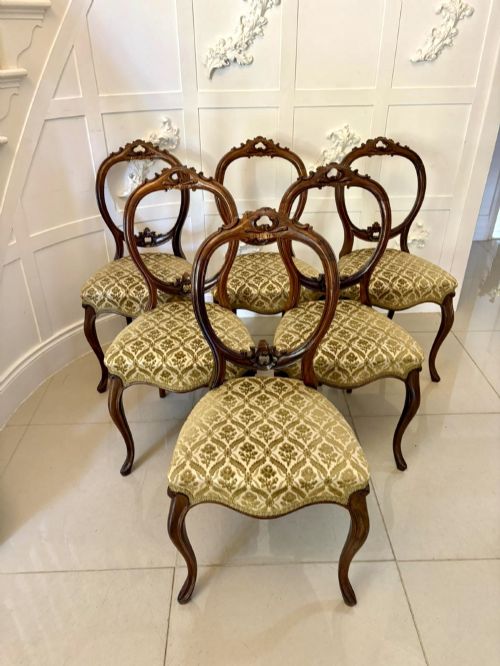
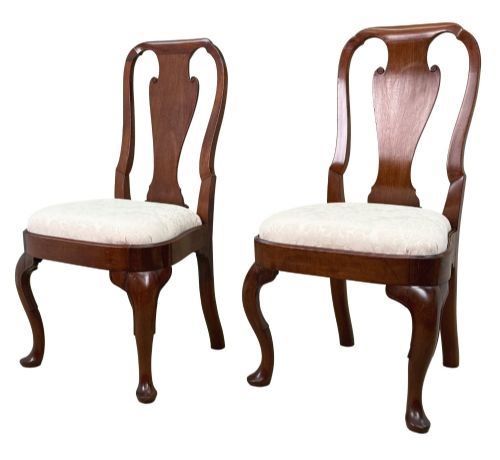
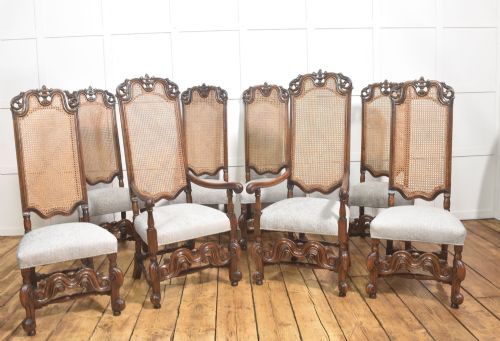
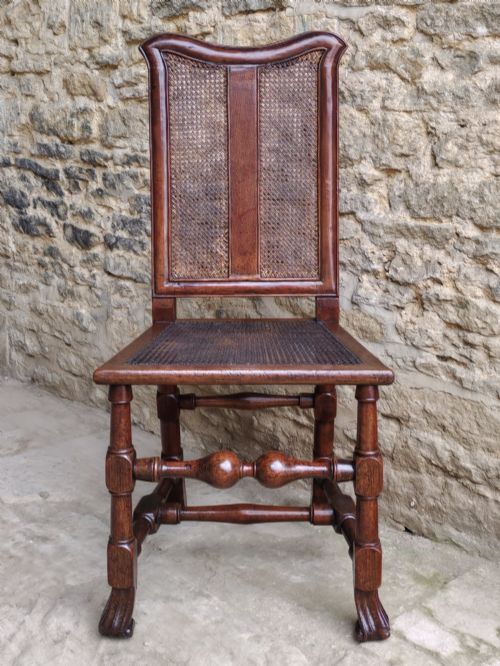
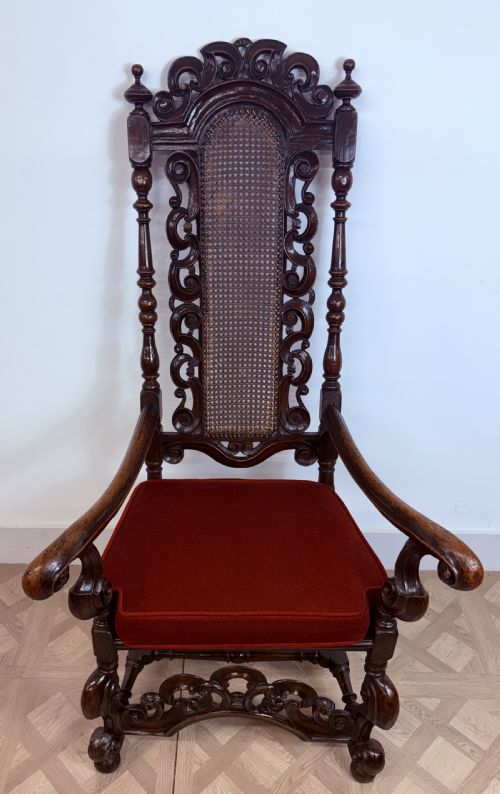
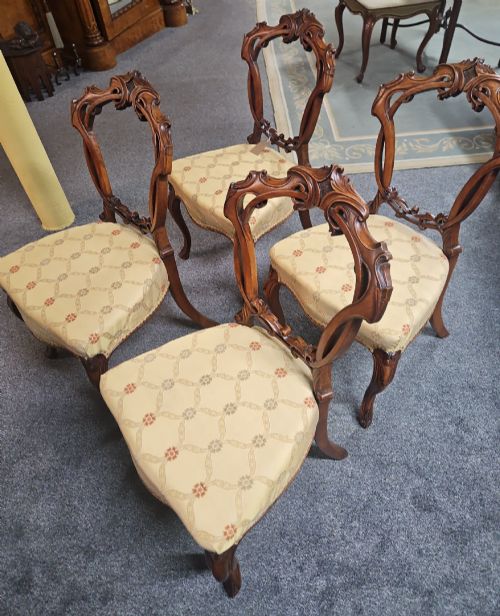
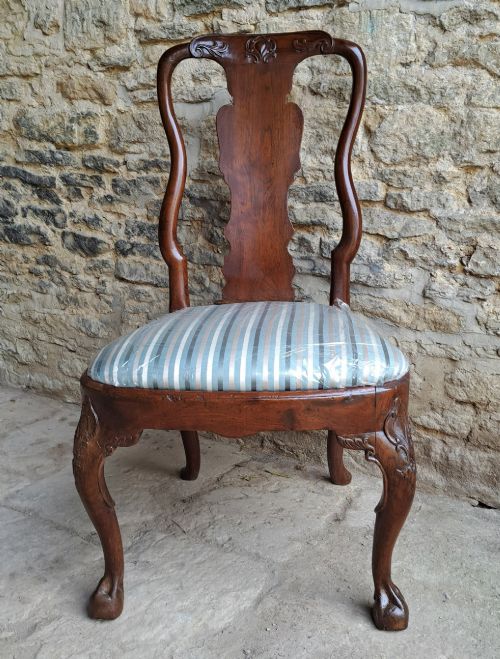
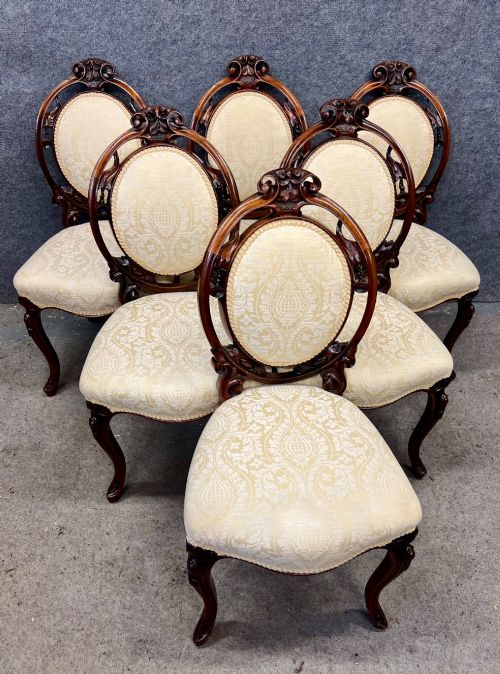
The inventory includes early high-back cane designs, Queen Anne splat-back forms, and balloon-back Victorian variants. These seating options serve formal dining rooms as well as occasional placement around the home.
How they were made
Cabinet makers utilised solid walnut and burr walnut veneers applied to secondary timbers to achieve deep figured grain patterns. Frames were joined using traditional woodworking joints such as mortise and tenon.
Seating portions incorporate cane work or webbed upholstery frames covered in fabric, textile, velvet, and tapestry. Needlepoint upholstery also appears on specific side and armchair variants.
Certain early chairs feature tall cane backs designed to keep aristocratic heads clear of draughty castle corridors.
What varies in quality
The distinction between standard examples and the finest works rests on timber selection and crispness of carving. Carved details on splats, knees, and rails show varying depths of relief and hand-worked precision.
Completeness of a matching set heavily influences character, alongside the survival of original cane panels or period upholstery materials. Uniformity across larger sets of six, eight, or ten chairs marks higher tier examples.
Charles Tozer·Lamb of Manchester
The Period Walnut Dining Chairs Glossary
- Burr walnut
- A figured timber veneer taken from the warted growths of walnut trees. This material yields complex, swirling grain patterns highly prized in cabinet making.
- Splatt
- The central vertical slat in the back of a dining chair. It provides lumbar support and serves as the primary canvas for stylistic ornamentation.
- Cane
- Woven rattan material used for chair seats and backs. It offers lightweight resilience and distinctive textural contrast against solid timber frames.
- Cabriole leg
- A furniture leg that curves outward in a convex arc and tapers inward in a concave arc, mimicking animal limbs. This form is common in Queen Anne and Georgian designs.
- Needlepoint
- Stitched textile work executed on canvas mesh. It provides durable, decorative surface coverage for padded chair seats.
Period Walnut Dining Chairs: Frequently Asked Questions
How do I clean period walnut chairs?
Dust timber surfaces regularly with a soft, dry cloth to prevent particulate buildup. Apply traditional beeswax sparingly to maintain the natural sheen of the walnut.
Avoid modern liquid polishes containing silicones, which can penetrate porous historical finishes. Protect upholstered and caned sections from direct sunlight to prevent fibre degradation.
Can I mix different styles around a table?
Pairing side chairs from similar eras creates an eclectic dining arrangement that highlights individual craftsmanship. Matching armchairs at the head of the table provides formal symmetry.
Ensure seat heights align comfortably if combining pieces from different decades. Similar timber tones help unify mixed seating groups.
How do I identify a Queen Anne chair?
Queen Anne chairs typically feature solid vase-shaped splats, cabriole legs, and pad feet. The overall silhouette emphasises curved lines rather than straight geometric framing.
Earlier high-back variants incorporate ornate crest rails and stretched underframes. Proportions remain slender and elegant compared to heavier Victorian interpretations.
Are these chairs suitable for daily use?
Period seating is structurally robust when joints remain tight and stable. Many examples have survived centuries of regular domestic service.
Routine checks of frame stability ensure safe seating. Modern users should avoid excessive weight loads on delicate antique cane panels.