
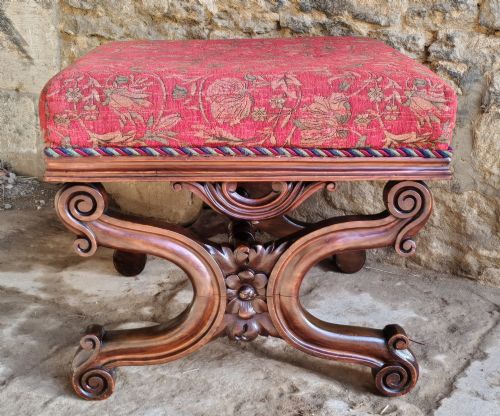
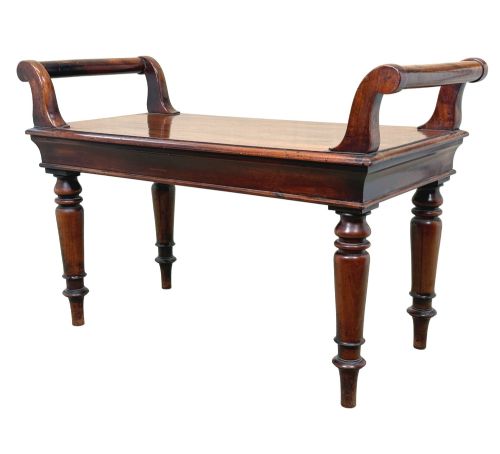
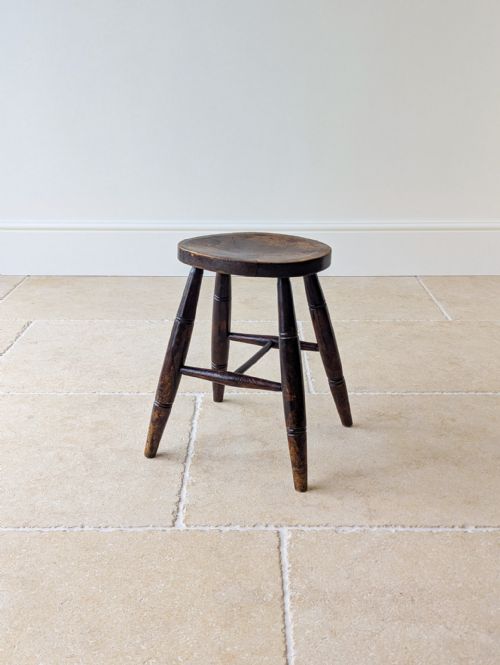
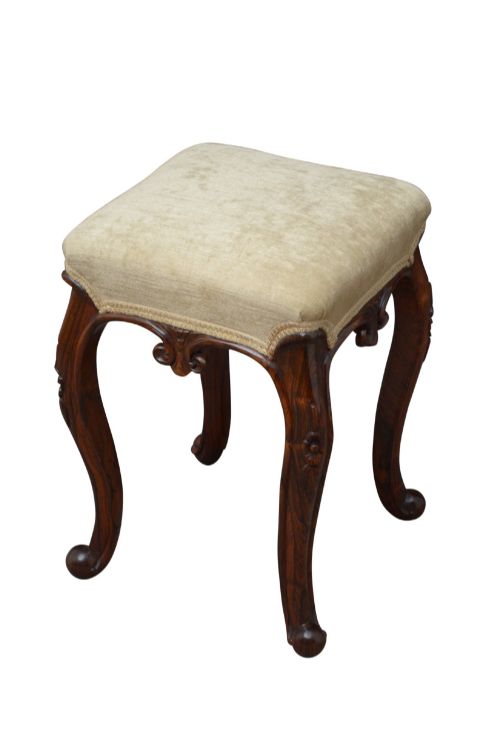
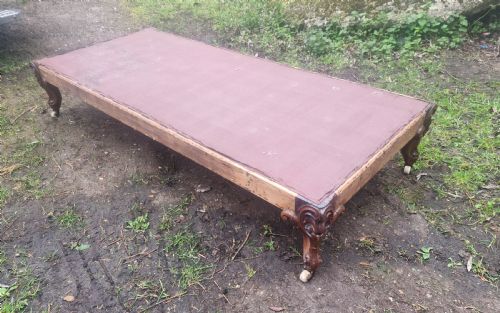


Mid Victorian Stool
Mid victorian stool examples bring solid nineteenth-century craftsmanship and domestic utility into modern rooms through varied woods and upholstered tops.

Mid Victorian Stool
A mid victorian stool encompasses a wide range of nineteenth-century seating designed for comfort, music-making, and fireside relaxation in domestic settings. The pieces vary from low footstools and gout stools to piano seats, window benches, and larger centre ottomans.
Most examples found on this page date between eighteen fifty and eighteen seventy, reflecting the height of Victorian production. These range from rustic country oak forms to heavily carved rosewood, walnut, and mahogany frames influenced by various revival styles.
How They Were Made
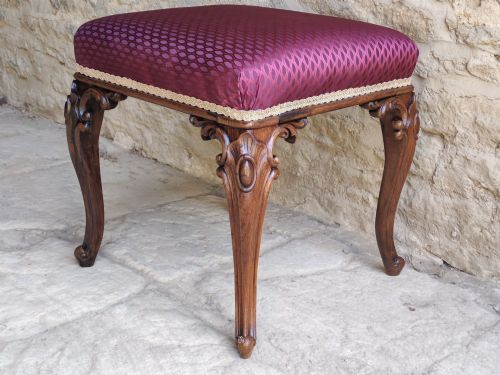
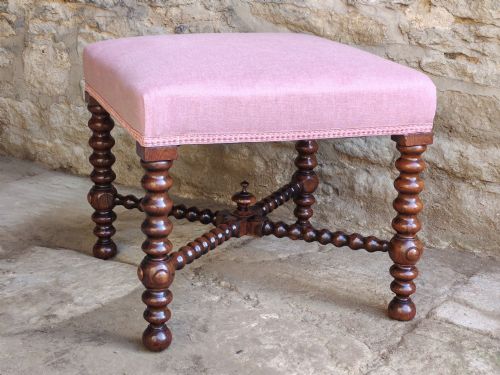
Cabinetmakers utilised dense native and imported timbers, shaping mahogany, walnut, rosewood, oak, and occasionally exotic woods like goncalo alves or burr maple into sturdy frames. Joinery methods included strong mortise and tenon joints, intricate hand-carving, and turned elements such as bobbin legs.
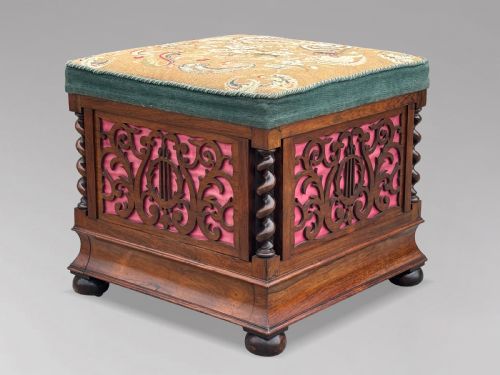
Upholstery formed an essential part of the construction, utilising materials like needlepoint, gros-point, velvet, and various traditional fabrics over webbed or sprung bases. Frames frequently featured specific supports like cabriole legs, x-frames, or rise-and-fall mechanisms for piano use.
The listings show frames executed in rosewood, mahogany, walnut, and oak, alongside needlepoint, velvet, and fabric upholstery.
What Varies In Quality
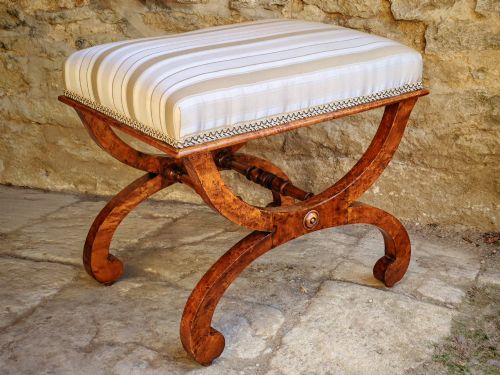
The distinction between standard utility seating and exceptional pieces lies in the choice of timber figure, such as highly figured rosewood, burr elm, or burr maple, combined with the depth and sharpness of hand-carving on the frame. High-grade items often display sophisticated proportions and refined turning.
Originality of the upholstery components and needlework tops heavily influences the standing of a piece. Frames retaining their original needlepoint, gros-point, or structural mechanisms hold greater integrity compared to those altered by modern replacements.
The Mid Victorian Stool Glossary
- X-frame stool
- A seat constructed with intersecting diagonal supports forming an X shape when viewed from the side. This classical frame design provides robust structural support.
- Gout stool
- A specialised low footrest featuring an adjustable angle to elevate and support the foot or leg. These pieces often incorporate mechanical ratchets for comfort.
- Centre stool
- A large freestanding seat designed to sit in the middle of a room rather than against a wall. They typically feature finished woodwork on all sides.
- Gros-point
- A heavy, counted-thread needlework technique utilising coarse wool yarn. It frequently appears on nineteenth-century footstool and ottoman tops.
- Reformed Gothic
- A nineteenth-century design style emphasising structural clarity, medieval architectural motifs, and unpretentious joinery. It marks a departure from heavy floral ornamentation.
Mid Victorian Stool: Frequently Asked Questions
How do I use a mid victorian stool today?
These pieces serve well as low coffee tables, window seats, or fireside footrests in contemporary living spaces. Their compact scale allows them to fit easily into smaller rooms.
Upholstered versions provide extra seating when hosting guests while introducing distinct nineteenth-century character to an interior.
What is the difference between an ottoman and a footstool?
Footstools are generally smaller and designed specifically to support the feet while sitting in a chair. Ottomans tend to be larger, often functioning as independent centre pieces or low seats.
Both forms share similar Victorian framing techniques and upholstered top constructions.
How can I date a nineteenth-century stool?
Dating relies on observing the secondary woods, turning styles, and specific revival influences present in the carved woodwork. Pieces from around eighteen fifty often display simpler lines, while those from the eighteen sixties and seventies lean into heavier ornamentation.
Archival records and specific mechanical elements, such as piano rise-and-fall screws, also help narrow the period of origin.
Are piano stools adjustable?
Many piano and music stools from this era feature a revolving top or a rise-and-fall screw mechanism. These adjustments allowed musicians to set their preferred seating height.
Non-adjustable variants also exist, functioning simply as fixed-height upholstered seats.