


Rosewood Footstool Bench
These rosewood footstool bench examples combine rich timber frames with upholstered seating, offering both period character and practical daily comfort for the home.
Rosewood Footstool Bench
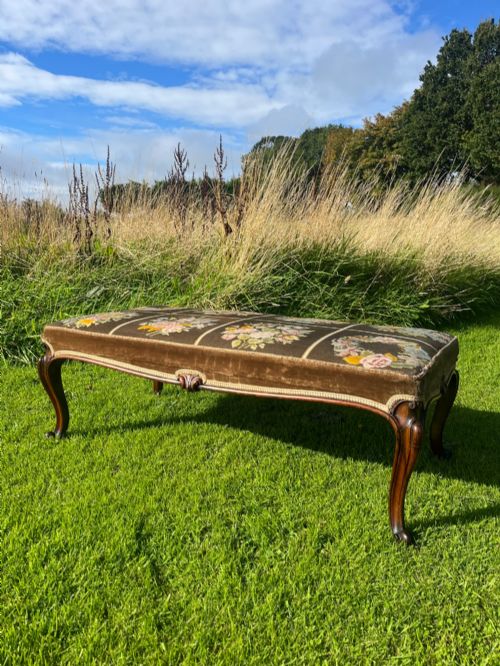
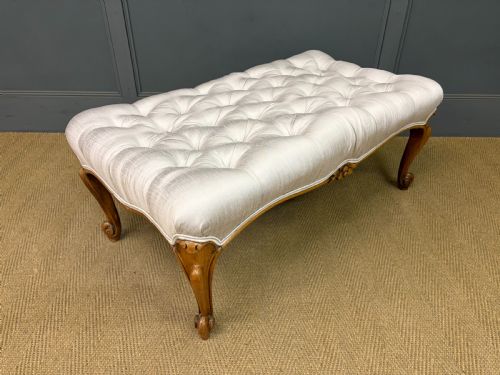
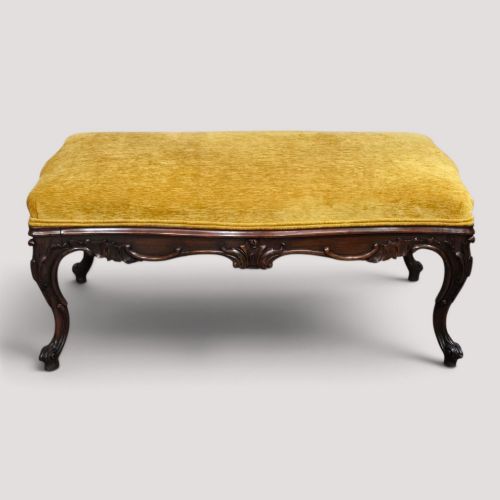
A rosewood footstool bench is a low seating piece designed for resting feet or sitting, frequently found in forms such as dressing stools, centre stools, and box ottomans. Buyers searching this phrase encounter substantial timber frames built during the Georgian, Regency, and Victorian eras.
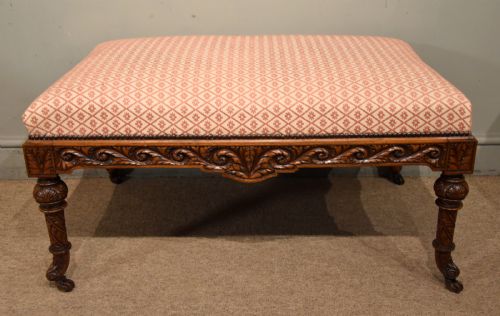
The pieces on this page span the nineteenth century, including specific dates like eighteen twenty and eighteen sixty alongside broader Victorian and Regency periods. You will see both simple oblong shapes and more decorative variations featuring carved details and liftout seats.
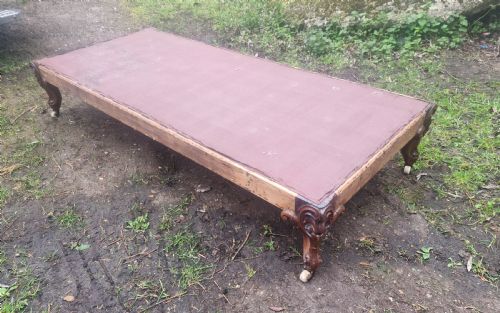
Origins range from standard British cabinet making to Anglo-Indian workshops, demonstrating diverse regional interpretations of the form. Most examples arrive ready for integration into traditional rooms, occasionally requiring reupholstering to match modern interiors.
How they were made
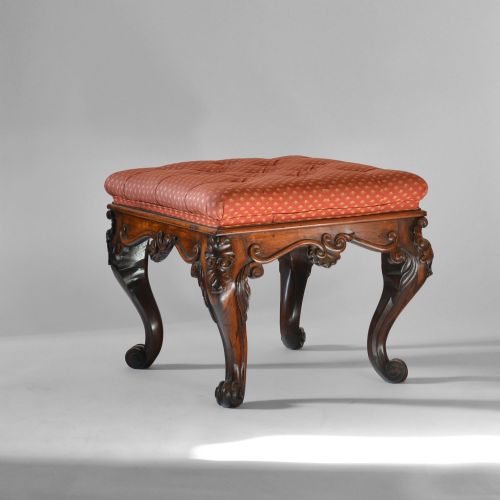
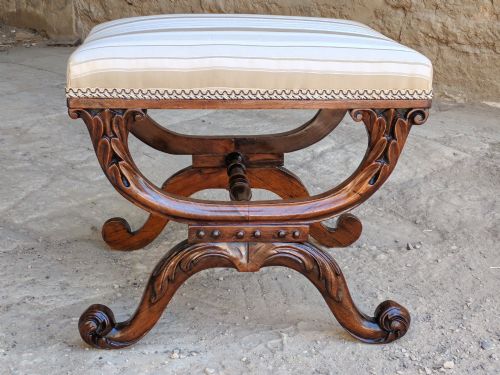
Makers utilised dense rosewood timber for the structural frames, shaping the wood into cabriole legs or X-framed supports that handled weight while displaying striking grain patterns. Cabinet makers combined these dark timbers with brass hardware and ceramic elements where functional or decorative accents were required.
Upholstery completed the construction, with historical workshops applying traditional fabric, velvet, and leather over padding. Liftout seat frames and box ottoman compartments were engineered into the timber structures to provide hidden storage alongside the primary seating surface.
Some nineteenth-century makers hid storage inside the seat so you could tuck away your secret letters.
What varies in quality
Quality in a rosewood footstool bench rests upon the crispness of the timber carving and the architectural proportion of the frame. Superior examples demonstrate thoughtful joinery, robust timber selection, and substantial scale rather than plain assembly.
The integrity of the original rosewood structure dictates the baseline value, while unusual configurations such as X-frames, box compartments, or Anglo-Indian detailing separate ordinary seating from notable cabinet work.
The Rosewood Footstool Bench Glossary
- Rosewood
- A dense, heavily grained dark timber prized by nineteenth-century cabinet makers for its rich colour and durability. It takes a high polish and forms the primary structural material for these pieces.
- Box Ottoman
- A low seat featuring a hollow compartment beneath a liftout or hinged upholstered top. This design allowed period households to combine seating with concealed storage.
- Cabriole Leg
- A furniture leg that curves outward and then tapers inward, mimicking an animal's limb. This silhouette appears frequently on Victorian examples.
- X-Framed
- A structural base formed by two intersecting diagonal members creating an X shape. This configuration provides distinct architectural support and visual interest.
- Centre Stool
- A substantial freestanding seat intended to sit in the middle of a room rather than against a wall. These pieces are typically finished on all sides.
Rosewood Footstool Bench: Frequently Asked Questions
What is a rosewood footstool bench used for?
These pieces function as low seating or footrests in living spaces, bedrooms, and dressing rooms. Many historical examples double as storage compartments or decorative centre pieces.
Their sturdy timber construction allows them to handle daily domestic use while maintaining period character.
How do I identify a Victorian rosewood stool?
Victorian examples typically display deep timber tones, carved ornament, and specific leg styles such as cabriole supports. Dates ranging across the nineteenth century often appear in the construction methods and upholstery styling.
Examining the underside reveals the joinery techniques and timber thickness characteristic of the period.
Are these benches comfortable to use daily?
Most pieces provide firm seating supported by traditional internal padding and durable upholstery fabrics. Some historical examples feature liftout seats that make updating the cushioning straightforward.
Buyers often select pieces needing reupholstering to tailor the comfort and fabric to their own rooms.
How do Regency and Georgian pieces differ?
Georgian and Regency examples tend to feature cleaner architectural lines and classical influence compared to later ornate Victorian designs. The proportion of the timber frame and the detailing on the legs usually signal the era of manufacture.
Cabinet makers of the earlier periods focused heavily on the natural grain of the rosewood timber.