
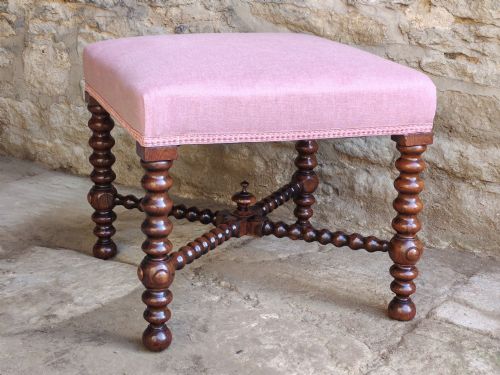

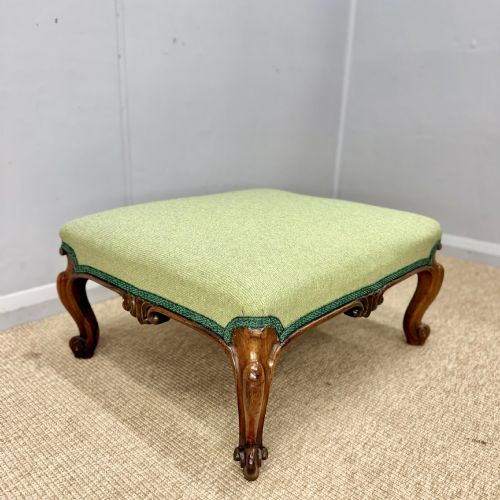


Padded Rosewood Footstool
A padded rosewood footstool brings tactile warmth and rich timber grain to a room, offering both decorative presence and quiet utility.
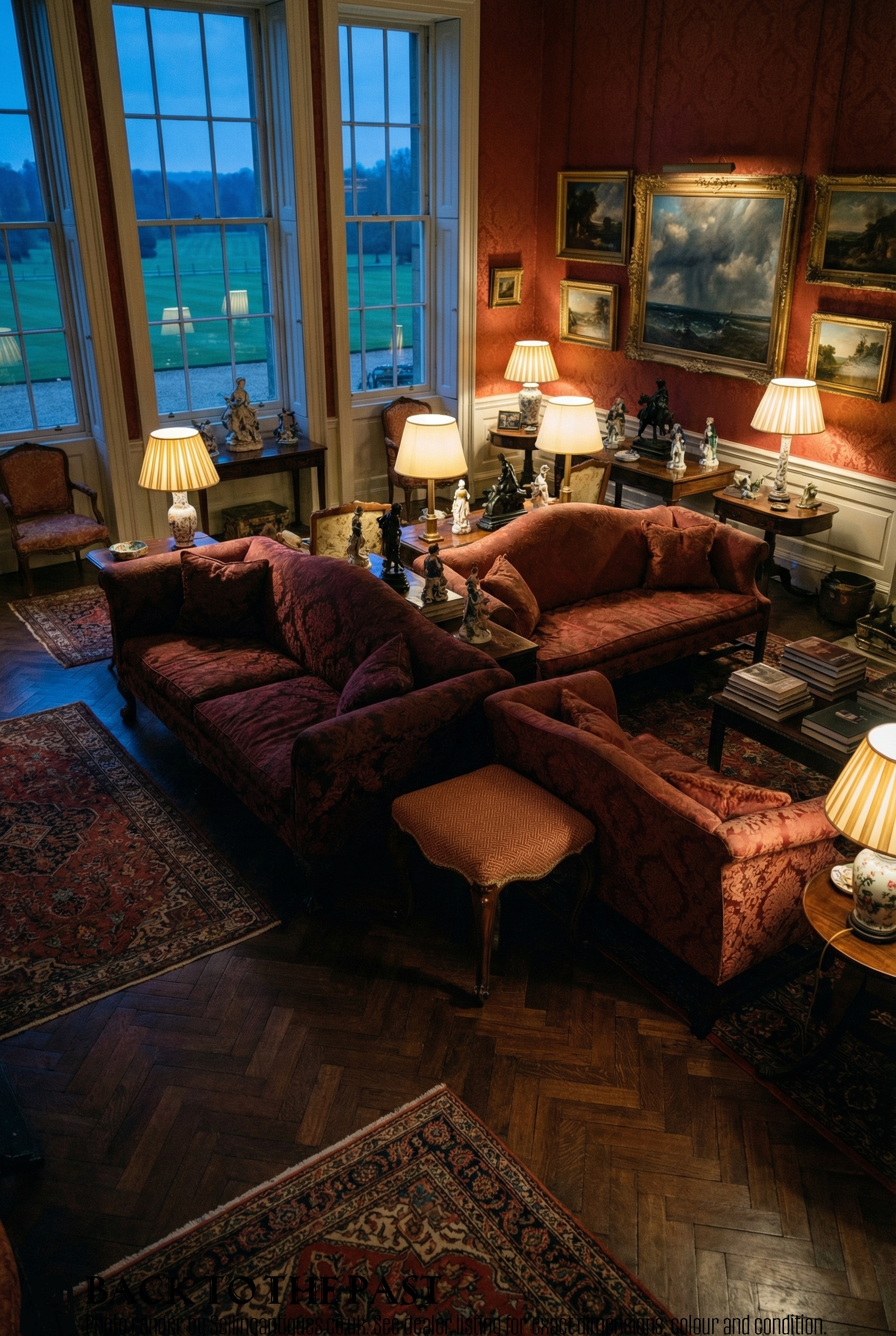
Padded Rosewood Footstool
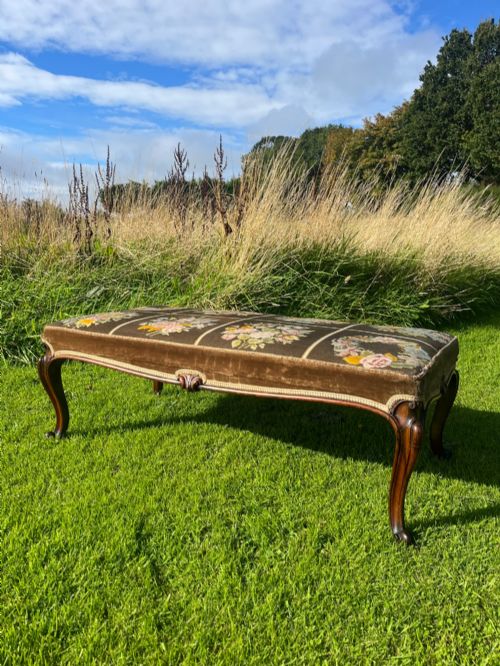
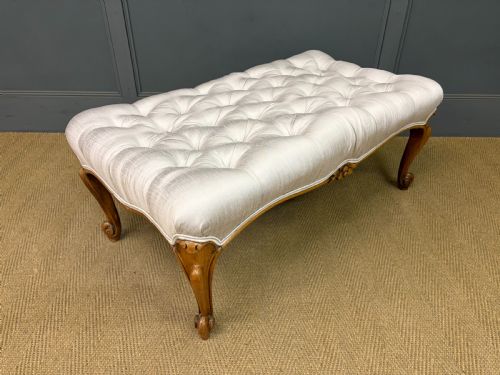
A padded rosewood footstool is a low seating piece constructed from dense, dark timber and finished with a soft top. When you search for a padded rosewood footstool, you encounter forms ranging from compact Victorian examples to larger ottomans.
The pieces listed on this page span the nineteenth century, encompassing Regency, George IV, and Victorian periods. You will frequently find styles such as Victorian Rococo Revival and Anglo-Indian work alongside simpler nineteenth-century forms.
Most items take the form of standard stools or box ottomans designed for resting feet or providing secondary seating. Their presence in a room grounds the space with the dark tones of rosewood and the texture of period upholstery.
How they were made
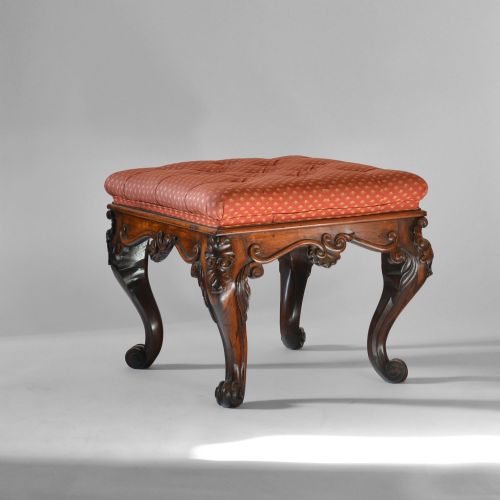
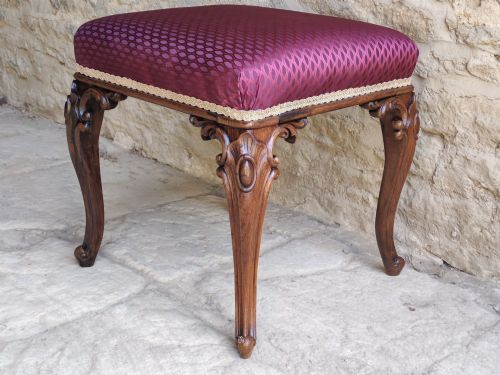
Makers constructed these frames from solid rosewood, utilising timber known for its deep colour and pronounced grain pattern. Carved details, such as cabriole legs or bobbin turnings, demonstrate the manual woodworking skills applied during the period.
The upper sections rely on traditional upholstery techniques, combining internal padding with outer coverings like velvet, leather, tapestry, or standard textile fabrics. Brass elements sometimes appear as decorative mounts or structural hardware on box ottomans and X-framed designs.
Some nineteenth-century owners kept secret compartments inside box ottomans for hiding away stray embroidery threads and very small domestic grievances.
What varies in quality
Quality in a padded rosewood footstool rests on the crispness of the timber carving and the architectural proportion of the frame. Pieces with well-defined cabriole legs or balanced X-frames show a higher degree of workshop attention than simpler turned designs.
The integration between the timber base and the upholstered top also dictates the overall standard. Superior examples maintain structural integrity in the rosewood frame while retaining appropriate padding and textile choices that complement the nineteenth-century aesthetic.
The Padded Rosewood Footstool Glossary
- Rosewood
- A dense, heavily grained dark timber prized in the nineteenth century for cabinet work and seating frames. Its natural oils take a high polish.
- Cabriole leg
- A furniture leg that curves outward and then tapers inward, mimicking an animal limb. This form appears frequently on Victorian examples.
- Ottoman
- A low, upholstered seat or footstool often featuring an internal compartment for storage. Regency and Victorian versions frequently incorporate box seats.
- X-framed
- A structural support design where two members cross in the shape of an X. This configuration provides stability and a distinct architectural silhouette.
- Tapestry
- A heavy textile woven with decorative pictorial or geometric designs. These fabrics often cover the top surfaces of period footstools.
Padded Rosewood Footstool: Frequently Asked Questions
How do I use a footstool in a modern room?
Place a padded rosewood footstool before a low armchair or sofa to provide functional leg support. The dark timber and textured upholstery also allow it to function as a standalone decorative object.
In larger spaces, an ottoman version can sit centrally to hold books or act as informal extra seating. The compact nineteenth-century scale integrates easily into various room layouts without dominating the floor space.
How do I distinguish between Regency and Victorian pieces?
Regency items generally exhibit cleaner architectural lines and classical influences, sometimes incorporating brass mounts or leather box seats. They date from the early part of the nineteenth century.
Victorian pieces often display more exuberant carving, such as cabriole legs or Rococo Revival curves. The timber remains rosewood, but the decorative vocabulary shifts toward heavier ornamentation as the century progresses.
Are the upholstery fabrics original?
Most nineteenth-century footstools have undergone reupholstery over time to ensure structural soundness and clean presentation. Materials such as velvet, tapestry, and modern textiles frequently reflect later updates rather than the original factory finish.
Original needlework or tapestry covers do survive on certain pieces, but buyers should expect that the padding and outer fabric may have been renewed during the lifespan of the stool.
What is an Anglo-Indian rosewood stool?
An Anglo-Indian stool reflects furniture made in India during the nineteenth century under British colonial influence. These pieces often feature distinctive carving styles executed in native rosewood.
They share the functional purpose of domestic footstools while displaying ornamental details distinct from standard domestic British production of the same era.