
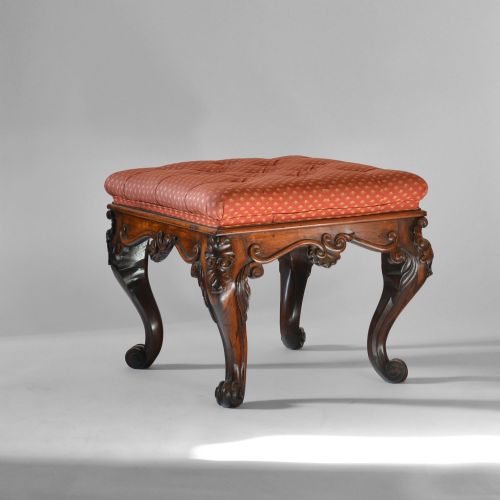
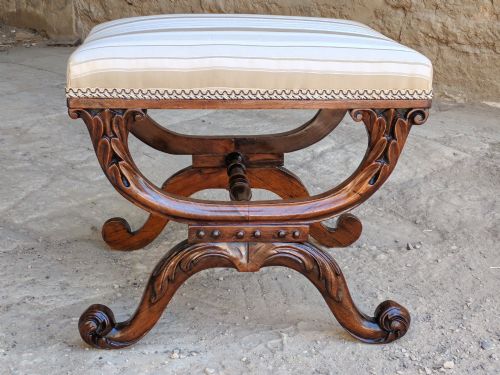
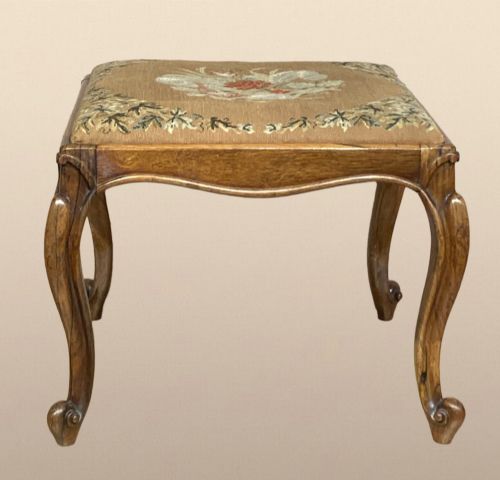


Antique Rosewood Dressing Seat
An antique rosewood dressing seat brings rich grain and practical utility to a bedroom or dressing room, offering both a comfortable perch and a handsome period form.
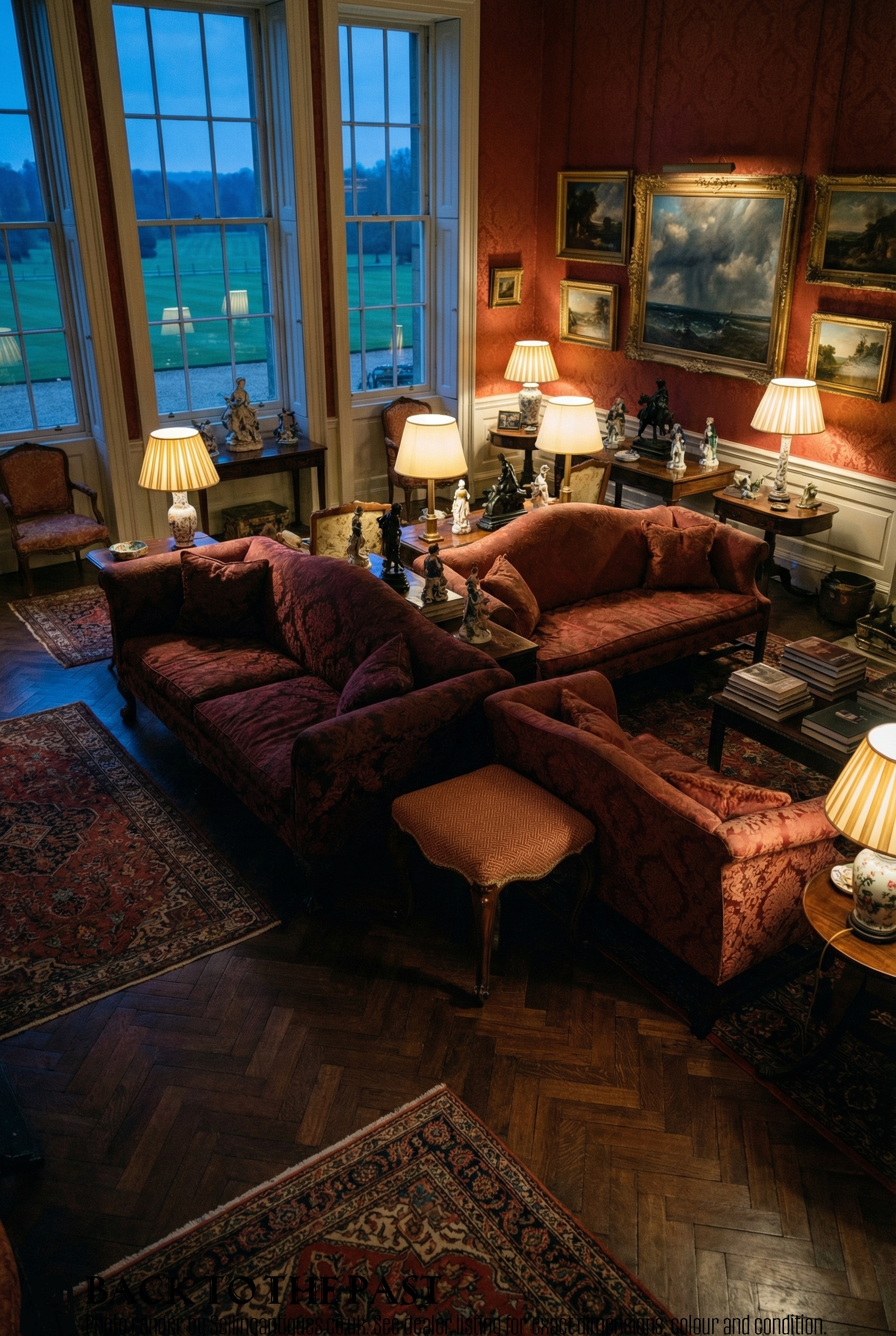
Antique Rosewood Dressing Seat
An antique rosewood dressing seat is a small form of seating designed for vanity tables, dressing rooms, and music rooms, frequently encountered in forms such as stools, footstools, and revolving piano stools.
Most examples rely on compact proportions, featuring upholstered tops in various textiles paired with sturdy timber frames that suit domestic use.
How they were made
Cabinetmakers utilised dense rosewood for the primary frames, frequently shaping the timber with carved details, cabriole legs, or cross-frame structures.
Upholstery techniques combined traditional stuffing materials with fabrics such as leather, tapestry, wool, and textile covers edged with braid.
The listings on this page span the 19th Century, including Georgian, Regency, and Victorian periods, alongside Chinese Qing Dynasty examples.
What varies in quality
Quality rests in the crispness of the timber carving and the sophistication of the frame design, distinguishing simple utilitarian stools from highly ornamented Victorian rococo revival or Regency pieces.
The integrity of the rosewood timber and the historical accuracy of the upholstery materials also differentiate standard workshop pieces from superior examples.
The Antique Rosewood Dressing Seat Glossary
- Rosewood
- A dense, dark timber prized for its prominent grain patterns and rich natural colour, frequently selected for nineteenth-century cabinet furniture.
- Cabriole leg
- A furniture leg that curves outward in a convex arc and tapers inward to a foot, typical of many Victorian seating designs.
- Cross-frame
- A structural base formed by intersecting members that create an X-shape, often utilised in Regency and Victorian stools for added stability.
- Tapestry
- A heavy woven textile featuring decorative patterns, commonly used for the upholstered seats of period dressing furniture.
- Revolving
- A mechanical feature allowing the seat top to turn on a central screw, frequently found on piano and dressing table stools.
Antique Rosewood Dressing Seat: Frequently Asked Questions
Where did people use these seats?
These seats were primarily placed in bedrooms, dressing rooms, and drawing rooms for personal grooming, piano playing, or resting the feet.
Their modest scale allowed them to slide neatly beneath tables or remain tucked beside a vanity.
How do I date an antique rosewood stool?
Dating relies on observing the stylistic markers, such as the sweeping curves of Regency frames or the ornate carved details of mid-Victorian pieces.
Construction methods and timber selection also offer clues to whether a piece originates from the early nineteenth century or the later Victorian decades.
What is the difference between a dressing seat and a piano stool?
While both serve as compact seating, piano stools frequently incorporate a revolving mechanism to adjust the height for the seated musician.
Dressing seats often feature fixed upholstered tops supported by cabriole or cross-frame structures designed for vanity tables.
Can I use an antique rosewood stool daily?
These sturdy nineteenth-century forms were built for regular domestic use and remain entirely practical for modern seating.
Placing them in low-traffic areas or ensuring the internal frame remains stable helps preserve the antique timber.