


Mid Century Walnut Chairs
Mid century walnut chairs are timber seating pieces built across various eras, offering buyers rich grain figures and robust frames for daily sitting.
Mid Century Walnut Chairs
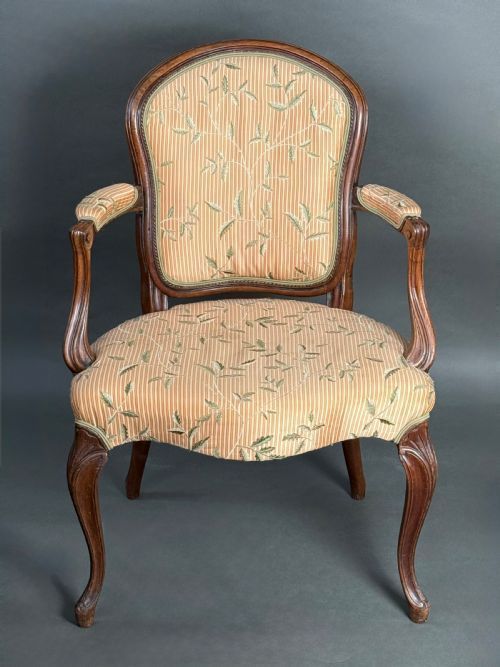
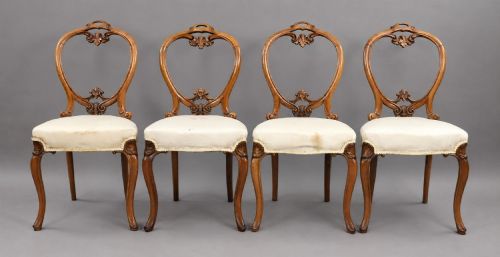
Mid century walnut chairs encompass dining sets, armchairs, and occasional seating shaped from timber across the eighteenth, nineteenth, and twentieth centuries. Buyers seeking mid century walnut chairs will encounter numerous Victorian balloon back dining chairs alongside eighteenth-century examples.
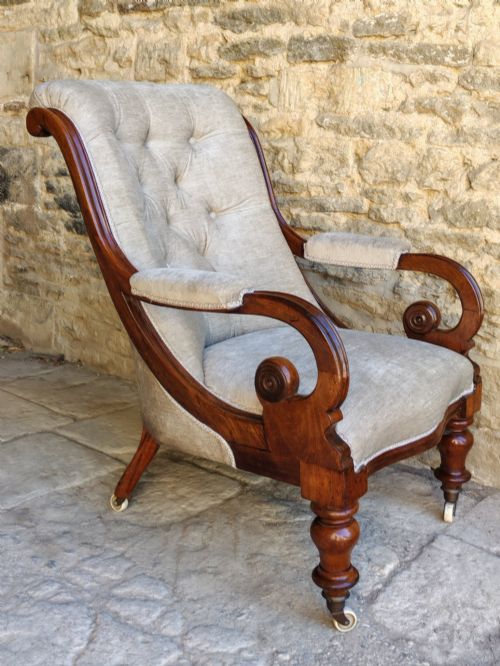
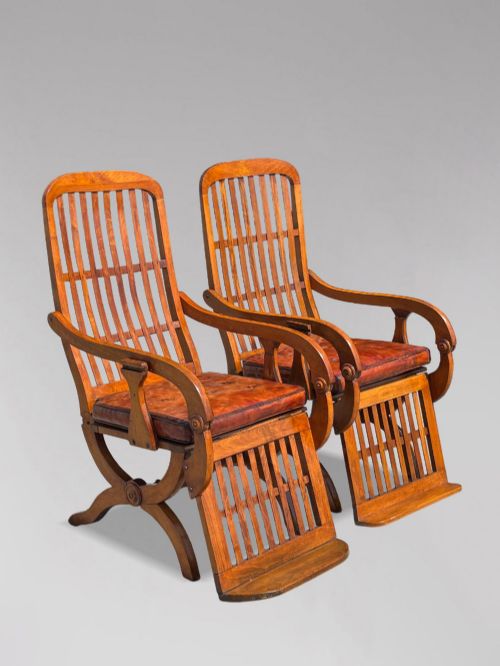
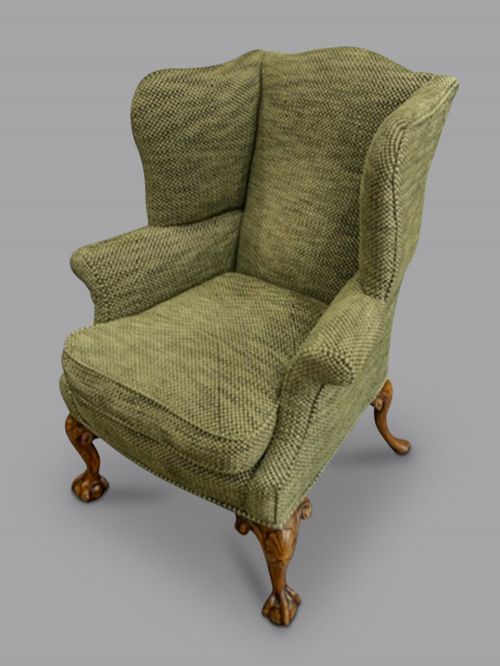
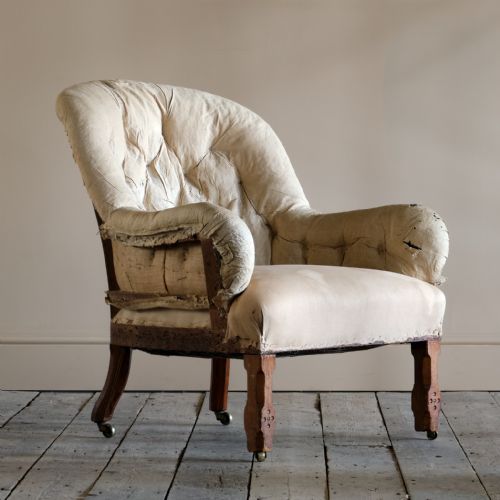
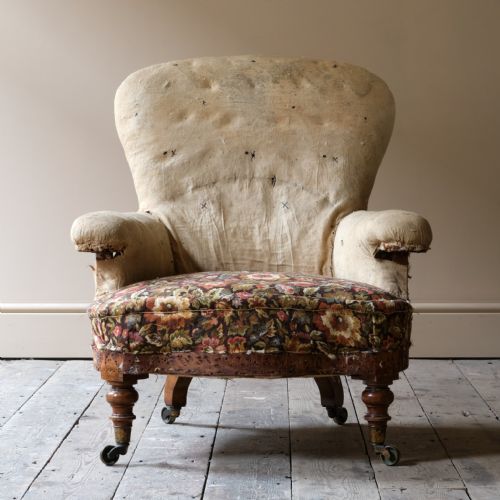
The selection ranges from early Georgian side chairs to Art Deco lounge seats and twentieth-century bar stools. Armchairs, chaise longues, and slipper chairs dominate the upholstered forms.
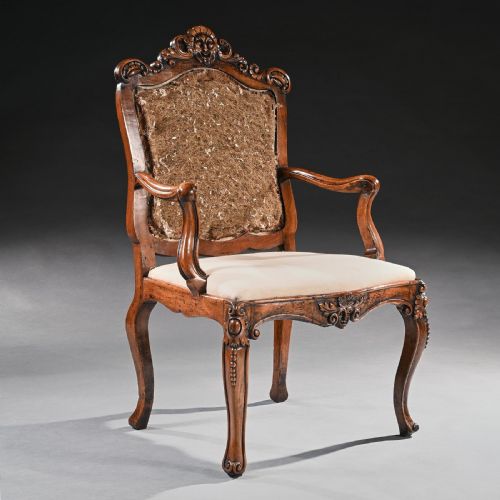
Makers and workshops across England, Ireland, and Italy produced these pieces using native and imported timber. Regional styles span from French Rococo Revival to simple vernacular parlour seating.
Materials and construction
The primary timber is walnut, occasionally noted as red or Virginia walnut, offering deep brown tones and distinct grain patterns. Mahogany and assorted structural timbers appear within internal frames and secondary supports.
Craftsmen joined structural components using traditional joinery before finishing surfaces with wax or polish. Upholstered varieties utilise materials such as leather, velvet, brass tacking, silk, and modern fabrics over sprung or stuffed interiors.
Listings feature periods spanning from the seventeenth century through to Art Deco designs of the twentieth century.
Judgement of quality
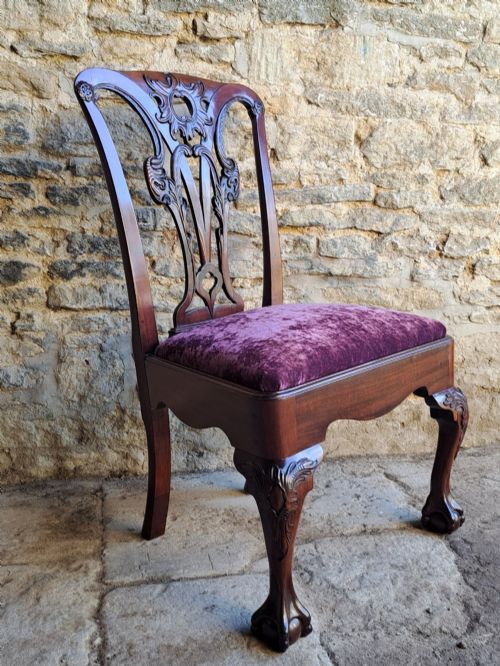
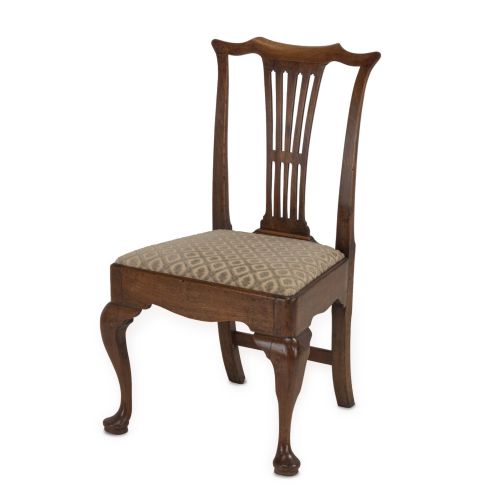
Quality rests upon the crispness of timber carving, the integrity of the timber joints, and the retention of original surface patination. Early pieces show hand-cut joinery and sculptural depth in elements like pierced splats or carved head rails.
Upholstered forms depend on the preservation of interior padding materials and the quality of the textile covering, whether period silk or newer upholstery fabric.
Howard and Sons·Hille·Gillows
The Mid Century Walnut Chairs Glossary
- Balloon back
- A chair back shaped in an open curve resembling a balloon, common in Victorian dining seats. This design appeared frequently in large sets.
- Splats
- The central vertical slat in a chair back, often pierced or carved in eighteenth-century examples. It provides both lumbar support and decorative detail.
- Chaise longue
- An elongated upholstered seat for reclining, combining a chair with an extended footstool. These pieces frequently feature carved walnut frames.
- Slipper chair
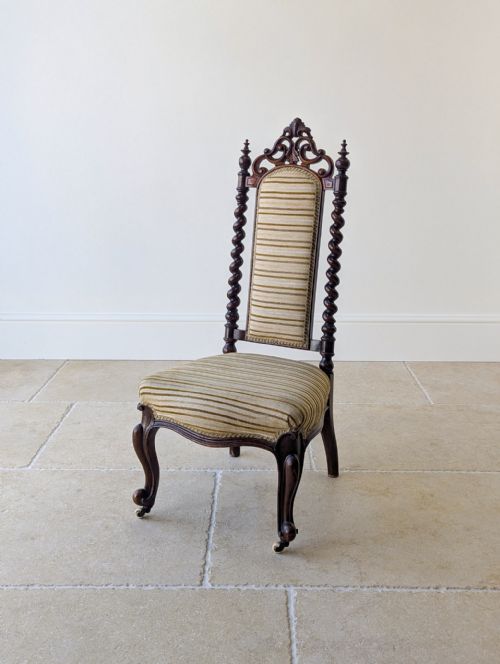
- A low-seated upholstered chair designed originally for bedrooms to assist with footwear. They typically lack arms to accommodate bulky nineteenth-century garments.
Mid Century Walnut Chairs: Frequently Asked Questions
How do I date a walnut chair?
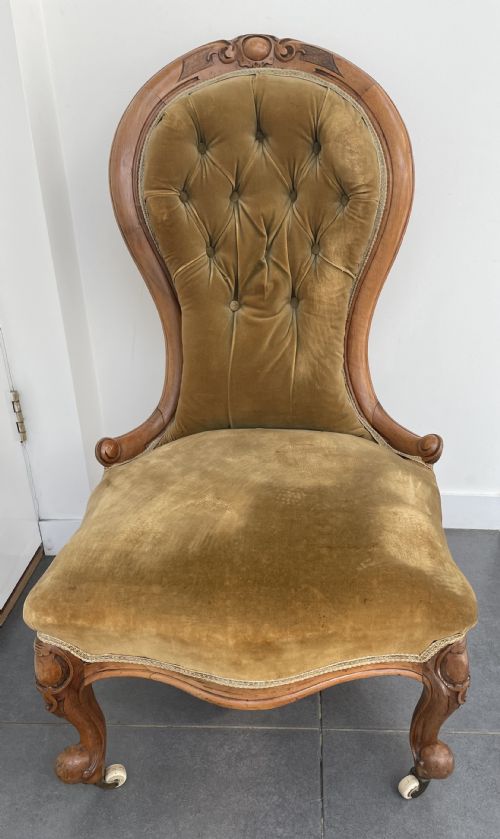
Dating relies on stylistic clues, construction methods, and timber characteristics. Eighteenth-century pieces often display pierced splats and cabriole legs, while Victorian examples frequently show balloon backs or button-tufted upholstery.
Examining internal secondary timbers and joinery marks helps distinguish earlier hand-tooled frames from later nineteenth-century production methods.
Are these chairs suitable for daily dining?
Many dining chairs from the Victorian and earlier periods remain sturdy enough for regular use. Solid walnut construction provides durable framing for seated guests.
Buyers should inspect the rigidity of the leg joints and the condition of the upholstery webbing before placing antique chairs into daily service.
What is the difference between side chairs and armchairs?
Side chairs are built without armrests, designed primarily for placement around dining tables or against room walls. They occupy less floor space than armed counterparts.
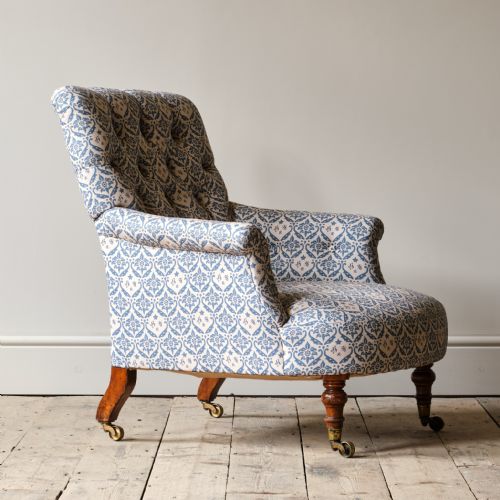
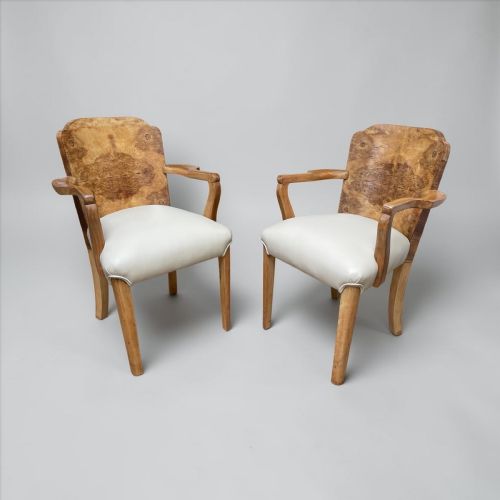
Armchairs feature structural elbow rests and typically offer wider seats, making them suited for parlours, libraries, or occasional seating areas.
How should I care for antique walnut wood?
Walnut timber benefits from periodic application of quality wax polish to nourish the grain and protect the surface finish. Avoid placing antique chairs near direct heat sources or in strong sunlight.
Dusting regularly with a soft, dry cloth prevents particulate accumulation without risking moisture damage to the polish or exposed joinery.