



Mid Century Modernist Artwork
Mid century modernist artwork captures the intellectual shift of the mid-twentieth century through bold abstraction and expressive portraiture.
Mid Century Modernist Artwork
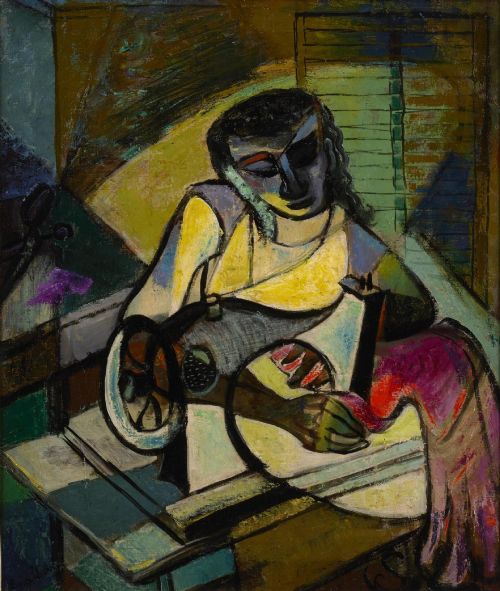
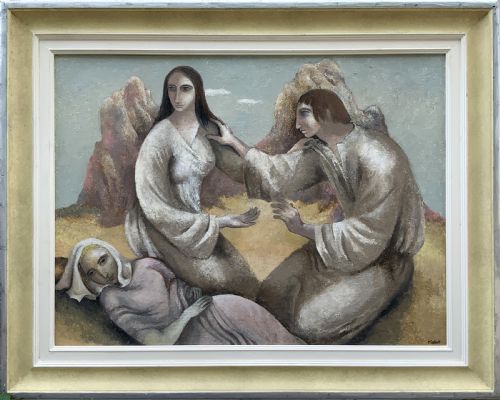
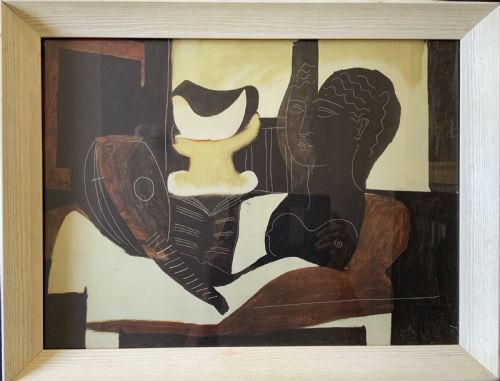
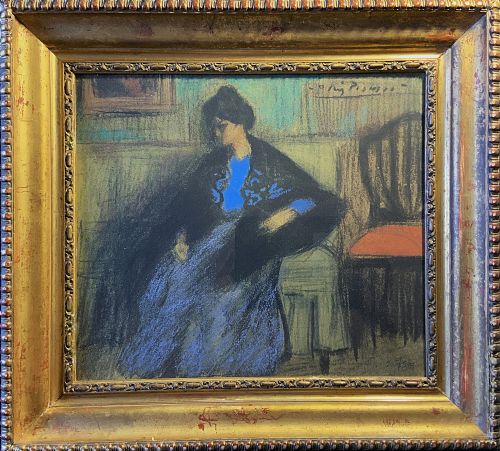
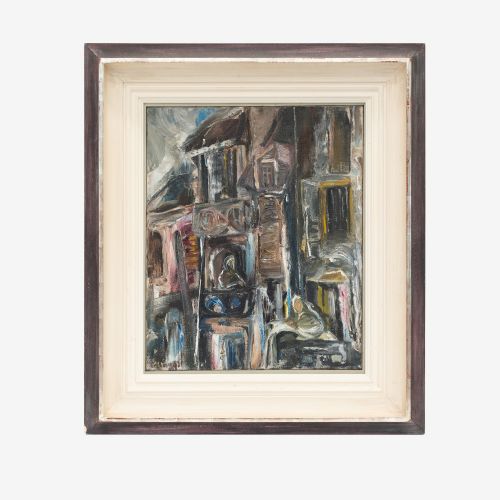
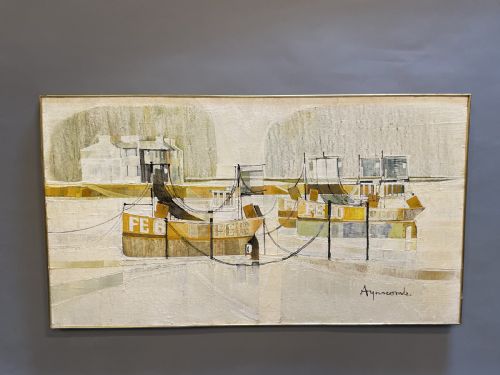
Mid century modernist artwork comprises original paintings, drawings, prints, and wall art produced across the decades from the 1930s to the 1960s. These pieces include abstract compositions, figurative studies, harbour scenes, and interior views rooted in movements like Modern British art and the St Ives School.
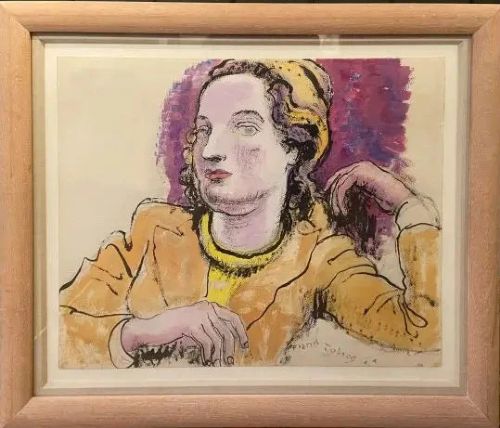
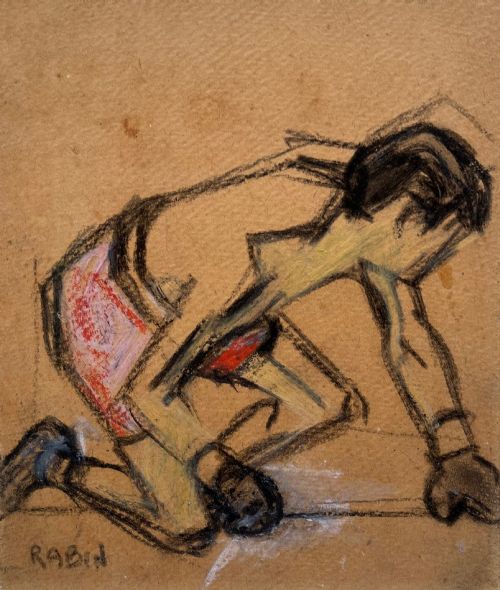
Buyers will most frequently encounter original oil paintings on canvas or board, alongside works on paper executed in ink, gouache, and watercolour. Many of these items reflect European and British aesthetics, spanning intimate portraits and expansive cityscapes.
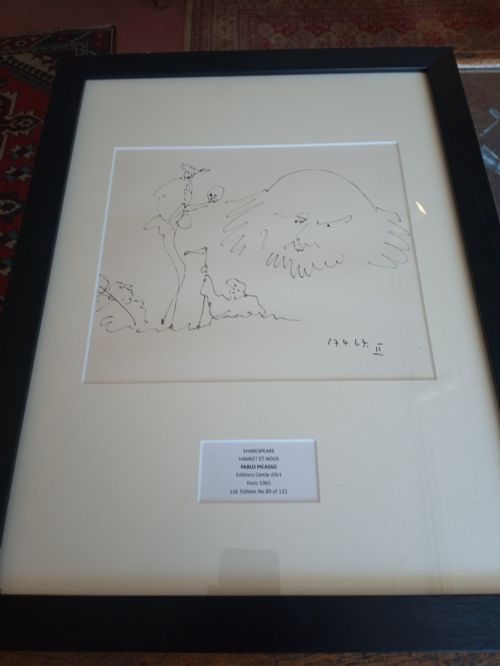
The selection ranges from works dated precisely within the 1930s, 1940s, 1950s, and 1960s to limited edition lithographs and prints bearing mid-century publication details.
How they were made
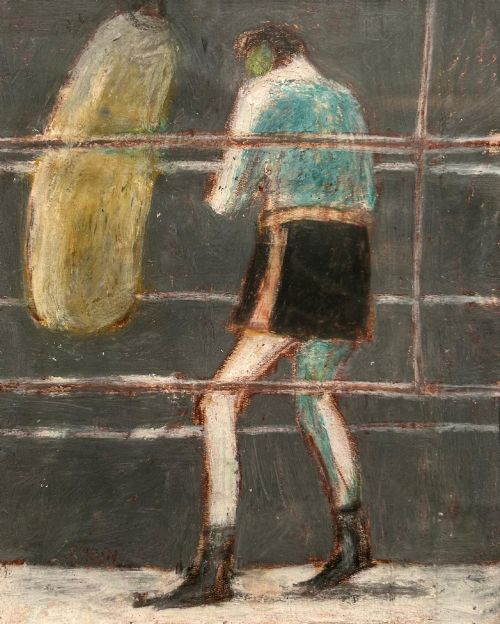
Painters and draughtsmen utilised traditional supports such as stretched canvas, wooden board, and heavy paper, applying oil paint, impasto, gouache, watercolour, or ink to build surface texture and tonal depth. Many compositions combine fluid brushwork with deliberate line work to articulate form.
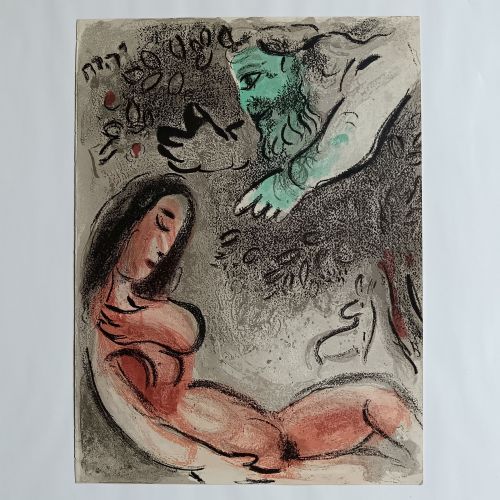
Printmakers employed lithography, pochoir, and specialised printing techniques to reproduce original designs in limited runs, often working alongside established Parisian printers and galleries during the 1950s and 1960s.
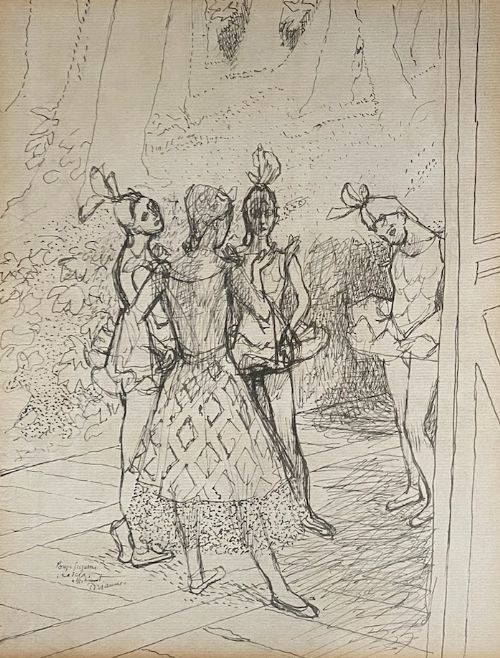
Several canvases capture harbours, ballet dancers, and chestnut leaves unfurling in spring.
What varies in quality
Quality rests upon the sureness of the draughtsmanship, the handled weight of the pigment, and the confidence with which an artist commands the picture plane. Works that balance colour harmony with structural integrity stand apart from more formulaic decorative pieces.
The degree of historical documentation and verifiable provenance, such as gallery labels, documented exhibition history, and clear signatures, elevates certain examples above anonymous or unprovenanced works from the same period.
Marc Chagall·Frank Dobson·Samuel Rabin·Dame Elisabeth Frink·Denis Mitchell·Pablo Picasso·William McCance
The Mid Century Modernist Artwork Glossary
- Impasto
- Paint applied thickly to a canvas or board, leaving visible brush or palette knife marks that project outward from the surface.
- Lithography
- A planographic printing process utilising a stone or metal plate to transfer an inked image onto paper.
- Pochoir
- A stencil-based printing technique used for applying hand-coloured details or flat areas of vibrant pigment to prints.
- Gouache
- An opaque water-based medium that dries to a matte finish, frequently employed on paper for sketches and finished modernist compositions.
- St Ives School
- A group of artists working in Cornwall who pioneered British abstract art during the mid-twentieth century.
Mid Century Modernist Artwork: Frequently Asked Questions
How should I frame mid-century art?
Selecting a frame depends on the period and medium of the artwork. Simple wood mouldings or slender profiles complement mid-century aesthetics without overwhelming the composition.
Works on paper benefit from conservation mounting under glass, whilst canvases often sit best in floating frames that reveal the original edges.
Where were these modernist pieces created?
The works originate from artistic hubs across Britain and continental Europe, including Paris, Provence, and the coastal communities of Cornwall and Brittany.
Artists frequently travelled between these centres, absorbing local landscapes and stylistic developments before producing their finished canvases and prints.
How do I identify a 1950s abstract painting?
Mid-century abstract works typically rely on simplified geometric forms, non-naturalistic colour palettes, and expressive brushwork that prioritises mood over strict realism.
Examining the canvas texture, stretcher bars, and any signatures or dates on the reverse helps confirm the operational decade.
Can I mix prints and original paintings?
Combining original oils, gouaches, and limited edition prints creates a dynamic display that mirrors how mid-century collectors lived with their acquisitions.
Balancing scale and subject matter across different mediums allows each piece to retain visual clarity within a gallery wall arrangement.